
The Battle of Plassey: The day the British took control of Bengal
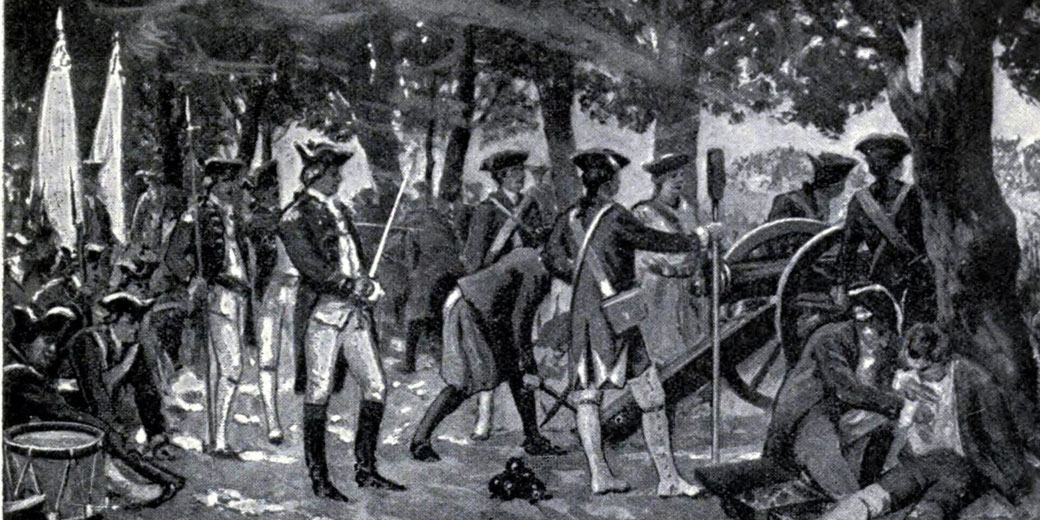
On 23 June 1757, under heavy clouds in a field near the village of Palashi, a force from the British East India Company confronted the much larger army of the Nawab of Bengal.
The outcome of that single day would transform the Company from a commercial enterprise into a political authority that could dictate terms to Indian rulers.
Although it appeared to be a military engagement, the battle actually succeeded through a campaign of deception that relied on the deliberate withholding of support and on secret negotiations that had already sealed the Nawab’s fate even before he stepped onto the field of battle.
Causes of conflict
After Alivardi Khan died in April 1756, his grandson Siraj ud-Daulah secured the title of Nawab and quickly found himself surrounded by enemies both within his court and among European merchants.
He demanded that the East India Company stop fortifying its settlements and begin paying taxes on its trade.
Instead, the Company refused to acknowledge his authority and continued its operations as before.
Before his death, Siraj had led a military campaign to assert his position, had captured Fort William in Calcutta, and had imprisoned a number of British defenders.
As a result, that incident, which was later described in British accounts as the Black Hole of Calcutta, created widespread outrage among Company officials.
Some British reports claimed that 146 men had been confined overnight in a small dungeon and that 123 had died of suffocation, although some modern historians have questioned both the figures and the reliability of the sole eyewitness account.
Nevertheless, in response, Company authorities in Madras ordered Robert Clive to restore their presence in Bengal, and by January 1757, Clive had retaken Calcutta with assistance from Admiral Charles Watson.
Clive had previously earned fame for his notable defence of Arcot in 1751 and, despite his lack of formal military training, now carried significant influence in the region.
The Nawab, who was unable to withstand further attack, so signed a treaty that confirmed Company trading rights and allowed its agents to operate again.
However, Clive distrusted Siraj’s promises and believed that he would renew his alliance with the French.
He began to make arrangements to remove him by reaching out to nobles who had lost confidence in the Nawab’s leadership.
Who was Mir Jafar?
One of these nobles was Mir Jafar, who commanded the army but feared for his safety and resented his loss of influence.
For several weeks, William Watts, who had acted on Clive’s behalf, had negotiated terms that would secure Mir Jafar’s support.
Their eventual agreement included a plan for Mir Jafar to withhold his troops during the next battle.
In exchange, the Company promised to recognise him as Nawab and demanded financial compensation worth thirty million rupees.
While that payment was promised in full, some funds were reportedly delayed, kept back, or used by the Company.
Regardless, Clive concealed the plot, and he kept up diplomatic contact with Siraj as he prepared for war.
Then, in mid-June, Clive marched north from Calcutta with just over 3,000 men.
His army included about 900 European infantry and 2,100 sepoys. By contrast, Siraj had gathered a force of approximately 35,000 to 40,000 soldiers and positioned them along the Bhagirathi River near a grove of mango trees at Plassey, located about 150 kilometres north of Calcutta and close to his capital at Murshidabad.
His army included cavalry, war elephants, artillery, and a small contingent of French officers led by Jean Law.
Although Law was present in an advisory role and supported the artillery effort, he did not personally command the guns.
Siraj had the advantage in numbers and firepower. However, he had begun to suspect betrayal among his own officers and did not trust his senior commanders to follow orders.
How the battle unfolded
At dawn on 23 June, Siraj’s forces opened fire on the British line. Clive’s troops fell back behind mud embankments and held their position under constant bombardment.
After several hours, a rainstorm swept across the field and soaked both sides, and because Siraj’s gunners failed to cover their powder, their guns soon fell silent.
Clive’s men, who had kept their ammunition dry under waterproof covers, resumed firing once the weather cleared and advanced steadily toward the Nawab’s camp.
As they moved forward, Clive’s officers noticed that Mir Jafar’s division remained still.
Several other commanders, including Yar Lutuf Khan and Rai Durlabh, followed his lead and gave no orders to support the Nawab’s position.
As a result, Siraj’s line collapsed in confusion and he mounted a horse and fled the battlefield.
British troops captured the Nawab’s camp, seized his artillery, and encountered little resistance as the rest of his army scattered or surrendered.
Aftermath of Plassey
Afterwards, Siraj had attempted to take refuge in Murshidabad, but his supporters had deserted him.
Within two days, agents of Mir Jafar found him after he had hidden himself in a disguise.
He was executed around the beginning of July, likely on 2 July, although some sources place the date earlier.
Mir Jafar formally assumed the role of Nawab under the protection of Company officials and, at his investiture, he confirmed the full financial settlement promised to the British and ceded territory surrounding Calcutta to Company control.
British forces had also seized treasure from Murshidabad, which was estimated at about 17 to 20 million rupees.
While some contemporary accounts equated this to two or three million pounds sterling, modern historians suggest these conversions exaggerated the total value.
Clive reportedly received a jagir that was valued at £27,000 annually and other officers received land together with pensions and privileges.
Mir Jafar, though nominally ruler, largely depended on British support to maintain his position.
Over time, he lost influence as Company agents imposed their own decisions on matters of commercial regulation that encompassed taxation and administrative authority.
When he failed to meet their expectations, Clive's successors removed him in 1760 and installed Mir Qasim, who had promised closer cooperation.
The later Battle of Buxar and its consequences
For a brief period, Mir Qasim had attempted to resist British demands, and he had built his own army and had sought to reassert Nawabi control.
However, conflict resumed in 1764 when Hector Munro led Company forces against him and his allies at the Battle of Buxar, and as a result the Mughal emperor Shah Alam II issued a firman granting the Company the Diwani of Bengal, Bihar, and Orissa.
That arrangement, which was finalised by the Treaties of Allahabad in 1765, gave the Company the right to collect land taxes directly and removed the need to act through an Indian middleman.
Instead of conquering Bengal by brute force, the Company had largely secured control when it had used rivalries, had offered bribes and had weakened the Nawab’s political authority.
As a result, Plassey became a textbook example of how a small force, backed by payments and secret deals, could defeat a vastly larger army by ensuring that most of the enemy troops never joined the battle.
The success of that approach convinced Company officials that India could be governed by commercial agents who only used military power when necessary.
Clive later told Parliament about the fortune he had acquired, "I stand astonished at my own moderation."
The transformation of India that began on the muddy fields of Plassey would continue for another century.