
Why did Peter the Great execute his own son, Tsarevich Alexei?
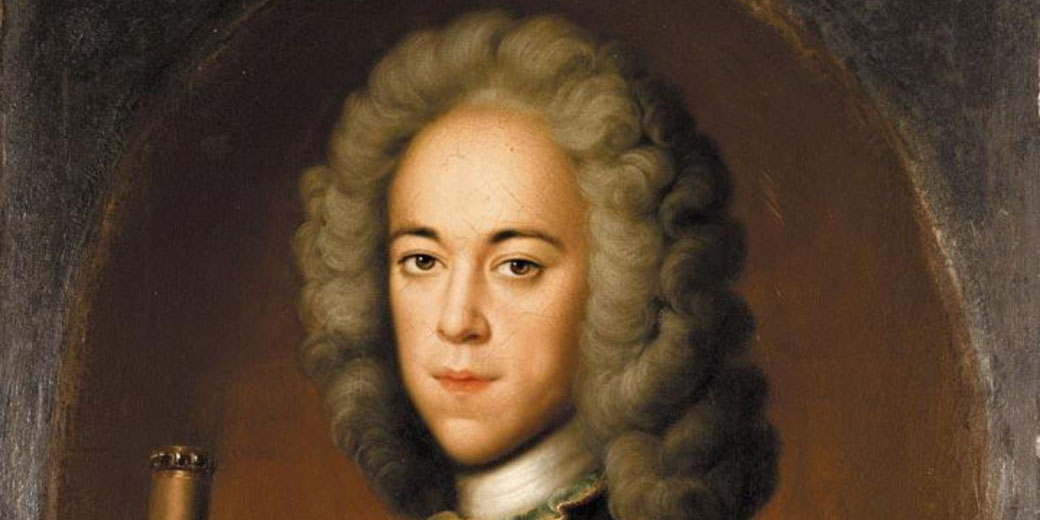
In June 1718, Tsarevich Alexei Petrovich, the eldest son and heir apparent of Tsar Peter I of Russia, died in the Peter and Paul Fortress in Saint Petersburg after receiving forty lashes of the knout, a metal-reinforced whip capable of breaking a man’s spine.
He was twenty-eight years old, and his own father had authorised the torture that killed him. The story of Alexei’s death is one of the most disturbing episodes in Romanov history, because it exposes how Peter the Great placed the survival of his reforms above even his closest family ties.
A son raised in his mother’s world
Alexei Petrovich was born on 28 February 1690 in Moscow, the only surviving child of Peter I and his first wife, Eudoxia Lopukhina.
Eudoxia belonged to a conservative boyar family that viewed foreigners with suspicion and regarded Western customs as threats to Russian Orthodoxy.
Peter had little patience for her traditional outlook, and the marriage collapsed quickly.
In 1698, when Alexei was eight years old, Peter forced Eudoxia into the Intercession Convent at Suzdal and took full control of his son’s upbringing.
Before the separation, Alexei’s early education had been supervised by his mother and a tutor named Nikifor Vyazemsky, who focused almost entirely on religious instruction.
After Eudoxia’s removal, Peter placed Alexei under the care of foreign-educated tutors, including Baron Heinrich von Huyssen, who taught him languages such as French and German alongside mathematics.
Peter also assigned him to an artillery regiment as a private in 1703. Yet Alexei had already absorbed his mother’s piety and her scepticism of Western innovation, and those attitudes would prove difficult to dislodge.

Why did Alexei refuse to follow his father’s path?
As Alexei reached adulthood, Peter expected him to take an active interest in military campaigns and state administration.
In 1708, Peter sent Alexei to Smolensk to gather recruits, and then to Moscow to oversee the city’s defences against a possible Swedish invasion led by Charles XII.
Alexei carried out these tasks dutifully, and after a year of study in Dresden in 1709, he seemed to be following the path Peter had set.
Around 1711, the relationship began to deteriorate. Peter arranged a marriage between Alexei and Princess Charlotte of Brunswick-Wolfenbüttel, a German noblewoman whose sister was married to Holy Roman Emperor Charles VI.
Charlotte soon found herself isolated at the Russian court, and Alexei had begun an affair with a Finnish serf named Afrosinya Fedorova, which deepened Peter’s frustration with his heir.
By this point, conservative elements among the Russian clergy and old aristocracy increasingly viewed the young tsarevich as a future ruler who would reverse Peter’s changes.
On 22 October 1715, Charlotte died from complications after giving birth to a son, the future Peter II.
On the day of the funeral, Peter sent Alexei a stern letter accusing him of laziness and warning that he would cut off the succession “as one may cut off a useless member.”
Alexei responded by offering to renounce his claim, stating he lacked the capacity for ruling.
Peter agreed only if Alexei entered a monastery, which would remove him permanently as a political threat.
The flight to Austria
Rather than accept monastic life, Alexei chose to flee. On 10 November 1716, he arrived in Vienna with Afrosinya, who was disguised as a male page, and placed himself under the protection of Emperor Charles VI.
The Emperor sent the tsarevich first to the fortress of Ehrenberg in the Tyrolean Alps and then to the Castle of Sant’Elmo in Naples.
For Peter, the flight was an unforgivable act of defiance, because a Russian prince running to a foreign monarch was a public humiliation.
Peter feared that Alexei might become a rallying point for opponents of his reforms, and the historian Paul Bushkovitch noted that there was “some sort of understanding with the Austrians” about using Alexei to lead a possible revolt.
Peter dispatched Count Peter Tolstoy, one of his most capable agents, to track Alexei down in Naples and present him with a letter promising a pardon before God if Alexei returned.
Alexei agreed to come home, arriving at the Russian border on 21 January 1718, hoping to live quietly on his estates with Afrosinya.
That promise of safety would prove worthless.
Trial and death in the Peter and Paul Fortress
On 31 January 1718, Alexei reached Moscow and appeared before Russian nobles in the Kremlin, where Peter formally stripped him of his title.
The pardon was conditional: Alexei had to name every person who had assisted his flight.
Under pressure, Alexei provided a confession on 18 February that implicated dozens of associates.
A wave of brutal retribution followed, as several supporters were broken on the wheel or impaled in Red Square.
Peter’s former wife Eudoxia was dragged from her convent and publicly tried for alleged adultery.
Afrosinya, the woman Alexei had hoped to marry, turned against him. Count Tolstoy had compromised her during the mission to Italy, and she testified that Alexei had spoken of abandoning Saint Petersburg, disbanding the navy and ruling from Moscow with the support of the old aristocracy.
For Peter, these words confirmed that Alexei intended to dismantle everything the tsar had built.
On 19 June 1718, the ailing tsarevich received twenty-five strokes of the knout during interrogation.
Five days later, on 24 June, he was lashed fifteen more times, and under this torment he confessed to wishing for his father’s death.
That same evening, 127 members of the Russian Senate declared Alexei guilty of high treason and sentenced him to death.
On 26 June 1718, Alexei died in the Peter and Paul Fortress. The official cause was listed as apoplexy, but the injuries from forty strokes of the knout were sufficient to kill a man in his condition.
A tsar’s cold calculation
Peter’s willingness to destroy his own son requires explanation that goes deeper than personal cruelty.
As a child in 1682, Peter had witnessed political violence firsthand when the Streltsy palace guard stormed the Kremlin and murdered members of his family during a succession crisis.
He had spent his entire reign battling conservative factions that wanted to reverse his military and administrative reforms.
In Alexei, Peter saw a living symbol of that opposition: a man who preferred the old Muscovite ways and attracted the loyalty of clergy and aristocrats hostile to the new Russia.
From Peter’s perspective, allowing Alexei to survive in any capacity posed an unacceptable risk, because conservative factions could always rally around a living heir.
The historian Paul Bushkovitch found evidence that many within the Russian elite hoped Alexei would restore the old order, even if they were not actively organising a rebellion.
For Peter, that hope was dangerous enough to justify the elimination of his own firstborn son.
In 1722, four years after Alexei’s death, Peter issued a new Decree on Succession that abolished the tradition of passing the throne to the eldest male heir, granting the reigning monarch the right to choose any successor.
The decree confirmed what the tsarevich’s broken body had already made clear: Peter would sacrifice anything, including his own bloodline, to protect the future he envisioned for Russia.