
Six emperors, one year: The bloody political upheaval in Rome in AD 238
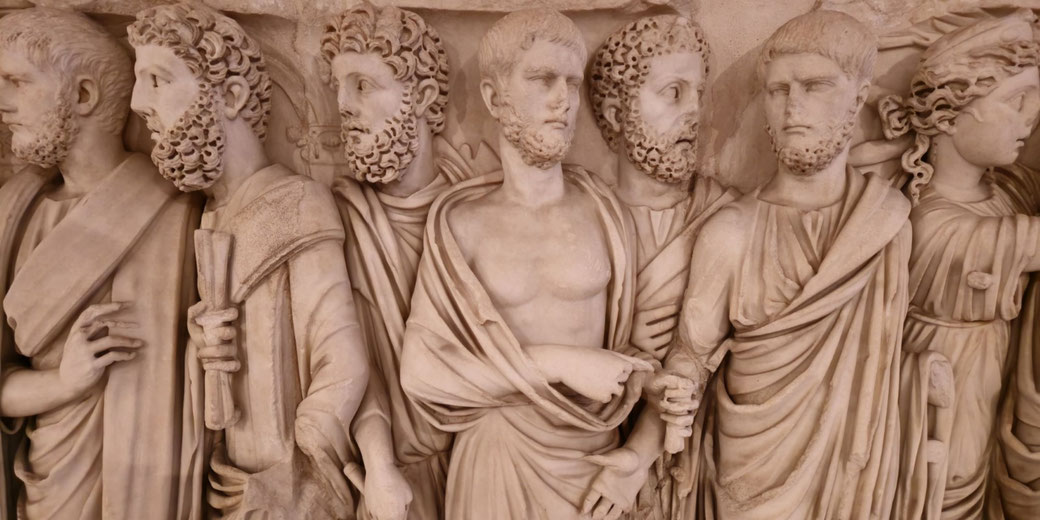
In AD 238, Rome endured a breakdown without equal in imperial rule as six men, Maximinus Thrax, Gordian I, Gordian II, Balbinus, Pupienus and Gordian III, each claimed the throne amid a wave of political violence that included assassinations and rebellions and that involved betrayals among some of Rome's ruling circles.
The chain of events unfolded after years in which military interference had grown and economic strain had deepened.
Senatorial resentment rose and considerably weakened the central government's authority. By the end of the year, the empire’s institutions had been exposed as clearly unstable, and power shifted in unpredictable ways, first to frontier armies and provincial leaders and later to palace factions.
The growing crisis in Rome beforehand
By the early third century, imperial stability had already begun to unravel as successive emperors had largely failed to satisfy both the military and the aristocracy.
After Septimius Severus had died in AD 211, his sons, Caracalla and Geta, brought the empire to the brink of civil war, which had ended when Caracalla had ordered Geta’s murder and had carried out executions and removed his brother’s supporters.
He then ruled alone but continued to distrust the Senate, and because of that, he imposed harsh controls on the aristocracy and effectively elevated the army as his primary source of power.
Soon after Caracalla’s assassination in AD 217, Macrinus, a former Praetorian Prefect, had seized control.
However, his lack of dynastic connection or battlefield experience greatly hindered his ability to secure the loyalty of the legions.
Within a year, Elagabalus had replaced him by asserting that he descended from the Severan family, but he ignored Roman religion and moral customs, especially his promotion of the Syrian sun god Elagabal.
As a result, he lost much support from both the Senate and the army. He met a violent end in AD 222 when the Praetorian Guard murdered him and installed his young cousin, Severus Alexander.
Initially, Severus Alexander received widespread support as a moderate and competent ruler.
Over time, though, his preference for negotiation and his dependence on his mother and advisors increasingly frustrated soldiers on the frontiers, especially during campaigns against the Alamanni and the Sassanid Persians.
By AD 235, during operations along the Rhine, officers had lost confidence in his leadership and had declared Maximinus Thrax emperor.
The army’s mutiny indicated a shift toward open military control, as imperial succession began increasingly to follow the preferences of soldiers rather than the traditions of Roman rule.
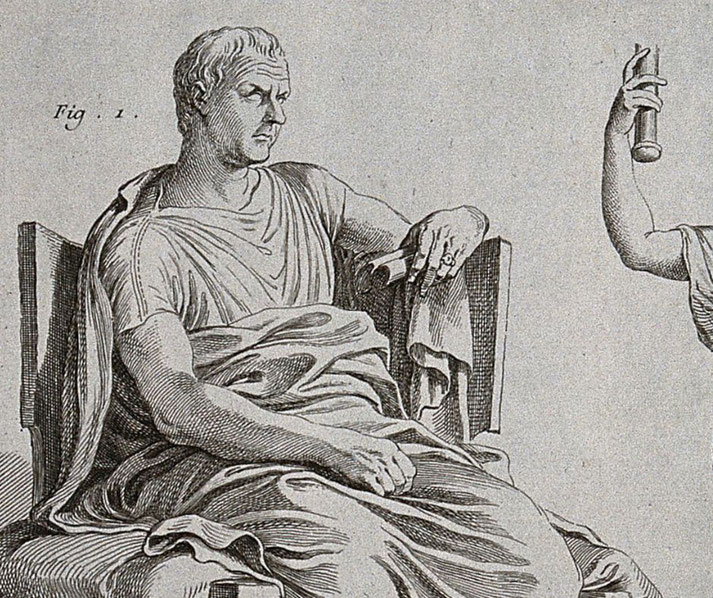
Meet the six emperors
Maximinus Thrax: The Reign and Downfall
After his elevation by the Rhine legions, Maximinus Thrax had become the first emperor who was widely recognised as having risen from an entirely humble and non-aristocratic background.
He came from a peasant family in Thrace and had a reputation for physical strength and battlefield command, but he lacked any connection to Rome’s ruling elite or prior senatorial standing.
He refused to visit the capital and ruled from the frontiers, where he continued military operations and consistently prioritised the loyalty of the legions over cooperation with the Senate.
To maintain support among his troops, he imposed new taxes on wealthy landowners and demanded contributions from provincial cities, which soon caused unrest in areas already strained by debt and inflation.
The falling value of the currency under earlier emperors had already worsened economic instability, and Maximinus's demands pushed many cities to the brink.
As a result, provincial elites, especially in North Africa, became increasingly hostile to his regime.
At the same time, Some senatorial leaders, who resented their exclusion from influence, quietly supported resistance efforts.
Eventually, tensions reached a breaking point in Africa Proconsularis because a coalition of local landowners and elites in Thysdrus had responded to public anger over taxation by murdering the imperial procurator and declaring Gordian I and Gordian II as co-emperors.
Maximinus stayed on the northern frontiers and was unaware of how quickly support for him had collapsed in Rome and the western provinces.
Gordian I and Gordian II: The Short-lived Rebellion
After the revolt in Thysdrus, the Senate swiftly endorsed the Gordians in a planned move to unite opposition to Maximinus behind respected patricians.
Gordian I was a veteran administrator in his late seventies who served as the sitting proconsul of Africa, and he had held several senior posts and commanded respect from the aristocracy, while Gordian II was his son and became the symbolic figure to appeal to younger Roman elites.
Although their appointment gave the Senate a limited new opportunity to reclaim influence, neither man had significant military experience, and both mainly relied on quickly gathered local militia made up of landowners and volunteers.
Soon, the governor of Numidia, Capelianus, commanded Legio III Augusta and continued to support Maximinus, and he launched a swift counterattack from the west partly because the legion, which was an experienced professional force stationed in Lambaesis, had long dominated North Africa and continued to be well-provisioned.
The two forces clashed near Carthage, where Gordian II led the rebel troops in person.
His militia, poorly trained and lightly armed, largely collapsed under pressure from professional legionaries, and he died in the fighting.
Once the news had reached Gordian I, he stayed in the city and committed suicide.
As a result, their joint reign ended in less than a month, and the Senate’s gamble ultimately failed.
The rebellion clearly exposed the difficulty of challenging military power without proper support, even when political backing and popular enthusiasm existed.
Balbinus and Pupienus: The Senate's Choice
Soon after the failure of the African revolt, senators, still unwilling to surrender to Maximinus, selected two of their own, Balbinus and Pupienus, to share the throne.
Balbinus had held several high-profile administrative positions, including that of city prefect, while Pupienus differed from most senators because he had experience in military command in both the East and northern Italy.
This arrangement aimed to combine civil authority with military leadership, partly in the hope of defending Rome while preparing for a possible confrontation with Maximinus.
Pupienus marched north to intercept Maximinus, who had begun advancing toward Italy with his frontier army.
Along the way, supply problems, difficult terrain, and local resistance significantly hindered his progress.
At Aquileia, which was a walled city in northern Italy, the emperor attempted a siege, but defenders held firm.
As the stalemate continued, frustration increasingly spread through his ranks.
Eventually, soldiers had begun to doubt Maximinus’s leadership, especially as hunger and disease took hold, and because of this, in April his own men had turned against him and assassinated both him and his son.
The victory, however, did not end the instability in Rome. Back in the capital, Balbinus and Pupienus fell into personal rivalry and failed to manage the increasingly aggressive Praetorian Guard.
Within weeks, the Guard struck back. After the Guard forced its way into the imperial palace, its members murdered both emperors.
Ancient sources claim their corpses were mistreated and dragged through the streets, though such accounts may show exaggeration by hostile later writers.
Their deaths made clear that no one could effectively rule without the support of Rome’s military garrison, regardless of senatorial backing or battlefield success.
Gordian III: The Rise of the Youngest Emperor
Following the bloody coup, senators had no remaining figure with both legitimacy and broad appeal.
To prevent further violence, they appointed the thirteen-year-old grandson of Gordian I as emperor.
Gordian III was too young to govern independently but carried the weight of his family name and largely enjoyed the support of the Roman crowd, who remembered the earlier rebellion fondly.
Real authority shifted to the palace officials and military officers who managed the day-to-day operations of the empire.
Among them was the Praetorian Prefect Timesitheus, who soon became the most capable administrator and assumed control of the empire’s eastern policy.
With his guidance, the empire launched a new campaign against the Sassanid Persians, who had expanded into Mesopotamia and threatened Syria.
Gordian III joined the army and travelled east, but during the campaign, Timesitheus died, possibly from illness or political intrigue, and his death created an opening for Philip the Arab, who replaced him and became the emperor’s closest advisor.
By early AD 244, Gordian III had died under suspicious circumstances. Official reports claimed he fell in battle near Circesium, though several later sources alleged that Philip orchestrated his death to claim the throne himself.
The consequences of this year
AD 238 was widely seen as a turning point in the decline of Roman imperial order, as no clear system of succession existed, and every claim to the throne had to be supported by force.
In practice the Senate no longer held the authority to govern effectively, and the army was powerful but had grown increasingly unpredictable and often acted in its own interests.
Military leaders routinely used assassination and rebellion as common ways to gain power, and the result was a state governed by short-term survival rather than long-term stability.
Over the next three decades, Rome would endure repeated civil wars, frequent changes in leadership, and increasing pressure from outside enemies who sensed the empire’s internal weakness.
The Crisis of the Third Century, which had already begun, intensified, as regional commanders seized control of distant provinces and imperial unity came under threat.
For ordinary Romans, the events of AD 238 brought widespread violence and persistent instability that together undermined public confidence and produced deep fear.
The murders of emperors, the breakdown of central authority, and the visible power of armed factions reduced public confidence and undermined faith in the imperial office. Power persisted, but legitimacy had faded.
In the years that followed, emperors would continue to rise and fall at the whim of soldiers, and the imperial throne became increasingly dangerous and less secure.
AD 238 did not create the crisis, and it clearly showed that the empire had entered a phase where violence and personal gain decided who ruled Rome.