
The purple dye that made Tyre rich
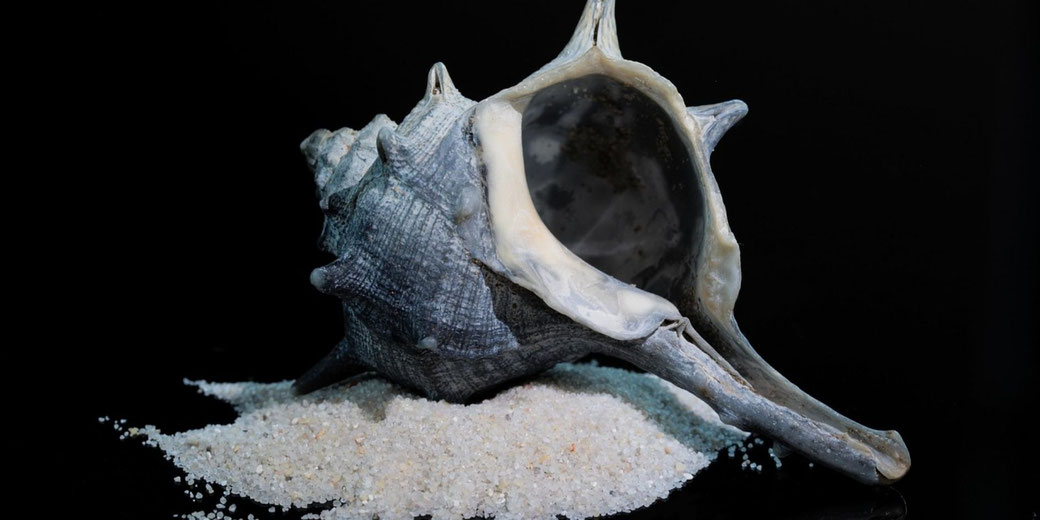
In the ancient Mediterranean, a single gram of reddish-purple dye could cost more than a gram of gold, and the Phoenician city of Tyre controlled nearly all of its production for over a thousand years.
Known today as Tyrian purple, the pigment came from an unlikely source: the mucus glands of predatory sea snails that lived along the rocky coastline of modern-day Lebanon.
From roughly 1200 BCE until the fall of Constantinople in 1453 CE, this biological dye fuelled one of the longest-running commercial monopolies in recorded history, and it turned a small coastal settlement into one of the wealthiest trading centres in the ancient world.
How the dye was extracted from sea snails
Several species of carnivorous sea snails in the family Muricidae produced the raw material for Tyrian purple, of which Bolinus brandaris and Hexaplex trunculus were the two most commonly harvested.
Each snail contained a small hypobranchial gland that secreted a yellowish-white mucus, and dye-makers needed to extract this gland while the animal was still alive.
Once exposed to sunlight and air, the mucus underwent a chemical transformation, and it gradually changed colour from yellow-green to blue and then to a deep reddish-purple that ancient consumers reportedly prized above all other colours.
The active compound responsible for the final hue is 6,6’-dibromoindigo, a molecule so resistant to fading that fabrics that were dyed with it actually improved in vibrancy after repeated washing: a quality that was arguably unmatched by any other ancient dye.
According to historian David Jacoby, approximately 12,000 Bolinus brandaris snails yielded only 1.4 grams of pure dye, which was enough to colour the trim on a single garment.
Producing sufficient pigment to dye an entire cloth required tens of thousands of additional snails, which meant that workshops consumed enormous quantities of shellfish every day.
Sidon was a Phoenician city roughly 40 kilometres north of Tyre, and archaeological excavations there uncovered discarded shell deposits that had accumulated into a mound approximately 40 metres high over centuries of continuous production.
In the fourth century BCE, the Greek historian Theopompus reported that purple dye fetched its weight in silver, and by 301 CE, Emperor Diocletian’s price edict valued one pound of Tyrian purple at 150,000 denarii: roughly equivalent to three pounds of gold.
The production process also generated a notoriously foul smell that ancient writers commented on frequently.
As Pliny the Elder described in his Natural History in the first century CE, workers crushed the snails and added salt before leaving the mixture to ferment in open-air vats for three days.
After this initial period of decomposition, the liquid was slowly boiled down over approximately ten days until it reached the correct hue.
Pliny himself noted the deep irony that such a coveted product came from such a revolting process, and for this reason, dye workshops were almost always located on the outskirts of towns or along exposed coastlines, where sea breezes could help disperse the stench.
Why Tyre controlled the purple trade for centuries
Tyre is located on the coast of modern-day Lebanon and is one of the oldest continuously inhabited cities in the world, with evidence of settlement that dates back to approximately 2750 BCE.
The Phoenicians who lived there were skilled maritime traders, and their city occupied a prime position on the eastern Mediterranean shipping routes.
By the twelfth century BCE, Tyrian dye-makers had turned purple production into a full commercial industry, and they exported dyed cloth as well as raw pigment to markets throughout the Mediterranean.
Several factors explain Tyre’s control over the purple trade. The waters off the Lebanese coast supported large natural populations of murex snails, which gave Tyrian producers easy access to their primary raw material.
Knowledge of how to make the dye was treated as a guarded trade secret that was passed down within families of specialised craftspeople who took care to prevent outsiders from learning the exact methods of extraction and fermentation.
As a result, for centuries, other Mediterranean peoples had to rely on Tyre and the nearby city of Sidon for their supply of purple-dyed goods.
In Phoenician mythology, the discovery of the dye had a memorable origin story. According to tradition, the god Melqart was walking along the beach with his mistress Tyros and her dog when the animal bit into a washed-up murex snail and its mouth turned purple.
Tyros asked Melqart to make her a garment dyed in the same colour, and from that request, the dyeing industry supposedly began.
The first historical records of purple dye production come from texts that were found at Ugarit and in Hittite sources, which date to the fourteenth century BCE, and this suggests that the industry had been developing along the Levantine coast for at least two hundred years before Tyre became its principal centre.
The Phoenicians also exported their dyeing technology to colonies across the Mediterranean, and archaeologists have found murex shells that had been crushed at Phoenician settlements in North Africa and southern Spain.
Some historians believe that the Greek name “Phoenicia” derives from the word phoinos, which means “dark red,” a direct reference to the purple dye that defined the Phoenician trading reputation.
How purple became the colour of political power in Rome
After Alexander the Great had besieged and captured Tyre in 332 BCE, the city’s independent commercial power declined considerably.
The Romans later seized the region from the Seleucid dynasty in 64 BCE and took direct control of the lucrative purple trade.
By this point, Roman elites had already developed a powerful attachment to the colour, and the Roman state had built a detailed system of laws around who could wear it.
Roman sumptuary laws restricted purple garments to specific social classes.
Senators were permitted to wear the toga praetexta, a white robe with a purple border, as a sign of their political authority.
Generals who celebrated a military triumph through the streets of Rome could wear the toga picta, a robe that was dyed entirely in purple with gold embroidery.
Julius Caesar became the first Roman leader to wear an all-purple toga, which was known as the toga purpurea, as his regular attire, and succeeding emperors adopted the same practice until purple became synonymous with imperial rule.
By the reign of Emperor Alexander Severus in the early third century CE (222 to 235 CE), the production and sale of purple dye had become an official state monopoly, and only the emperor could authorise the manufacture of purple-dyed silk garments.
The penalties for violating these laws were real, as ordinary citizens who wore purple without authorisation could face public censure from Roman censors, whose duties included monitoring excessive personal consumption.
The exclusivity of the colour made it a remarkably effective way to communicate rank, since anyone who saw a purple-bordered toga in the Forum immediately understood the status of the person who wore it.
What happened when the purple industry collapsed
As the Western Roman Empire fragmented in the fifth century CE, the Byzantine Empire in Constantinople inherited control of the purple dye trade.
Byzantine emperors continued to subsidise production and tightly restrict the use of purple to members of the imperial family.
Children who were born to a reigning emperor in the palace’s purple-draped birth chamber were given the title porphyrogennetos, which means “born in the purple” and signified their legitimate claim to the throne.
The sacking of Constantinople by the armies of the Fourth Crusade in 1204 CE effectively destroyed the system that had sustained purple dye production for centuries.
As historian David Jacoby has noted, no Byzantine emperor or Latin ruler in the former Byzantine territories could assemble the financial resources that were needed to continue the expensive manufacturing process.
The murex snail populations along the Phoenician coast had already been severely depleted through centuries of intensive harvesting, which made large-scale production increasingly difficult even before the political collapse of the empire.
By the fifteenth century, the exact methods of Tyrian purple production had largely disappeared.
Dye-makers had been notoriously secretive about their individual formulas, and without institutional support from an imperial court, the accumulated knowledge gradually faded from living memory.
In the mid-nineteenth century, a French zoologist named Henri de Lacaze-Duthiers accidentally rediscovered the source of the dye when he observed a Mediterranean fisherman who was drawing yellow lines on his shirt with snail secretions that turned purple in sunlight.
The German chemist Paul Friedlander later identified the chemical structure of Tyrian purple in 1909 and confirmed it as 6,6’-dibromoindigo.
For over two and a half millennia, from the Bronze Age coasts of Lebanon to the palaces of Constantinople, the reason that kings and emperors paid fortunes for this dye was straightforward: arguably nothing else in the ancient world could produce a colour so vivid and so permanently resistant to fading.