
The incredible rediscovery of the lost ancient Egyptian city of Tanis
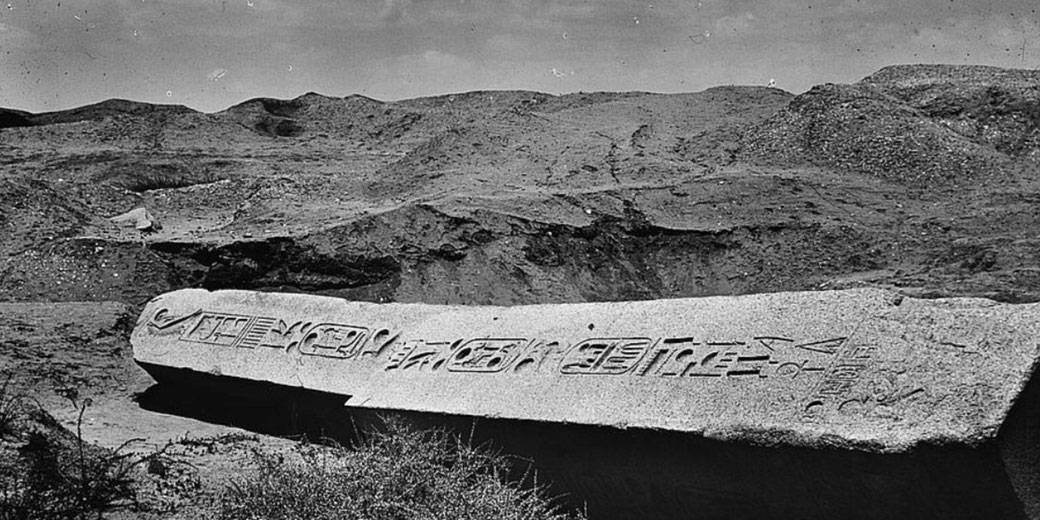
For over a thousand years, Tanis lay buried beneath the Nile Delta’s shifting waters, and its name survived only in classical accounts and hieroglyphs etched into scattered temple blocks.
During the 21st and 22nd Dynasties, the city operated primarily as a royal capital and as a religious centre and burial ground for powerful kings such as Psusennes I and Shoshenq II.
After centuries of wrong identification and confusion with other ancient sites, archaeologists eventually uncovered its lost tombs and uncovered treasures of gold and silver that had remained hidden since the Third Intermediate Period.
Tanis in ancient Egyptian history
By the early 11th century BC, after Egypt’s New Kingdom administration had weakened, Psusennes I (c. 1047–1001 BC) established Tanis as his seat of power in the Delta.
While Upper Egypt fell under the religious authority of the high priests of Amun at Thebes, Lower Egypt required a rival centre that could house royal ceremonies and reinforce dynastic rule.
To achieve this, the Tanite pharaohs constructed large temple precincts and restored traditional temple rituals, and in this way they created a northern capital that mirrored the authority of the south.
Under kings such as Amenemope, Siamun, and Psusennes II, the city expanded in political power and in the scale of its buildings.
Instead of using fresh building materials, they transported entire monuments from earlier sites such as Pi-Ramesses, where the Nile’s changing course had left temples abandoned and settlements uninhabitable.
In the early 21st Dynasty, silting had probably rendered Pi-Ramesses unusable, and this prompted the movement of statues and obelisks to more viable locations.
As a result, Tanis incorporated colossal statues and decorated columns, along with obelisks bearing the names of Ramesses II and his descendants, and this gave the impression that it had been a Ramesside foundation.
Later, during the Libyan-led 22nd Dynasty, pharaohs including Shoshenq I (c. 943–922 BC) and Osorkon II (c. 872–837 BC) ordered new buildings to be constructed within the city’s temple district.
They expanded the sacred enclosure and buried their dead in carefully built tombs that stood near the temple of Amun-Ra.
Shoshenq I also appointed his son as high priest of Amun in Thebes in an attempt to bridge the power divide between the two regions.
Over time, natural processes gradually altered the Delta’s layout of the land, and as the Pelusiac branch of the Nile receded, sediment gradually smothered the structures of Tanis.
Without consistent occupation, the city’s political role declined, and its monuments were gradually obscured beneath farmland and flood deposits, though local populations continued to recognise the area as an ancient ruin.
Initial discoveries and misidentifications
During the Napoleonic expedition of 1798, French scholars visited San el-Hagar and recorded fragments of decorated stonework that bore the cartouches of Ramesside kings.
At the time, they concluded that the site marked the location of Pi-Ramesses, because they assumed that the presence of Ramesses II’s name indicated a direct connection.
Karl Richard Lepsius later repeated this identification during the Prussian expedition of the 1840s, and this repetition reinforced this mistake.
Early maps and notes carried the error forward, and Tanis had largely remained unidentified despite evidence from Egyptian texts that suggested its presence in the region.
Over the next several decades, figures such as Jean-Jacques Rifaud and Auguste Mariette conducted brief investigations at the site, but their work had focused on the collection of inscriptions rather than on the full excavation of the buried ruins.
In 1883, Flinders Petrie undertook a more careful study. By comparing architectural features and analysing reused materials, he recognised inconsistencies in the attribution.
As a result, he proposed that San el-Hagar should be identified as Tanis rather than Pi-Ramesses, and he distinguished it as a later site that builders had constructed from earlier materials.
Even so, the site seemed to lack the obvious markers of a capital city. Without visible tombs or temples that could be firmly dated to the 21st or 22nd Dynasties, the archaeological community remained uncertain about the extent of the city’s importance.
That uncertainty persisted until the work of a single archaeologist dramatically altered the historical understanding of Tanis and its place in Egyptian history.
The astonishing work of Pierre Montet
In 1939, French archaeologist Pierre Montet led excavations at San el-Hagar to clarify the layout and history of the temple area.
In 1940, after the outbreak of the Second World War had already begun to affect fieldwork, his team uncovered a group of underground chambers that had been constructed beneath the sanctuary enclosure.
Inside them, they located intact royal tombs that bore the names of Psusennes I, Shoshenq II, and other kings from Egypt’s Third Intermediate Period.
The burial of Amenemope was also found within the same necropolis, though the state of its preservation was more difficult to confirm.
Importantly, the tomb of Psusennes I contained a silver coffin decorated with gold inlay, along with a golden funerary mask inlaid with lapis lazuli and obsidian.
The mask itself weighed approximately one kilogram, making it one of only a few such royal masks discovered intact.
Nearby chambers yielded pectorals, rings, scarabs, and ceremonial weapons, all crafted with exceptional skill and inscribed with religious texts that called on protection from the gods for the deceased.
The preservation of these tombs was an exceptionally rare event in Egyptian archaeology, as the majority of royal burials in Thebes and other regions had been emptied long before modern excavations began.
Since the Delta’s wet environment had caused organic material to decay rapidly, only objects made of stone or metal and items of faience together generally remained intact.
Still, the quantity and craftsmanship of the surviving items rivalled the discoveries made in the Valley of the Kings, and because the tombs had never been entered since antiquity, Montet’s team recovered a full collection of burial goods.
This recovery offered historians a rare understanding of royal funerary practices during a period often viewed as fragmented and unstable.
Religious and cultural significance
Inside the sacred enclosure at Tanis, the temple precinct dedicated to Amun-Ra and to the deities Mut and Khonsu followed the same sacred pattern seen in Thebes.
To reinforce their religious legitimacy, the Tanite kings adopted Theban architecture and installed high priests drawn from the royal family, and this allowed them to assert both political and spiritual authority.
By these actions, they maintained continuity of ritual with earlier dynasties and aligned themselves with the most powerful religious tradition in Egypt.
Inscriptions that were preserved on stelae and temple walls describe oracles and ritual offerings, as well as seasonal festivals conducted within the temple precinct.
They record the dedication of shrines and the establishment of land donations, along with the involvement of priestly officials in the management of temple estates.
Some inscriptions also indicate periods of rivalry between Thebes and Tanis, in which competing claims to the office of high priest show the divided structure of how Egypt was ruled during the Third Intermediate Period.
Architectural evidence at the site strongly suggests that the builders reused blocks from Pi-Ramesses and Heliopolis.
They constructed massive pylons and gateways from red granite, and they often carved over older inscriptions so that the monuments carried their own names and titles.
Among the most striking features were the colossal statues of Ramesses II that had been re-erected in Tanis, and in some cases they stood in rows.