
Villas, insulae, domus, and slums: Why housing differed dramatically for the ancient Romans
On the steep ridges of Rome’s Seven Hills, housing largely determined how people lived and laboured in order to survive.
Wealthy senators typically greeted clients beneath painted atriums while many labourers climbed crumbling staircases to airless rooms, and many slaves slept beside animals in alleyway stalls.
As such, the types of homes available demosntrated the legal status and wealth, along with the limits of urban planning in a city where inequality defined the structure of every wall and rooftop.
As the population had approached one million by the second century AD, city officials struggled to regulate housing within the space enclosed by the Servian Walls.
The domus: elite townhouses of the roman upper class
Inside the wealthiest districts of Rome, the domus offered a separate world for noble families, who used their homes as both living quarters and tools of political power.
Typically, these houses followed a layout that reinforced a hierarchy of privacy and ritual within the household.
The vestibulum led into the atrium, where clients waited to offer morning greetings to the paterfamilias, whose status and ancestry set the household’s daily rhythms and expectations.
Above the impluvium, where rainwater collected, sunlight filtered through the roof's central opening, the compluvium, which lit the formal heart of the home.
Often, architects designed the tablinum directly behind the atrium to showcase family busts and documents that advertised their wealth.
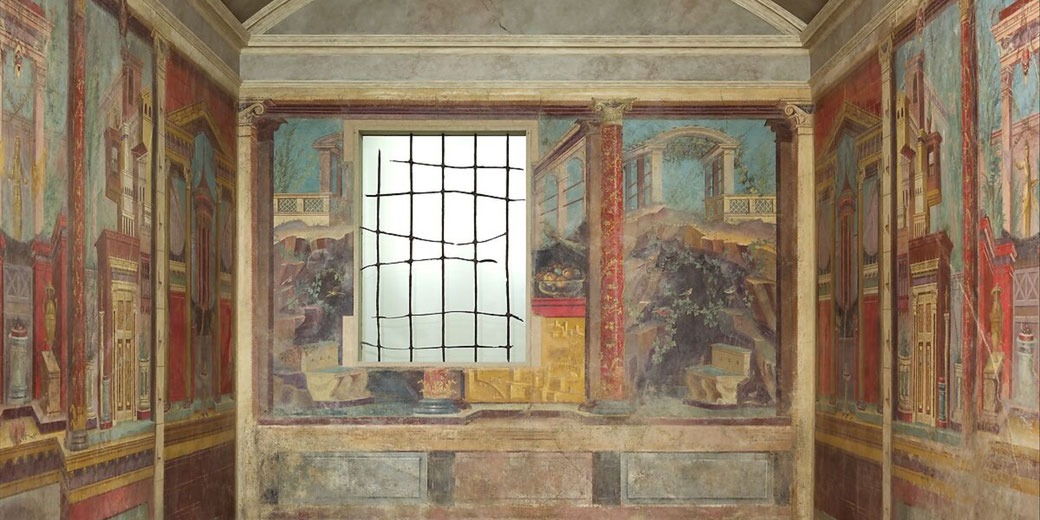
Painted walls in the Second or Fourth Style and mosaic floors and interior fountains reinforced the owner's command of culture and resources.
Behind this formal space, a colonnaded peristylum provided access to bedrooms, dining rooms, kitchens, and shrines, while enclosed gardens offered a managed form of leisure within the city’s chaos.
Slaves usually managed every corner of the house, and they prepared meals and washed feet, and their movements stayed restricted to corridors and work areas that kept them largely invisible to guests.
Occasionally, the domus included private bath suites or libraries, which gave the elite access to comforts unavailable to most citizens.
Many important families used their homes for formal banquets and business dealings, along with rituals tied to ancestral honour.
Across neighbourhoods such as the Palatine and Esquiline Hills, homes had grown increasingly highly decorated, with imported marble and ceiling frescoes, together with open reception spaces built to impress rivals and allies alike.
Some of the best-known surviving examples included the Domus Augusti on the Palatine and the House of the Vettii in Pompeii.
Often, those who entered the domus entered a space carefully constructed to maintain Roman values.
Each room reinforced family power built around order and tradition. Legal ownership of the land and home, known as dominium, passed through male heirs, and disputes over inheritance or building boundaries often reached the praetor urbanus.
Vitruvius emphasised in his architectural treatises the alignment of design with social rank, and this emphasis showed how domestic space displayed wider hierarchies.
By contrast, renters and labourers in poorer districts had no such protections.
The insulae: urban apartment blocks for the working population
By the first century AD, as Rome’s population climbed toward one million, the majority of residents had come to live in insulae, which were tall apartment blocks built for profit by wealthy landlords and contractors.
Unlike the domus, these buildings offered no open courtyards or gardens and no private bathing spaces.
Instead, builders divided floor space into cramped rental units, and each level became more unsafe and dim, as well as unsanitary.
Larger insulae sometimes housed several hundred tenants, and each tenant occupied a subdivided unit called a cenaculum.
Typically, the ground floor contained tabernae, which shopkeepers and craftsmen rented to operate businesses.
Behind the storefronts, rooms served as living quarters that allowed easy access to food and water, together with a steady stream of customers.
Above, tenants paid cheaper rents for smaller spaces that lacked kitchens, toilets, or running water.
Instead of private latrines, residents relied on public facilities that often stood streets away.
Importantly, safety stayed a constant concern. Builders frequently used timber and rubble to reduce costs, and while emperors such as Augustus imposed height limits of 70 Roman feet and fire prevention rules, enforcement often failed.
Fires often started by cooking pots or oil lamps and moved rapidly through wooden staircases and beams.
The Great Fire of 64 AD under Nero showed the vulnerability of such construction, destroying entire districts.
Although the vigiles patrolled districts as a firefighting force, they could not prevent frequent disasters.
When entire insulae collapsed, as they sometimes did, residents received no compensation or relocation.
Over time, rent contracts had grown shorter and prices had risen. Landlords subdivided units to fit more tenants, and overcrowding became normal.
Inscriptions from Ostia and Pompeii sometimes describe families who shared rooms with strangers, and others who lived in attic spaces accessed by ladders.
Conditions worsened during grain shortages or economic downturns, when families had to choose between rent and food.
Because the state offered no formal public housing, most workers had no choice but to stay in dangerous, unstable accommodation.
Later emperors such as Hadrian had attempted modest reforms, but without consistent enforcement or funding, little changed.
Villas: the rural estates of the wealthy
Outside Rome’s walls, many wealthy families retreated to countryside villae, which showed both their financial power and their control over land.
Some villas supported agricultural operations, with olive presses and wine cellars, along with wool production facilities that were integrated into the household structure.
These estates were called villae rusticae, and they operated as economic centres.
Others were known as villae urbanae and existed as seasonal retreats, designed for time devoted to leisure and reading, as well as philosophical discussion.
In many cases, these rural estates included private bathhouses and columned courtyards, together with extensive gardens, where owners relaxed far from the noise of the city.
Letters by Pliny the Younger describe his villas in Etruria and Campania, where architecture combined beauty and practical use.
In one, he described a long covered walkway, shaded with vines, where he composed speeches and letters as he watched the labourers below.
Cato the Elder and Columella also wrote extensively about villa management, and their writings reinforced expectations of efficiency and discipline.
In practical terms, production villas relied on slave labour, which estate managers supervised with tight discipline.
The vilicus handled daily reports and repairs, as well as punishment, while the vilica, often the manager’s wife or a trusted female slave, oversaw kitchen stores and linen supplies.
The estate also included dormitories or huts for labourers, whose lives stayed hard and highly controlled.
Across the provinces, villa construction helped to spread Roman tastes and customs.
In Britannia and Gaul, villae included features such as heated floors and imported pottery, together with decorative mosaics that copied Roman myths or pastoral scenes.
Sites like the Fishbourne Roman Palace in Britain and the Villa Romana del Casale in Sicily, which provide detailed archaeological evidence of this cultural spread.
They stood as markers of Romanisation, where local elites adopted Roman habits to gain imperial favour.
Meanwhile, landowners continued to draw income from rural tenants and enslaved workers who stayed tied to the land.
Substandard housing and urban slums
Along the edges of Rome’s formal buildings, many poorer residents lived in structures that offered neither legal recognition nor proper sanitation, and they provided no basic safety.
Many of these units were referred to as cellae, which occupied space under staircases, inside storage vaults, or behind taverns.
Unlike the insulae, which had official rental records and contracts, cellae operated informally, often rented by the day or shared between several families.
In physical terms, they lacked proper roofs, solid walls, or fresh air. Residents cooked indoors on makeshift braziers and stored food in hanging baskets as they collected water in clay pots from street fountains.
Without drains or latrines, they emptied waste into gutters, where it mixed with runoff and animal dung.
The smell attracted flies and vermin, along with frequent disease, particularly during summer.
Occasionally, slums formed in the ruins of older buildings or in abandoned construction sites, where displaced people created shelter from discarded timber and fabric.
Public buildings such as porticoes and market stalls sometimes doubled as places where people slept if they could not find even a cella.
Evictions happened constantly, as owners cleared space for new buildings without warning, and the state rarely intervened.
Crucially, the people who lived in these conditions worked jobs essential to Rome’s survival.
Street sellers, porters, bakers, fullers, and hauliers kept the markets active each day, and others, like tanners or dung collectors, performed tasks that few wished to acknowledge.
However, they lacked voting power, property rights, or protection under most housing laws.
When fires, floods, or violence struck, they bore the heaviest burden. Graffiti from stairwells and shop walls shows their frustration, with sharp warnings and crude jokes, along with insults, scratched into plaster as a way to express anger or humour in the face of hardship.
Satirists like Juvenal and Martial described these slums with bitterness and sarcasm, and they recorded the daily indignities suffered by Rome’s poorest residents.
Districts like the Subura became infamous for these living conditions.
Why housing varied so widely
Under Roman law, property ownership remained restricted to citizens who held recognised legal rights, and even then, access to prime land depended on inheritance, political success, or imperial favour.
Most residents, particularly freedmen and poorer citizens, rented housing, which left them vulnerable to price increases and exploitation, along with constant instability.
Because no citywide system of housing assistance existed, private landlords filled the gap, and they built and managed accommodation with profit in mind.
Over time, emperors introduced building regulations. However, enforcement required cooperation between landlords and city officials, together with builders, in relationships often shaped by bribes or neglect.
Magistrates known as curatores operum publicorum held responsibility for public infrastructure, but rarely addressed the needs of poor housing.
As a result, overcrowding worsened, and low-income areas stayed unchanged across generations.
Importantly, the physical separation between domus, insulae, and slums reinforced wider divisions within Roman society.
The cityscape itself became a visual map of power. Wide streets led to the domus of elite families, while narrow lanes twisted around insulae and dead-ended in alleyway cellae.
Over time, these differences became expected, and attempts to improve housing, such as Trajan’s alimenta program, which focused on help with the cost of food and education for poor children, did not address the structural issues of housing supply or quality.
Eventually, as Rome expanded, its housing inequality had become normalised. Fire, collapse, or eviction affected the poor far more often than the elite, who could flee to their villas or repair their homes with little financial strain.
The structure of Roman housing showed the success of a system built to protect wealth and define class boundaries, rather than any failure in planning, and it kept the poor where they belonged.