
Pavlopetri: the real-life Atlantis found
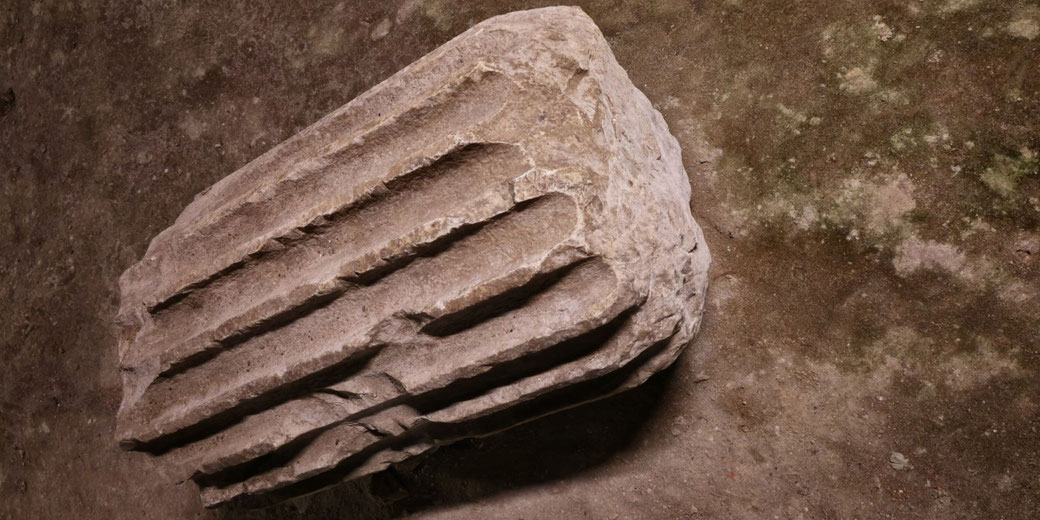
Off the southern coast of Laconia in Greece, beneath the waters of Vatika Bay, lie the ruins of a fully planned Bronze Age city.
Pavlopetri is currently regarded as the world’s oldest known submerged planned town and includes streets and tombs, as well as domestic houses that date back nearly 5,000 years.
People had originally settled the site around 2700 BCE and later expanded it during the Mycenaean era, and the city then vanished under the sea due to gradual geological changes, and its structure had stayed untouched beneath sand and saltwater until rediscovered in the twentieth century.
The discovery beneath the waves
In 1967, during a coastal seabed survey near Elafonisos, British marine geologist Nicholas Flemming identified straight lines and rectangular outlines beneath the water that suggested a human-built settlement.
The following year, a team that included archaeologist John Crouwel conducted further investigations and confirmed the find as a sunken city.
Early mapping efforts revealed a network of rooms and streets, along with tombs, which were all preserved under just three to four metres of water.
At first, researchers believed the site belonged solely to the Mycenaean period.
However, closer analysis of ceramic fragments, such as Early Helladic II ware and transitional forms, indicated that the city’s origins most likely went back as far as the Early Bronze Age, around 2700 BCE.
As a result, Pavlopetri predated classical Athens, as well as the palatial centres of Crete and mainland Greece.
Its early establishment seemed to point to a long-lived settlement that had developed and stayed important across several cultural periods.
It probably overlapped with the emergence of organised societies at mainland sites such as Lerna, though its connection to Akrotiri is still limited to later phases.
Urban planning in the Bronze Age
By the middle of the second millennium BCE, Pavlopetri may have kept parts of its earlier layout, but there is limited evidence that people lived there without long breaks during this period.
Archaeologists identified over fifteen major structures, many of which featured rectangular floorplans with interior courtyards and separate rooms inside that suggested multi-room homes.
Some houses appeared to include upper levels, suggested by wall thickness and stairway remains, and storage vessels embedded into floors revealed a concern for food preservation and security for the household.
At the centre of the settlement, a larger structure stood, which set it apart in both scale and design.
It may have operated as a communal hall or a building used for local officials, suggesting some form of organised activity for the community.
Elsewhere, the rock-cut chamber tombs showed that burial customs were consistent and ordered, which likely indicated generational continuity and social importance within family groups.
Importantly, evidence of street networks and drainage suggested that the town’s design addressed both movement and sanitation.
Stone-built channels ran between buildings, and the position of houses followed the same general direction, which reinforced the idea that construction followed an organised layout.
The preserved layout spanned approximately 3.5 hectares, and individual buildings measured up to twelve metres in length, which provided an unusually detailed example of Early Bronze Age urbanism.
As a result, Pavlopetri offered one of the earliest examples of urban design in southern Greece.
A city tied to the sea
Due to its position within a sheltered natural harbour, Pavlopetri would have maintained regular access to maritime routes that connected the Peloponnese to the Cyclades, Crete, and other regions.
Trade artefacts appeared to support this view. Pottery fragments found across the site showed Minoan and Cycladic influences, along with features from the mainland, and their range seems to indicate broad economic links during both the Early and Late Bronze Age periods.
To support this view, archaeologists discovered several stone anchors near the edges of the city, along with large pithoi used to store liquids and grains in bulk.
Among the imported items were marine-style Minoan ceramics and Cycladic bowls, which suggested direct or indirect trade with the major island centres.
These items implied that Pavlopetri operated as a port settlement involved in the movement and storage of goods.
Its economic role likely also involved sending produce from the mainland on to nearby islands, and the presence of foreign ceramics indicated that its merchants took part in two-way trade.
Overall, the presence of buildings and facilities suited for transport and storage, along with its location, suggested that Pavlopetri had formed part of a wider Aegean trade network long before the rise of larger palatial economies.
How Pavlopetri sank below the waves
Unlike cities destroyed by war or fire, Pavlopetri appears to have disappeared as a result of slow geological movement and subsidence.
Situated along the Vatika Fault, which was an active tectonic zone, the land beneath the town sank over centuries due to repeated seismic activity and crustal adjustment.
At the same time, natural sea level rise moved further onto the coastal plain.
Eventually, the entire settlement became submerged. The submergence likely occurred step by step over time, although the precise duration remains uncertain.
According to geological surveys, no single disaster appears to have overwhelmed the city.
Instead, gradual shifts had allowed water to overtake the flat ground where people once lived.
As sand and silt accumulated, they covered the walls and preserved the urban layout in very good condition.
The anaerobic conditions created by these deposits limited biological decay and erosion, which helped preserve architectural features with remarkable clarity.
Because the city was never rebuilt or looted, its architectural features stayed undisturbed.
The walls stayed intact beneath layers of sediment, allowing modern researchers to study the original town plan without interference from later construction.
Technological breakthroughs in underwater archaeology
From 2009, underwater archaeologist Dr. Jon Henderson of the University of Nottingham, who worked in partnership with the Hellenic Ministry of Culture, began a renewed survey.
The team used multi-beam sonar, photogrammetry, and 3D digital modelling with centimetre-level accuracy, and they produced highly accurate maps of the city’s features.
Pavlopetri became one of the first underwater archaeological sites to undergo a complete digital reconstruction in three dimensions by means of these technologies.
During their work in shallow water, divers identified more than one hundred stone foundations, such as residential homes, tombs, open spaces, and what may have been workshops or storage facilities.
These scans suggested that the original layout had stayed almost unchanged beneath the seabed, allowing researchers to reconstruct the uses and movement patterns of the city. S
oftware systems such as Fledermaus and QPS Qimera, along with other modelling tools, helped bring together sonar and image data.
Eventually, concerns about the risk of damage to the site led to its legal protection, and in 2011, the Greek government classified Pavlopetri as a protected underwater cultural heritage site.
Fishing nets and boat anchors, along with tourism, posed significant risks to the fragile structures, but the high-resolution mapping allowed both plans to protect the site and wider public awareness, which made Pavlopetri one of the best-documented ancient cities ever discovered under the sea.
Public engagement also increased after the BBC documentary “City Beneath the Waves: Pavlopetri,” which introduced the site’s significance to international audiences.
Pavlopetri’s impact and the Atlantis comparison
Although some popular reports described Pavlopetri as a “real-life Atlantis,” the comparison relied more on poetic appeal than historical similarity.
Atlantis was a fictional island empire, as Plato described it, and was said to have sunk in a single day.
Pavlopetri, by contrast, grew gradually over many centuries and slowly vanished beneath the sea due to geological shifts.
Still, the discovery of such an ancient, intact city beneath the water helped change how archaeologists understood the early Aegean world.
Pavlopetri provided clear evidence that permanent, well-structured towns had existed before the rise of Mycenaean palaces, and it showed that maritime trade and social organisation, together with urban planning, had already developed by the third millennium BCE.
Since no other underwater site from the period had displayed such complete preservation, Pavlopetri offered a rare opportunity to observe how a Bronze Age coastal community had lived and worked before it eventually disappeared.
From the silent foundations beneath Vatika Bay, the ancient city told a clear story of early innovation and cross-sea exchange, along with the long-lasting impact of people who once built their lives at the edge of land and water.