
Emperor Nero's most notorious murders of his friends, family, and perceived enemies
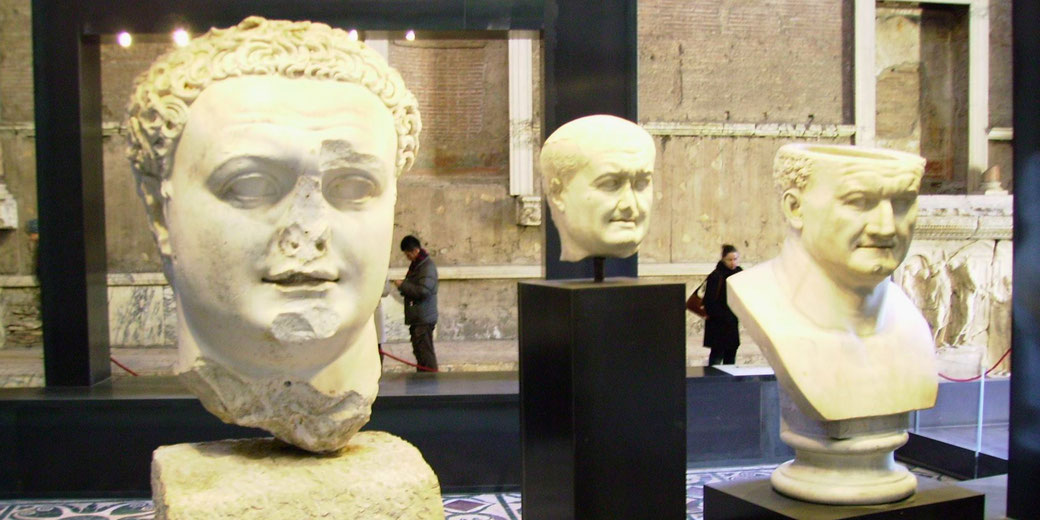
At the height of his rule, Nero Claudius Caesar Augustus Germanicus ruled an empire that had valued order and tradition, yet his actions produced widespread fear, eroded public stability and caused a surprisingly number of deaths.
From his teenage years on the throne, he reportedly committed a series of brutal murders to remove anyone who challenged his power or displeased him.
He killed family members, lovers, senators, and ordinary citizens, often without trial, which strengthened his grip over Rome.
Who was Emperor Nero?
Born in AD 37 as Lucius Domitius Ahenobarbus, Nero descended from two powerful dynasties.
His mother was Agrippina the Younger, and she claimed blood ties to Augustus, whiel her marriage to Emperor Claudius placed her in a position to control imperial succession.
In fact, she had persuaded Claudius to adopt Nero as his heir in AD 50, which had moved him ahead of Claudius’s biological son, Britannicus.
Then in AD 54, Claudius died suddenly. Suspicion fell on Agrippina, who may have poisoned him with mushrooms, later identified by modern historians as the highly toxic Amanita phalloides, to ensure her son’s rise.
At first, Nero had ruled with restraint as he had reduced taxation, had avoided the use of capital punishment where possible, and had allowed the Senate some independence.
This restraint was largely guided by his tutor, Seneca, and the Praetorian Prefect, Sextus Afranius Burrus.
For this reason, many welcomed his early reign. However, as he aged and grew confident, he pushed aside his advisors and rejected the influence of his mother.
He pursued private pleasures instead of public duties. To keep power, he used an increasing degree of deception and violence.
The murder of a teenage rival
Soon after becoming emperor, Nero viewed Britannicus as a very real threat to his own legitamcy.
Though younger than Nero, Britannicus remained the biological son of Claudius and held a legal right to succeed him.
Some senators still supported his claim, and his presence created uncertainty in the palace.
On the night of 11 February AD 55, Nero invited Britannicus to a formal banquet at the palace.
During the meal, a servant brought him a cup of wine laced with a poison that acted quickly.
The boy was just thirteen years old and drank, collapsed to the floor, and died in full view of the guests, which had reportedly been chosen to mimic the symptoms of a seizure.
Nero insisted it had indeed been a seizure, but no one believed the lie. The deliberate public setting made the message clear: Nero would not tolerate any rival, even one within his own extended family.
Turning on his own mother
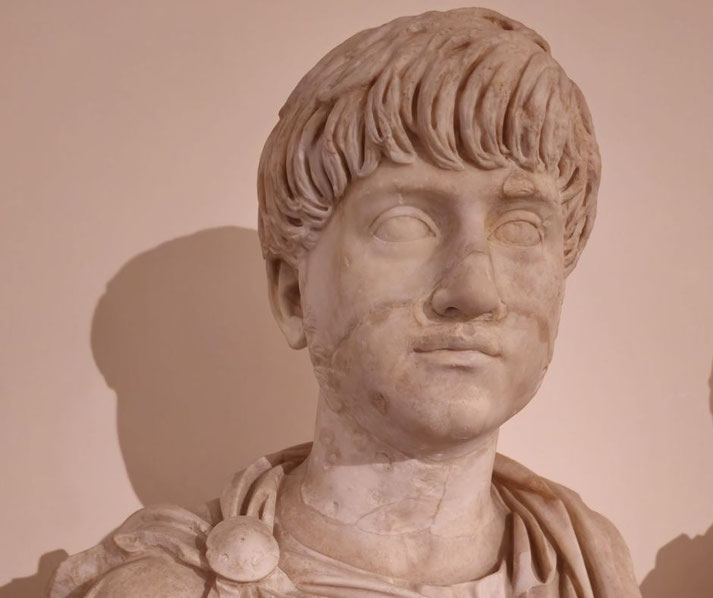
Agrippina expected to rule beside her son because she had arranged his rise and assumed she would continue to influence imperial decisions.
At first, Nero allowed her to appear at ceremonies and communicate with officials.
Her prominence was so great that coins minted during this period showed her face alongside her son’s.
This was unusual for a woman in Roman public life. However, her control over him began to fade when he fell in love with Poppaea Sabina, who encouraged him to assert himself and remove his mother from power.
Tensions grew rapidly because Agrippina criticised Poppaea, supported political enemies of her son, and may have tried to promote Britannicus as a replacement.
So, Nero decided to act. First, he had invited Agrippina aboard a boat that had been designed to collapse at sea.
When that had failed and she had swum to safety, he resorted to more direct methods.
Soon after, he sent a team of soldiers to her villa at Misenum. They broke into her bedroom and stabbed her to death.
Then he claimed she had plotted to kill him and that he had acted in defence of the state.
According to Tacitus, Agrippina’s final words were bitter and direct. She told the soldiers to strike her womb, the source of the son who had ordered her murder.

Eliminating his first wife...
Nero married Claudia Octavia as part of the arrangement that had made him heir.
She was the daughter of Claudius and had strong support among the Roman people.
Yet Nero showed her little affection and spent more time with Poppaea, who soon became his mistress and began to demand that Octavia be removed.
In AD 62, Nero accused Octavia of adultery and infertility. Then, he divorced her and banished her to the island of Pandateria.
The public reacted with outrage as people filled the streets with chants, damaged statues of Poppaea and praised Octavia as the rightful empress.
The rare public protest undeniably showed Octavia’s popularity.
So, Nero ordered Octavia’s execution. Her death came quickly, likely by forced suicide, and according to Tacitus, her severed head was sent to Poppaea, though this detail may reflect the hostile tone of the sources rather than a confirmed fact.
Octavia died at just twenty-three and her only crime had been to stand between Nero and the woman he preferred.
...and his second wife
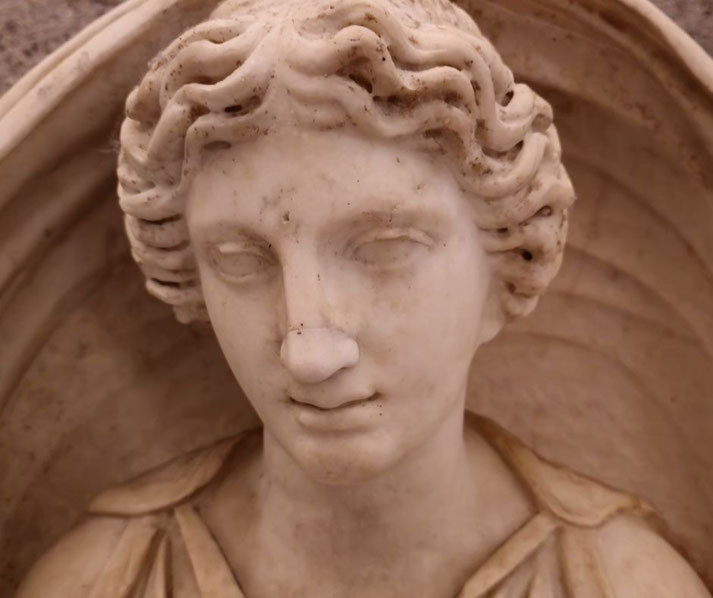
After Octavia’s death, Nero married Poppaea Sabina and she became the new empress.
She gave birth to a daughter who died in infancy. For a time, Nero adored her and treated her with great public affection.
Poppaea had previously been married to Otho, who would later become emperor in AD 69.
However, ancient accounts claimed that her relationship with Nero turned violent behind closed doors.
In AD 65, while Poppaea was pregnant again, Nero reportedly kicked her in the stomach during an argument.
She died from the injuries, either immediately or shortly afterwards, though some ancient accounts suggest she may have died of miscarriage complications rather than deliberate violence.
The exact circumstances remain unclear, but the death shocked many. Some contemporaries believed the act had not been deliberate.
Others saw it as another example of Nero’s lack of control.
Then came the funeral at which Nero preserved her body with rare spices, and buried her in the Mausoleum of Augustus, and declared her to have become a goddess.
However, public honours could not erase the brutality of her death, since, once again, Nero had destroyed someone who had once held his affection.
Persecution of the Christians
On the night of 18 July AD 64, fire swept through Rome. It burned for six days, destroyed temples, homes, and entire districts, and displaced thousands.
Nero faced immediate blame and rumours spread that he had started the fire so he could build his palace, the Domus Aurea, on the cleared land.
As a result, he looked for people to blame and he blamed the Christians, a small and unpopular religious group that rejected traditional Roman gods.
He accused them of arson, which led to their arrest, according to later sources.
Under torture, some confessed, many of whom were then executed in public.
According to Tacitus, some were torn apart by wild animals in the amphitheatre, while others were crucified.
Many were burned alive at night to illuminate Nero’s garden parties. Even though Tacitus disliked Christians himself, he still criticised the cruelty the emperor demonstrated.
He wrote in Annals 15.44 that the victims were punished "not so much for the crime of firing the city, as of hatred against mankind".
As a result of this persecution, the Christians saw their first martyrs, and Nero acquired a reputation for extreme cruelty.
Widespread political purges
After AD 65, Nero became more fearful of plot and began to fear conspiracies, which he learned about through a network of imperial informers.
Those who whispered against him or were falsely accused quickly disappeared.
Then came the Pisonian Conspiracy, a failed attempt by senators and soldiers to overthrow him.
The plot may have involved up to forty senators, equestrians, and military officers.
In response, Nero reportedly ordered a wave of forced suicides. Among the dead were his former tutor Seneca, the poet Lucan, and the imperial official Petronius.
Seneca had once tried to influence Nero’s early rule and, knowing that he could not escape his fate, chose to open his own veins and bleed to death in a calm, Stoic manner.
Dozens more died in disgrace. Trials effectively became meaningless, as a single rumour could bring the death sentence down upon their heads.
By this stage, the Senate lost all power over these matters, and noble families withdrew from public life to protect themselves from the abuse of these treason laws.
At the same time, Nero had ignored military and economic affairs. He had toured Greece, had performed music and poetry, and had cared more about applause than running the government.
During this tour, he had even competed in the Olympic Games, where he had fallen from his chariot and still claimed victory.
In fact, he boasted that he had won hundreds of prizes, a figure that some sources later inflated to more than 1,800, though that figure may have resulted from exaggeration by later writers.
What is more, Roman provincial governors rebelled against Nero's rule, and a number of generals declared their loyalty to rivals.
In AD 68, Galba, governor of Hispania, marched on Rome.
As news of these events reached the city, the Senate turned against Nero and declared him a public enemy.
However, the emperor had already fled and hid in a villa outside the city. When he faced arrest, he reportedly stabbed himself in the neck with the help of a freed slave.
His final words were: “What an artist dies in me,” a phrase preserved in Suetonius’s account and traditionally translated from the Latin 'qualis artifex pereo'.
His reign had ended in disgrace, but the trail of corpses left behind showed the lengths he had gone to preserve power.