
The strange story of what happened to Nero's bones after his death

In 68 CE, as revolt spread across the provinces of the Roman Empire and the Senate condemned him, Emperor Nero fled Rome but soon ended his own life with a dagger.
Although his body was quickly cremated and placed in the Domitian family tomb along the Via Nomentana, reports began to circulate of mysterious rites, loyal mourners, and imperial anxiety which transformed his bones into a lingering political problem for those who claimed his throne, even a thousand years later.
The dramatic circumstances of Nero's death
On 9 June 68 AD, the Roman Emperor Nero Claudius Caesar died in the villa of his freedman Phaon outside Rome, where his secretary Epaphroditus had steadied the blade that Nero could barely bring himself to press into his own throat.
Nero had been born at Antium on 15 December 37 AD, and he died aged thirty.
Ancient sources also placed a bitter final line on his lips, Qualis artifex pereo, which has often been translated as, “What an artist dies in me.”
By the time he reached Phaon’s villa, a messenger had brought news that the Roman Senate had declared him a public enemy, a hostis, and had voted that he should suffer the death penalty more maiorum, “in the ancient fashion.”
Suetonius described the punishment as public humiliation that was followed by execution, in which the condemned person was stripped and pinned in a wooden fork before being beaten to death with rods.
Later writers use the modern label damnatio memoriae for the official condemnation that targeted a person’s public memory through measures such as removing names from inscriptions as well as pulling down portraits.
Nero’s death triggered a question that would haunt Rome for centuries: what should become of his body?
The answer depended on who told the story, because Nero’s bones (or, more precisely, his ashes) became the subject of legend and superstition, as well as theological debate that stretched from the 1st century well into the medieval period.
Suetonius reported that the villa where Nero died sat about four miles from Rome, between the Via Nomentana and the Via Salaria.
The distance mattered in the story, because it placed Nero outside the protection of the city and within reach of the Senate’s sentence.
It also meant that his last hours had unfolded in hiding, far from the public rituals that had once surrounded his position.
A burial arranged by women
According to the Roman biographer Suetonius, who was writing in the early 2nd century AD in The Lives of the Twelve Caesars, Nero received a funeral that cost 200,000 sesterces.
His body was cremated and wrapped in white robes that had been embroidered with gold, which were the same garments he had worn on the Kalends of January (1 January in the Roman calendar).
At the pay rate that was commonly reported for an ordinary legionary in the first century AD, this funeral cost equalled considerably more than a century of wages.
At 225 denarii per year (about 900 sesterces), the sum equalled about 222 years of pay.
At about 300 denarii per year (about 1,200 sesterces), a figure often connected to Domitian’s later pay rise, it equalled about 166 years.
What makes the burial notable is who arranged it. Since Nero was placed in the Domitii family tomb rather than the Mausoleum of Augustus, three women took responsibility for the fallen emperor’s ashes: his childhood nurses, Egloge and Alexandria, as well as his former mistress, Claudia Acte.
Acte was a freedwoman, and later writers presented her as someone who had remained loyal to Nero after his fall.
These three women carried his ashes to the Sepulcrum Domitiorum, which was the family tomb of the Domitii Ahenobarbi, who were Nero’s paternal ancestors.
The tomb sat atop the Collis Hortulorum, which is known today as the Pincian Hill, on the northern edge of Rome’s historic centre and was visible from the Campus Martius below.
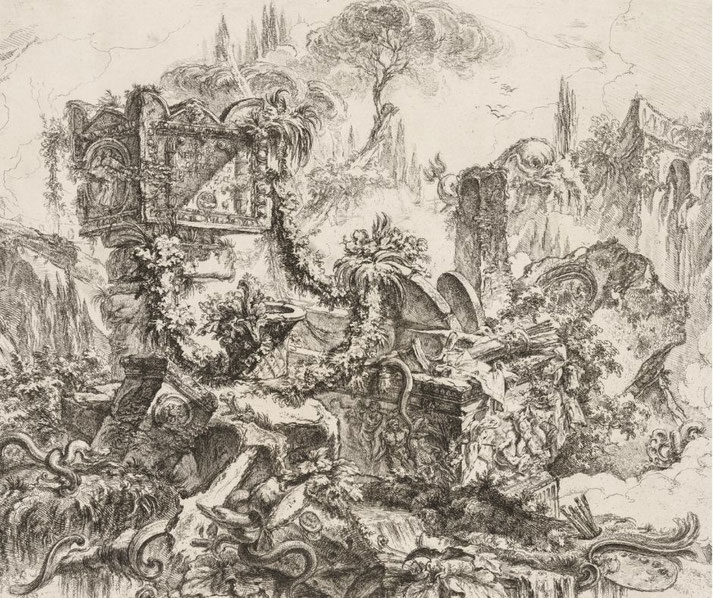
Suetonius described a sarcophagus of porphyry stone with an altar of Luna marble that had been positioned above it, as well as a balustrade of Thasian stone that enclosed the burial.
Porphyry came from imperial quarries in Egypt, and Romans associated its purple colour with imperial power.
Luna marble came from the quarries near Carrara in Italy, and Thasian stone came from the island of Thasos in the northern Aegean.
As a result, the burial looked imperial in its stone and finish, and yet it also lacked the public stamp of the Julio-Claudian mausoleum.
This contrast had helped later generations argue about whether Nero had received honour, disgrace, or some uneasy mix of both.
Flowers on the grave of a tyrant
Even with the Senate’s condemnation, popular affection for Nero did not disappear overnight.
Suetonius wrote that for years after his death, ordinary Romans decorated his tomb with spring flowers, and some even displayed his image on the speakers’ platform in the Forum, where they posted edicts as if he were still alive and would soon return to punish his enemies.
Since Nero had been popular among the lower classes and freedmen, as well as people in Rome’s eastern provinces, many refused to accept that his death was final.
In Greece, he had competed in major festivals and had announced privileges for Greek cities, and those actions helped keep his name alive in the eastern Mediterranean.
Suetonius also recorded that Vologaesus, who was the king of the Parthians, sent envoys to renew his alliance with Rome and pressed the Senate to pay honour to Nero’s memory.
That request showed how quickly Nero’s story had crossed Rome’s borders, and it also showed that foreign rulers could use Nero’s memory as a diplomatic tool.
The belief that Nero still lived also appeared in elite writing. Dio Chrysostom, in a discourse that modern editors usually place in the late first century AD, remarked that people longed for Nero to be alive and that many believed he was.
Nero’s ashes on the Pincian Hill did not settle the question of his fate in the public imagination, because the physical presence of a tomb did not stop rumours of survival, flight, or return.
The Nero Redivivus legend and impostors
From the refusal to accept Nero’s death grew one of the ancient world’s most persistent legends: the belief that was known as Nero Redivivus, or “Nero Revived.”
According to this belief, Nero had survived his apparent suicide and had fled east to Parthia, or he would one day return from the dead to reclaim his throne.
The legend proved so powerful that it produced at least three documented impostors in the two decades after Nero’s death.
The first appeared in late 68 or early 69 AD, in the chaos that followed Nero’s death and the collapse of the Julio-Claudian line.
Tacitus wrote that Achaia and Asia had panicked at a report that Nero had arrived.
He described the pretender as a slave from Pontus, or, according to other reports, a freedman from Italy, who sang and played the cithara and who looked like Nero.
A storm drove his ship to the island of Cythnus, where he tried to win soldiers to his side, robbed merchants, and armed slaves.
Tacitus also described how a centurion who was named Sisenna slipped away from the island and spread the alarm.
Soon after, Calpurnius Asprenas arrived with two triremes as the governor of Galatia and Pamphylia.
His captains pretended to negotiate, reported the situation, seized the ship, and killed the pretender.
Tacitus added a grim final note: the man’s corpse was carried to Asia and then to Rome.
A second false Nero, an Asian man who was named Terentius Maximus, appeared during the reign of Titus (79–81 AD).
Cassius Dio wrote that Terentius Maximus also sang and played the lyre, and that he attracted followers in Asia before he moved toward the Euphrates.
He then fled into Parthia and looked for protection from Artabanus, who was a Parthian leader that received him and prepared to restore him to Rome out of anger against Titus.
Dio reported that the impostor was later exposed and executed.
A third impostor appeared about twenty years after Nero’s death. Suetonius wrote that the Parthians supported this claimant with great enthusiasm and handed him over only with considerable reluctance.
That detail mattered, because it showed how the name “Nero” still carried political weight in Parthia long after the real emperor had died.
Each of these episodes fed into the legend that surrounded Nero’s ashes. Nero’s burial had been private and arranged by women rather than the state, and that privacy made denial easier for people who wanted a different ending.
The Christian transformation of the legend
As belief in Nero’s literal return faded over the centuries, Christian writers transformed it into an apocalyptic threat.
Nero had punished Christians in Rome after the Great Fire in 64 AD, and later Christian tradition treated this as a defining moment in the memory of persecution.
That memory turned Nero into a useful figure in Christian writing about evil and the end of days.
The Sibylline Oracles, which were a collection of Jewish and Christian apocalyptic verses that had been composed over time, included early references to Nero’s expected return.
Passages in Book 4 and Book 5 described a fugitive ruler who was connected to the east and the Euphrates, and later readers tied these lines to Nero’s flight and return.
The late antique writer Lactantius referred to Sibylline material in his own discussion of persecutors, and he noted that some people in his time still treated Nero as a figure who would return.
By the late 2nd and 3rd centuries, Christian writers went further and identified Nero directly with the Antichrist.
The Ascension of Isaiah, which was an anonymous text that had been compiled across several periods, presented Beliar in the likeness of a lawless king and a persecutor who would face defeat at the final judgement, and later readers associated this figure with Nero.
Other writers also kept the idea alive in different forms, and this included Sulpicius Severus, who preserved later traditions about persecution and expectation.
In the Book of Revelation, which was written in the 90s AD, the figure of “the Beast” is widely interpreted by modern scholars as drawing on the Nero Redivivus story.
Revelation 13 described a beast whose fatal wound had healed. The number of the Beast, 666, has often been explained through Hebrew gematria as “Neron Caesar” (נרון קסר).
Some manuscripts gave 616, which can match “Nero Caesar” (נרו קסר) without the final n in the name.
In the early 5th century, Augustine discussed the belief in Nero’s return in Book 20 of City of God.
He noted that some Christians thought Nero would rise again as the Antichrist, and he treated the claim as uncertain.
The Pope’s dream and the destruction of the tomb
For centuries, local tradition had kept a burial place on the Pincian Hill tied to Nero’s name, and medieval accounts described the sepulchre as having been buried under a landslide beneath a walnut tree.
Medieval accounts turned the area into a place of fear, and they described ghostly shrieks near the Pincian slopes at nightfall as well as crows that gathered around a large walnut tree near the burial site.
The stories claimed that demons lived in the tree and that witches met there.
This episode came from medieval chronicles and later Roman tradition rather than records that had been written by Paschal II himself, but the story still had a firm hold on local memory.
In the legend, the crisis peaked in 1099, early in the pontificate of Pope Paschal II (1099–1118).
After fasting and prayer, Paschal II supposedly dreamt that the Virgin Mary ordered him to destroy the walnut tree and purge the site.
The legend placed the event on the Thursday after the Third Sunday of Lent. It described a formal procession of clergy and people along the Via Flaminia to the city’s northern gate, which was the Porta Flaminia.
Paschal II performed rites of exorcism, struck the walnut tree, and had it removed.
Beneath the tree, the story claimed that Nero’s burial place was discovered among ruins, and Paschal II then ordered the tomb demolished and the ashes thrown into the Tiber.
The same tradition claimed that Paschal II placed the first stone of a Christian altar on the site and built a chapel.
Later popes expanded and rebuilt the church. Medieval and later sources connected an enlargement to Pope Gregory IX, with dates in circulation that included 1227 and 1235.
In the Renaissance, Pope Sixtus IV ordered a major rebuild in 1472–1477, with architects such as Baccio Pontelli and Andrea Bregno who were associated with the work.
In the seventeenth century, further work followed under Pope Alexander VII, and Gian Lorenzo Bernini oversaw alterations in the years 1655–1659.
Today, the Basilica of Santa Maria del Popolo is situated beside the Piazza del Popolo, near the Porta del Popolo, at the foot of the Pincian slope.
The tradition placed the church’s high altar over the spot where the tomb and the walnut tree had supposedly stood.
But, did they even have the right bones?
Some archaeological reports had noted subterranean spaces near the basilica and the adjoining Augustinian buildings, and some writers have argued that a chamber which was cut into the slope might relate to an older tomb on the hill.
The identification has stayed uncertain, because later building work changed the terrain and because no secure inscription tied any surviving chamber to the Domitii.
A separate case shows how easily Nero’s burial story drifted into error. A marble sarcophagus on the Via Cassia, which sat several kilometres north of Rome’s centre, carried the long-standing popular label “Tomba di Nerone.”
The inscription on the monument named Publius Vibius Marianus, who was a Roman military officer and provincial administrator, and it also named members of his family, including his daughter Vibia Maria Maxima.
Modern study placed the monument in the 3rd century AD, and nineteenth-century scholarship rejected the old identification with Nero.
The confusion that surrounded Nero’s burial illustrates how strongly his death had unsettled Romans and later generations.
A man who had been denied an official state funeral in the main imperial mausoleum became, through that denial, a figure whose ashes could never be pinned down to one definitive story.