
How the Catholic Church used excommunication as a tool of power and discipline through history
In January 1077, Holy Roman Emperor Henry IV stood barefoot in the snow outside Canossa Castle for three days, begging Pope Gregory VII to lift his excommunication.
For over two thousand years, excommunication has been the Catholic Church's most severe spiritual penalty, capable of humbling monarchs and, at times, fracturing entire political orders.
As a censure that severs a person from the sacraments and the fellowship of believers, excommunication was a powerful element of control in the relationship between religious authority and temporal power across Western civilisation.
A penalty with scriptural foundations
The concept of formal exclusion from a religious community predates the institutional Catholic Church by centuries, as the practice has identifiable roots in both Jewish tradition and the New Testament writings of Saint Paul.
In his First Letter to the Corinthians, written around 53–54 AD, Paul addressed a case of inappropriate family relationships within the Corinthian congregation and instructed believers to expel the offender so that "his spirit may be saved on the day of the Lord."
Paul's instruction established a critical principle, that exclusion from the community was a corrective measure intended to prompt repentance and eventual return.
During the first centuries of Christianity, excommunication became closely connected to the Sacrament of Penance.
Serious sinners would present themselves to a bishop, who assigned them to a formal class of penitents known as the ordo paenitentium.
Following a period of assigned penance that often lasted weeks or months, the bishop would formally lift the excommunication, absolve the sinner, and welcome them back into full communion with the Church.
In this early period, the penalty was regarded as affecting external membership and the person's spiritual relationship with the Christian body.
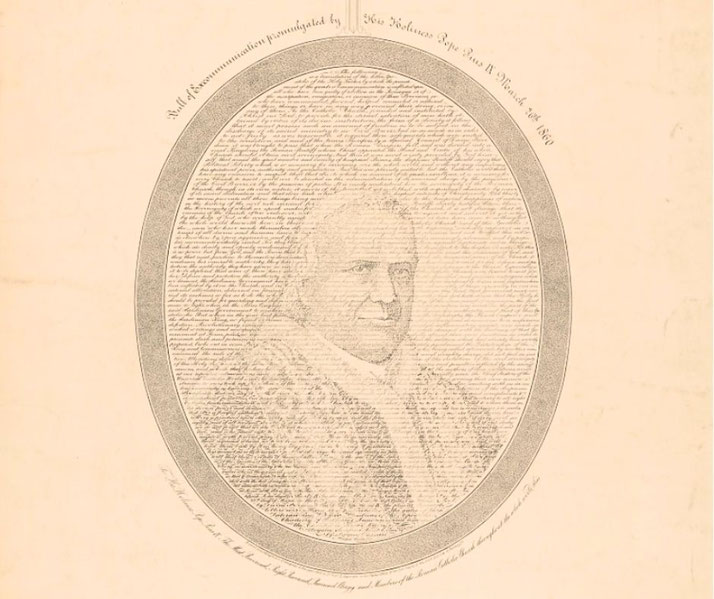
How the medieval Church wielded its severest penalty
By the seventh century, the Sacrament of Penance had become repeatable, and excommunication evolved into a distinct penalty reserved for the most serious offences.
As the Church consolidated its institutional authority throughout the early medieval period, excommunication became an increasingly powerful instrument in the hands of popes and bishops, as the penalty carried consequences reaching into the political and social order.
An excommunicated person could not receive any of the sacraments, including marriage and the Eucharist, and was denied a Christian burial upon death.
In a society where religious participation determined one's social standing and political legitimacy, excommunication effectively rendered its target a pariah.
For secular rulers, the penalty posed an existential threat, since Gregory VII established that an excommunicated monarch's subjects could be released from their oaths of loyalty.
Medieval bishops could also impose interdicts on entire towns or regions, which suspended religious services for whole populations and placed enormous pressure on local leaders to comply with Church demands.
Then, during the mid-twelfth century, Pope Eugene III convened a synod to address the growing number of heretical groups across Europe.
Mass excommunication became a convenient instrument for suppressing dissenters whose beliefs contradicted official Church teaching.
In Normandy, the consequences were especially severe: if an excommunicated person remained defiant for a year and a day, their goods were subject to confiscation.
When emperors and monarchs faced the ultimate penalty
Perhaps no individual excommunication carried greater political consequences than that imposed upon Holy Roman Emperor Henry IV in 1076.
The conflict began over the question of lay investiture, the practice by which secular rulers appointed bishops and other clergy.
When Henry insisted on his right to appoint the Bishop of Milan, Pope Gregory VII responded by excommunicating the emperor and releasing his German subjects from their feudal obligations.
Facing a rebellion among the German nobility, Henry had no option but to seek absolution.
In January 1077, he crossed the Alps in midwinter and arrived at Canossa Castle in Tuscany, where Gregory had taken refuge with Margravine Matilda.
According to the chronicler Lambert of Hersfeld, Henry stood barefoot in the snow for three days before Gregory finally opened the gates and lifted the excommunication on 28 January.
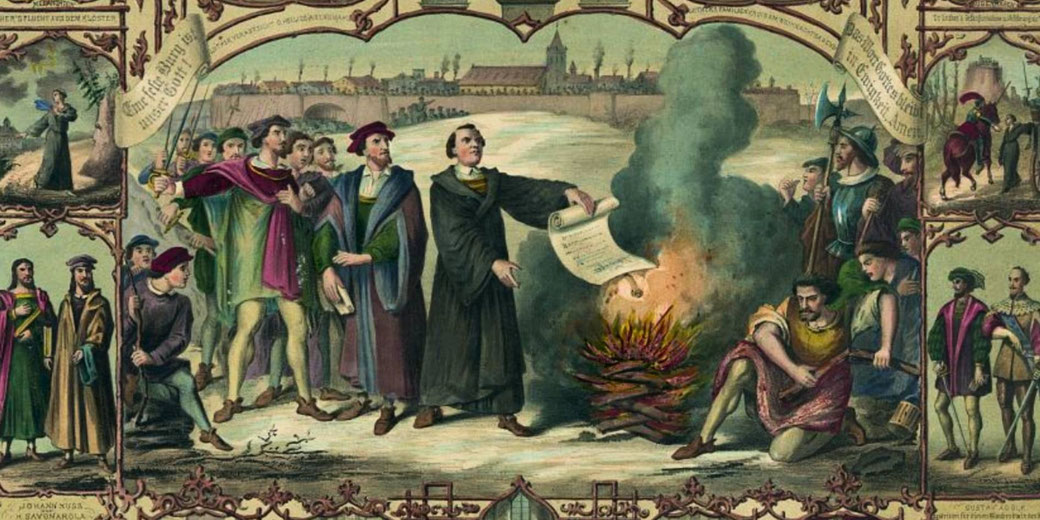
Martin Luther received one of the most consequential excommunications in Church history.
On 15 June 1520, Pope Leo X issued the papal bull Exsurge Domine, condemning forty-one of Luther's propositions and giving him sixty days to recant.
When Luther publicly burned the bull in December 1520, Leo X formally excommunicated him on 3 January 1521 through the bull Decet Romanum Pontificem.
Luther's refusal to submit permanently severed his relationship with Rome and accelerated the Protestant Reformation, which fractured Western Christianity into competing confessions.
Also, Queen Elizabeth I of England was excommunicated by Pope Pius V in 1570 through the bull Regnans in Excelsis, which declared her a heretic and absolved English Catholics of their allegiance to her.
Henry IV of France also received excommunication for his Protestant faith, though he converted to Catholicism in 1593, reportedly stating that Paris was worth a Mass, and had the censure lifted in September 1595.
The distinction between automatic and imposed excommunication
Canon law recognises two primary categories of excommunication: latae sententiae and ferendae sententiae.
A latae sententiae excommunication occurs automatically at the moment a person commits a specified offence, without any formal declaration from a bishop or tribunal.
Offences that incur automatic excommunication under the 1983 Code of Canon Law include apostasy, heresy, schism, procuring an abortion, and the consecration of a bishop without papal approval.
By contrast, a ferendae sententiae excommunication requires a formal judicial process conducted by a competent Church authority, typically a bishop, before the penalty takes effect.
In both categories, the excommunicated person retains their baptism and is still considered Catholic.
They are still bound by obligations such as attending Mass, even though they cannot receive the sacraments or hold any official position within the Church.
Prior to the 1983 revision of canon law, the Church also distinguished between two levels of severity: toleratus, where the excommunicated person was tolerated but excluded from the sacraments, and vitandus, a more severe category introduced by Pope Martin V in the early fifteenth century, in which the faithful were required to avoid all contact with the condemned individual.
Excommunication in the modern Church
In the modern era, excommunication continues to feature in Church discipline, though it is applied more sparingly than in previous centuries.
In 1988, Pope John Paul II excommunicated Archbishop Marcel Lefebvre for consecrating four bishops without Vatican authorisation, an act of defiance against the reforms of the Second Vatican Council.
More recently, in July 2024, the Vatican announced the excommunication of Archbishop Carlo Maria Viganò for questioning the legitimacy of Pope Francis and the authority of the Second Vatican Council.
Throughout its long history, the Catholic Church has maintained that excommunication is a "medicinal penalty" rather than a permanent rejection.
Canon law emphasises that the censure exists to invite the offender to recognise their error and seek reconciliation.
Once an excommunicated person expresses genuine repentance and fulfils any required conditions, a bishop or priest with the appropriate authority can lift the penalty through the sacrament of confession.
In certain reserved cases, only the Holy See itself possesses the authority to grant absolution.
Across nearly two millennia, excommunication has operated as a spiritual corrective and an instrument of institutional power, and continues to influence the way the Catholic Church defines the boundaries of its faith community.