
Who was Brutus and why did he kill Julius Caesar?
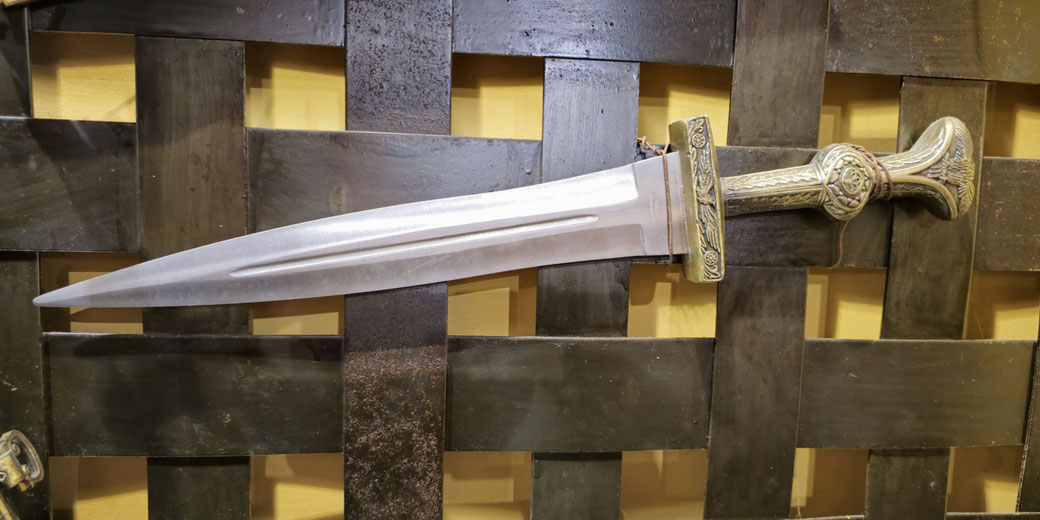
On 15 March 44 BCE, a group of Roman senators stabbed Julius Caesar to death at the base of Pompey’s statue in the Theatre of Pompey.
The attack, which was carried out during a Senate meeting, shocked the Roman people and set off a chain of events that ended the Republic.
Among the attackers stood Marcus Junius Brutus, whose family lineage traced back to the expulsion of Rome’s last king.
His participation gave the conspiracy symbolic weight, and it also raised a question that continues to provoke debate: why would a man who had once benefited from Caesar’s favour take part in his murder?
Who was Marcus Junius Brutus?
From 85 BCE, when Brutus was born, his family’s name had carried a reputation for defending Roman liberty.
His ancestor was Lucius Junius Brutus, who had helped overthrow the monarchy and establish the Republic in 509 BCE.
For centuries, Roman historians recited that story as a founding myth, and later generations expected Brutus’ descendants to uphold the same ideal.
Among Rome’s aristocratic class, this kind of ancestry brought both prestige and pressure, especially during moments of political crisis.
Under the care of his mother, Servilia, who held a long-standing relationship with Caesar, Brutus grew up in elite circles that mixed private scandal with public plans for power.
Servilia’s affair with Caesar had led to rumours that Brutus may have been his illegitimate son, though no ancient source confirms this.
Early in his education, tutors had introduced him to Greek philosophy and rhetorical training.
Significantly, his studies with Aristus of Soli seem to have encouraged a devotion to Stoic ethics, which emphasised duty to the common good and resistance to tyranny by demanding strict control over personal desires.
As he entered adulthood, Brutus developed a reputation for philosophical seriousness and commitment to public service, and he presented himself as a man of steady consistency.
He had also held the office of quaestor in Cilicia in 53 BCE, where he became known for lending money at high interest to local cities, a practice that drew criticism but highlighted his growing influence in Roman provincial affairs.
During Caesar’s civil war against Pompey, Brutus had chosen to side with Pompey, who had aligned with the conservative group in the Senate.
After Caesar had defeated Pompey at Pharsalus in 48 BCE, Brutus surrendered.
Unexpectedly, Caesar forgave him and even granted him public office, eventually making him praetor urbanus in 44 BCE.
Outwardly, the two men appeared reconciled. Caesar praised Brutus’ integrity and consulted him regularly, while Brutus accepted the honours and fulfilled his official duties.
Privately, however, Brutus appears to have begun to question whether Caesar intended to dismantle the Republic permanently.
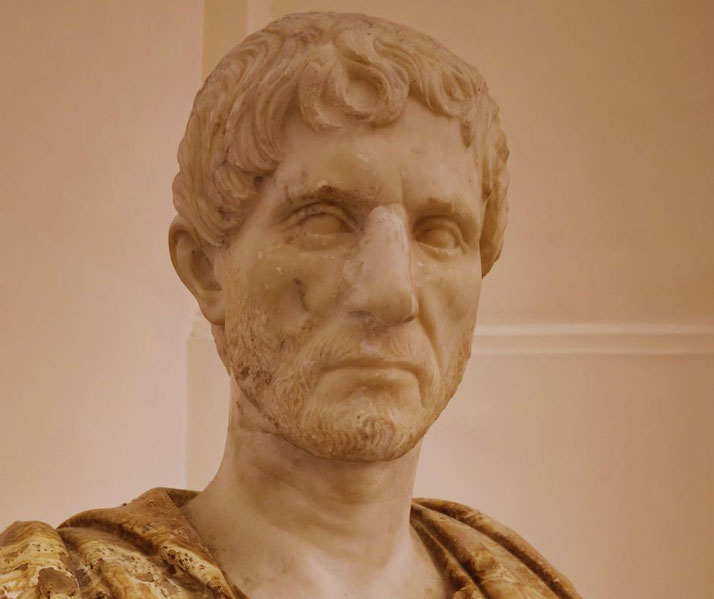
The rise of Caesar and the fear of monarchy
As Caesar gathered more power, including a ten-year dictatorship and a series of lifelong religious and public titles, senators who valued the old republican institutions began to suspect his true intentions.
In early 44 BCE, the Senate named him dictator perpetuo, a decision that stunned even some of his allies.
Statues of Caesar appeared beside sacred figures, and his busts replaced traditional images on Roman coinage.
At the same time, Caesar began to wear royal garments in public and sat on a gilded curule chair above other magistrates.
During the Lupercalia festival that February, Mark Antony offered Caesar a diadem in front of a public crowd.
Although Caesar refused it, the moment showed how easily royal symbols had crept back into Roman politics.
Many senators, already uneasy, took it as proof that Caesar no longer felt constrained by republican tradition.
Within weeks, private discussions turned into planning. Those who feared the loss of liberty gathered support for an extreme solution.
Cassius Longinus, who was a senator and former general, became, according to many accounts, the driving force behind the conspiracy.
He argued that Caesar’s power had grown unchecked and that he would soon claim kingship outright.
Cassius appealed to Brutus repeatedly, pointing to his family name and his philosophical values, and stressing his sense of public duty.
Some conspirators compared themselves to Harmodius and Aristogeiton, the Athenian tyrant-slayers celebrated for defending democracy.
Eventually, Brutus agreed. His name, they believed, would give their actions moral weight.
Without him, the killing would appear as a selfish coup. With him, it could be framed as a public rescue.
The assassination and the role of Brutus
On the morning of Caesar’s final Senate meeting, the conspirators assembled inside the Theatre of Pompey, which had temporarily housed the Senate due to building repairs at the Curia.
As Caesar entered, they surrounded him under the pretence of presenting a petition.
Then, one by one, they drew their daggers and began to stab him. Accounts varied, but ancient sources generally agreed that Caesar resisted until he saw Brutus among the attackers.
At that moment, Caesar reportedly stopped defending himself. According to Plutarch and others, he spoke in Greek and said “Kai su, teknon?”, which meant “You too, child?”, a phrase that implied both disbelief and sorrow.
Other sources claim he died in silence. Either way, Brutus’ presence transformed the scene from a political murder into a personal betrayal.
Caesar had trusted him. Many had even speculated that he intended to name Brutus as his heir.
According to Suetonius, Caesar suffered what he described as twenty-three stab wounds.
His body, left where it fell, stayed on the Senate floor for hours before slaves retrieved it.
Immediately after the killing, Brutus addressed the people of Rome. Standing before them in the Forum, he claimed that Caesar’s death had restored the Republic and prevented monarchy.
He insisted that Caesar’s desire for power had grown too large, and that the murder was committed for the public good.
At first, the crowd listened. Then, confusion and anger spread. Many remembered Caesar as the man who had ended civil war and had cancelled debts, and who had also distributed land to his supporters.
Few believed that his killers had acted selflessly. According to some accounts, Brutus attempted to deliver another speech on the Capitoline Hill, but the crowd drowned him out.
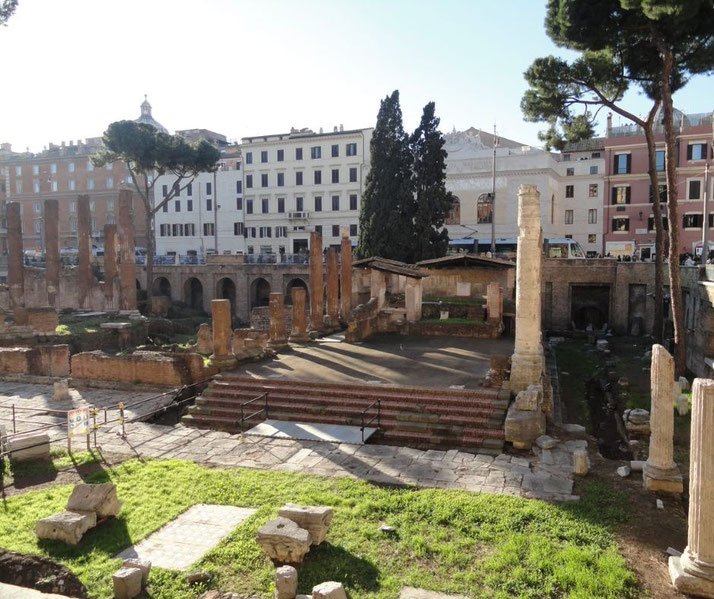
The collapse of the conspirators’ cause
By the following day, it had become clear that Brutus and his allies had not agreed on any plan for what came next.
Mark Antony, who remained publicly calm, privately began to gather support. He staged Caesar’s funeral with deliberate drama, holding it in the Forum and displaying Caesar’s blood-soaked toga.
When he read the contents of Caesar’s will, which offered money and land to ordinary Romans, the crowd erupted in grief and fury.
They built a sudden pyre on the spot, using benches and cloaks taken from nearby buildings, and adding furniture to feed the flames. The assassins fled the city.
Eventually, Brutus and Cassius came together again in the eastern provinces.
There, they raised armies and claimed to fight for the restoration of republican freedom.
However, support for their cause stayed divided. Caesar’s heir Octavian, who had inherited his name and a portion of his political support, joined forces with Antony and Lepidus to form the Second Triumvirate.
Together, they marched east to crush the assassins.
In 42 BCE, at the twin battles of Philippi in Macedonia, the armies of Brutus and Cassius met the forces of Antony and Octavian.
After an initial success, Cassius misread what had happened and committed suicide.
Brutus fought on but suffered defeat in the second battle. Rather than surrender, he withdrew from the battlefield and took his own life in October.
Plutarch recorded that he died quoting the Stoic ideals he had once lived by, though he confessed that virtue had failed to produce the outcome he had expected.
His wife, Porcia Catonis, reportedly committed suicide shortly after hearing of his death, and she used burning coals to take her own life rather than fall under the rule of Caesar’s allies.
The aftermath and historical memory
Within a generation, the Republic that Brutus had claimed to defend had stopped working as a real system of government.
Augustus had previously been called Octavian and ruled as princeps with complete authority.
The Senate stayed in place, but its independence disappeared. Brutus’ name faded from public celebration, as the new regime worked to erase sympathy for those who had resisted Caesar’s rule.
Later, a number of Roman historians presented Brutus again as a defender of ancient values.
Cicero admired Brutus and called the assassination a necessary act. Later still, many Enlightenment thinkers in Europe described him as a symbol of resistance to tyranny.
Shakespeare immortalised him in drama. Many modern scholars, however, have viewed him with more caution.
His motives still seem mixed between personal loyalty and philosophical belief, together with a firm political calculation about who would rule after Caesar.
Although Brutus wanted to rescue the Republic, his failure to secure public trust and provide a workable alternative allowed others to claim absolute power in the name of order.
Brutus later minted coins showing his own profile alongside two daggers and the words “EID MAR”, and the design presented the Ides of March as a moment of liberation and as a defiant message that failed to win lasting support.