
What was daily life like for a Roman emperor?
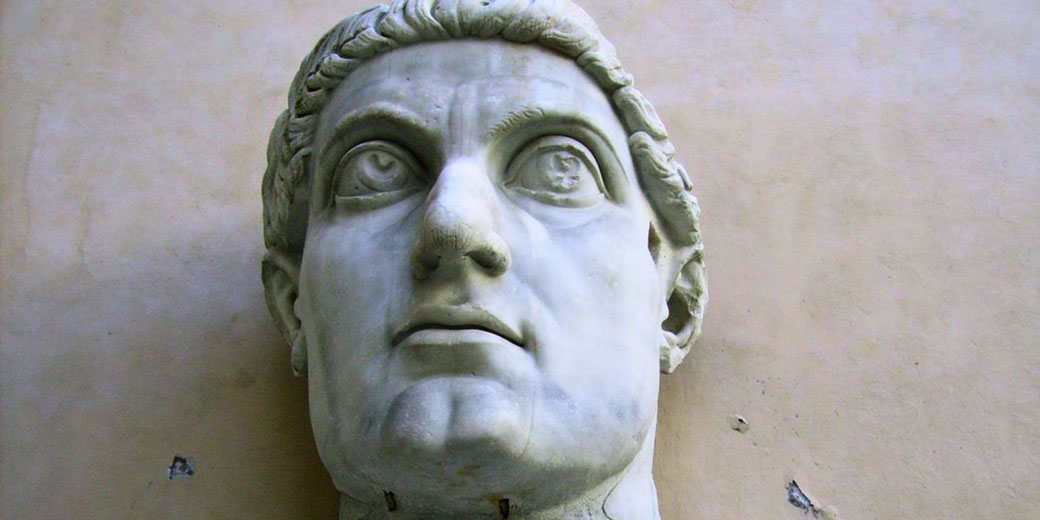
Absolute power in the Roman Empire rested on the shoulders of a single man whose actions often formed provincial policy and sustained the rites of state religion, and his actions projected Roman identity across three continents.
From the first emperor Augustus to Constantine, who had risen from the military ranks and who governed in a more established era than the earlier Crisis emperors, daily life behind the marble walls of imperial palaces typically required constant attention to detail and in diplomatic skill.
Each hour often involved calculated decisions that influenced grain prices in Egypt, troop discipline in Germania, legal appeals in Africa Proconsularis, and the shifting allegiances of Rome’s elite families.
The day-to-day management of an empire
Each day typically brought a stream of administrative business that required swift, informed judgement.
Reports from Britain might describe raids by Pictish tribes, while messages from Syria requested reinforcements or clarified grain levies.
At the same time, legal petitions reached the emperor’s hands from citizens who lacked recourse in their own provinces and turned to the ultimate authority for justice.
Hadrian, for instance, had personally reviewed legal disputes from Cyrene and had issued rescripts that formed provincial law, while senators also arrived with proposals or grievances, and military officers presented themselves for promotion or commendation.
At times, decisions about construction projects that included aqueducts, roads, or temples consumed the emperor’s attention.
Trajan’s Forum had been designed with the Basilica Ulpia and had been capped by his commemorative column which had required thousands of workers and had represented the height of imperial magnificence.
Engineers submitted designs and cost estimates, while city officials negotiated tax arrangements or supply deliveries.
Every approval or denial carried political meaning, rewarding allies or punishing rivals, and influenced the empire’s physical infrastructure for generations.
Importantly, economic matters occupied long hours, as advisers reviewed tax income and coinage circulation and planned the funding required to pay the legions.
The a rationibus was a senior palace official who had been originally drawn from freedmen under early emperors, who increasingly came from the equestrian class in later periods, and who managed imperial finances.
During later centuries, particularly under the Severan dynasty, when inflation often threatened or coinage debasement loomed, emperors had authorised adjustments to currency or had overseen new minting campaigns.
By mid-afternoon, imperial decisions had typically set in motion letters, building orders, tax authorisations, legal rulings, and military instructions that stretched from the frontiers of Dacia to the shores of Hispania.
How public appearances connected him with the people
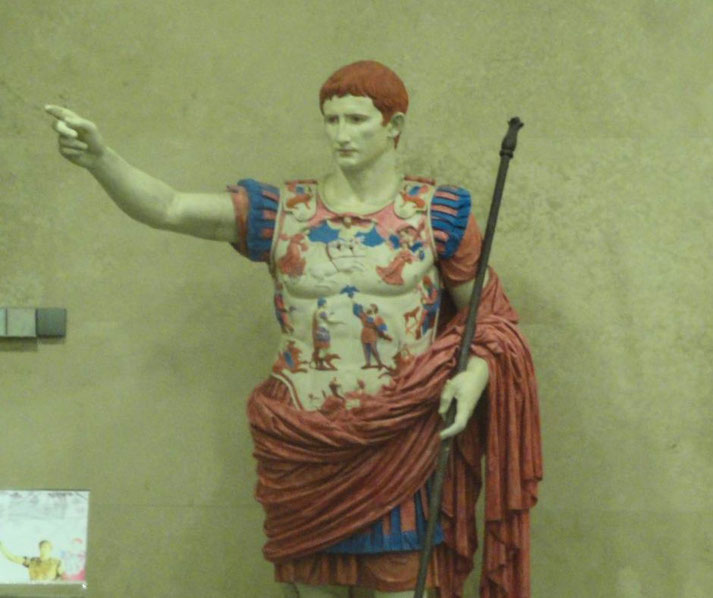
At various times throughout the year, the emperor left the palace to make public appearances that reinforced his religious authority and personal virtue in religious festivals, processions, and sacrifices.
These structured opportunities for him to appear among the people in his official capacity as the visible embodiment of Roman order.
Surrounded by bodyguards and priests, he entered temples, performed rituals before the gods, and often received the applause of a crowd trained to interpret the smallest gesture.
At the amphitheatre or the Circus Maximus, imperial presence often transformed entertainment into political theatre.
When the emperor gave the signal to start chariot races or decided the fate of a defeated gladiator, the crowd watched for signs of mercy, cruelty, or indifference.
Their reactions, shouts, cheers, or silence filtered back to the palace and formed the emperor’s understanding of his popularity.
Often, new laws, building projects, or military victories were commemorated by dedications in the Forum Romanum where statues, columns, and triumphal arches bore inscriptions that detailed the emperor’s achievements in marble and bronze.
For example, Vespasian had funded the construction of the Colosseum with spoils from the Jewish War and had turned captured wealth into civic generosity.
Even when he remained inside the palace, his likeness still travelled widely, as coinage featured carefully crafted portraits, at least during the early and high imperial periods, alongside titles such as Pius Felix Augustus or Restitutor Orbis, which reinforced the emperor’s image as benefactor and guardian of Roman civilisation.
Coins minted under Antoninus Pius in AD 140 included the inscription “TR POT COS III,” with specifically recorded his tribunician power and third consulship.
When entering a city, the emperor typically participated in an adventus ceremony, a theatrical procession that included garlands, incense, and sacrificial animals, which reinforced his quasi-religious presence.

What did Roman emperors do to relax?
Amid the pressures of rule, Roman emperors often carved out moments of leisure in private estates and rural villas that were designed for solitude and retreat.
Located in places such as Baiae, Capri, or Tibur, these residences included gardens, colonnades, artificial lakes, and personal libraries.
Hadrian’s villa at Tibur, for instance, featured a replica of the Nile, a circular island sanctuary, and architectural nods to every province of the empire.
Surrounded by philosophers, artists, or close confidants, emperors often passed their time in which they discussed Stoic texts, enjoyed poetry recitations, or walked in shaded courtyards in which the concerns of court politics faded, if only briefly.
Sometimes, physical activity offered both relief and performance. Hunting expeditions allowed the emperor to demonstrate his skill, often with foreign animals brought from Africa or Asia.
At other times, they engaged in ball games, swam, or took part in light military-style exercises or inspections, either for amusement or to maintain the appearance of vigour expected of a leader.
Augustus enjoyed dice games and tali, though he publicly disapproved of excessive gambling.
Evenings often featured banquets that ranged from formal state dinners to smaller, more intimate meals with advisers and entertainers.
Guests reclined on couches around mosaic floors while musicians performed and servants brought in dish after dish, which included dormice, oysters, honeyed cakes, or roasted birds.
Banquets followed the gustatio, prima mensa, and mensae secundae format, with structured progression from appetisers to desserts.
Between courses, satirists or storytellers offered diversions, and discussions shifted between military gossip, political schemes, and philosophical debate.
The outward ease suggested comfort, yet these dinners often carried risk because one misplaced word, one offensive joke, or one incorrect assumption about loyalty could result in a man’s disappearance the next morning.
What about family and personal relationships?
Within the imperial family, personal bonds often existed alongside strategic calculation, especially since marriages were arranged for political alignment, children were raised with succession in mind, and trust between relatives remained tenuous.
Empresses such as Livia, Sabina, or Julia Domna, who managed the palace and who played important roles, influenced policy and court appointments while also forming public expectations of womanhood and imperial virtue.
Julia Domna, wife of Septimius Severus, even hosted philosophers in Antioch and advised on provincial matters during campaign seasons.
Heirs, whether natural-born or adopted, often required careful presentation.
Public ceremonies announced their status, statues reinforced their legitimacy, and lessons in rhetoric, law, and military affairs prepared them for future rule.
Nerva’s adoption of Trajan in AD 97 began the era of the adoptive emperors, where merit superseded bloodline.
Sometimes, adopted sons such as Trajan or Hadrian outshone biological descendants, which caused tension among extended family members who believed their blood gave them rightful claim.
On occasion, family relationships broke down into open hostility. For instance, Tiberius distanced himself from Rome after clashes with the Senate and family intrigue involving his nephew Germanicus.
Meanwhile, Caligula, once hailed as the son of a hero, murdered relatives and lived in constant suspicion.
Caracalla killed his brother Geta in their mother’s arms, then had his memory erased in a brutal damnatio memoriae.
Under Domitian, both relatives and spouses disappeared under accusations of betrayal.
Even the emperor’s inner circle, freedmen, tutors, or old friends, faced exile or execution if their favour began to wane or if another rival spread a rumour that found the emperor in a suspicious mood.
Security and paranoia: Life under constant threat
In the middle of imperial life stood the reality that death might arrive with a whisper.
From the moment of his elevation, an emperor frequently faced conspiracies from senators, soldiers, or even family members whose aims or fears pushed them toward murder.
Of the nearly 70 emperors recognised in traditional chronologies of the Western Empire, more than 30 died by assassination, execution, or forced suicide.
The Praetorian Guard, though sworn to protect him, sometimes assassinated emperors whom they found inconvenient or who failed to provide generous donatives.
Caligula, Galba, and Pertinax all died by blades meant to defend them.
To reduce risk, emperors controlled access tightly, with chambers that remained guarded, meetings that were screened, and food that was tested for poison by trusted servants.
Nero employed food tasters such as the praegustatores, while slaves monitored each other for signs of bribery or treachery.
Informants and spies circulated in the Senate, in the legions, and within the palace itself.
Under Domitian, accusations of treason became weapons, and torture extracted names for further purges.
The senator Arulenus Rusticus, who had been denounced by palace informers, was executed for his philosophy and influence.
Public statues of the condemned were removed or defaced, while their names disappeared from official records.
Still, suspicion could never guarantee safety because a friendly greeting might conceal betrayal, as a toast at dinner might precede an ambush.
Under such conditions, many emperors developed suspicion toward everyone around them.
Some retreated from the public eye, and others, like Septimius Severus, stayed constantly on campaign to avoid palace intrigue.
Whether by poison, dagger, or conspiracy, ultimately more emperors met violent ends than died peacefully in bed.
The burden and privilege of being a Roman emperor
To command an empire that stretched from the Atlantic to the Euphrates required much more than military strength.
An emperor effectively became the centre of the legal order and head of state religion, entrusted with maintaining public order, feeding the population, defending the frontiers, and preserving ancestral customs.
Almost every action carried meaning: a word of praise might elevate a general to power, or delay in judgment might provoke rebellion, while a misplaced alliance could topple a dynasty.
True freedom rarely accompanied such power because flattery replaced honesty.
Fear often formed advice. Conversations turned into performances. The pressure to act justly and practise piety did not lift, and emperors usually had to demonstrate courage at every turn, not even during rest or retreat.
Augustus advised his successors to festina lente, which meant "make haste slowly", as a rule for wise rule and cautious reform.
For some, such as Augustus or Hadrian, the careful management of public image and internal discipline helped maintain long and stable reigns.
For others, such as Commodus or Elagabalus, indulgence, cruelty, or eccentricity often weakened both authority and trust.
To be emperor of Rome meant that he received religious honours, absolute command, and endless ceremony.
But beneath the titles and triumphs lay the truth that one misstep, one assassination, or one mutiny could erase everything.
Every sunrise marked a new day that demanded responsible decision-making and constant calculation to ensure survival.
The empire never slept, and neither could the man chosen to rule it.