
The quest to find Punt, the vanished civilization that made the Egyptian pharaohs wealthy
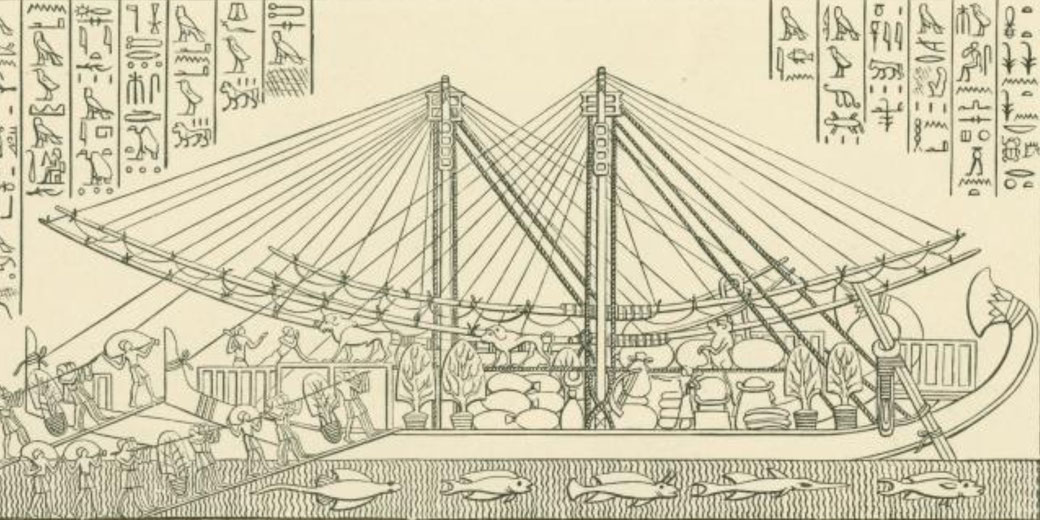
From the reign of Sahure in the Fifth Dynasty to the later New Kingdom, Egyptian pharaohs sent ships down the Red Sea to acquire goods that had no equal in the Nile Valley.
Among the most valued trade partners stood the Land of Punt, which was a source of incense, electrum, ivory, and exotic animals that appeared regularly in temple reliefs and royal inscriptions.
Although Punt enriched Egypt for over a thousand years and featured prominently in Hatshepsut’s large temple art, no confirmed ruins, texts, or native artefacts have ever been recovered from it, and modern archaeologists still debate where it once stood.
Egyptian accounts of Punt
During Sahure’s rule, around the mid-25th century BCE, Egyptian expeditions to Punt featured in temple carvings that displayed scenes of ships that returned with panther skins and other valuables such as precious woods and live monkeys.
At his mortuary temple at Abusir, the reliefs included stylised representations of foreign lands with palm trees and incense-bearing plants, accompanied by dark-skinned tribute bearers.
One scene depicts sailors who brought forth exotic animals and goods, and the reliefs, first recorded by the German Archaeological Institute, form the earliest known visual record of maritime trade with Punt.
Pharaohs of later periods expanded on these images and added hieroglyphic descriptions of the goods acquired and the approval of the gods under which the journeys took place.
Soon after, during the Middle Kingdom, rulers such as Mentuhotep III and Amenemhat II, who brought back long-distance sea trade, launched further missions.
Inscriptions from Wadi Gawasis refer to voyages across the Red Sea, and Amenemhat II’s annals mention tribute from eastern regions that may have included Punt, though the name itself does not appear.
Inscriptions claimed that Punt lay across the waters to the east and described it as a rich place.
Each successful voyage returned with items seen as essential for religious ceremonies and royal status.
When they depicted these journeys as acts of the will of the gods, scribes elevated the status of the pharaoh as the person through whom order and prosperity entered Egypt.
Under Hatshepsut, Egyptian images of Punt reached their most detailed form.
Around 1470 BCE, she commissioned a large-scale expedition that sailed from a Red Sea port and returned with cargo so valuable that it earned permanent depiction in stone at her temple at Deir el-Bahri.
Stone reliefs showed the Puntite rulers Parahu and Ati, along with trees that workers loaded onto Egyptian ships, which would later, according to her inscriptions, be planted in temple courtyards.
Ati’s distinctive appearance included signs of steatopygia and led to speculation about the Puntites' ethnicity and health.
Egyptian artists rendered the Puntite dwellings with stilted foundations and palm groves, built around elevated platforms that seemed to suggest a humid coastal region with regular flooding to Egyptian viewers.
For Hatshepsut, the expedition held symbolic and practical importance. She used it to demonstrate her ability to provide both material wealth and the favour of the gods.
Her inscriptions credited Amun with ordering the voyage, and she claimed to bring back living incense trees, which she described as a unique achievement.
Some of these trees had been planted within the temple precinct at Deir el-Bahri, where they were referred to as “plants for the god.”
As the myrrh and frankincense entered the temple economy, they became part of daily rituals, which ensured that the gods received their offerings and that Egypt’s religious structure remained intact.
Trade goods and economic value
At the heart of Punt’s importance stood its production of aromatic resins, especially myrrh and frankincense, which held great religious value in temple offerings and funerary rituals.
Daily temple rites required fragrant smoke to rise toward the sacred statues of the gods, and embalming specialists depended on imported resins to prepare the dead for burial.
Since Egypt could not produce these resins locally, the demand sustained trade over centuries.
In addition to incense, Puntite trade included gold, electrum, obsidian, short-horned cattle, live baboons, and giraffes, all of which served religious or high-status purposes.
Electrum was a naturally occurring alloy of gold and silver and may have come from placer deposits in the Ethiopian highlands, although this idea is still uncertain.
Giraffes and baboons appeared in religious iconography and also arrived alive as diplomatic gifts or temple animals.
According to inscriptions, Hatshepsut’s officials managed to transport entire groves of incense trees, which demonstrated the careful planning behind the journey.
Because access to Punt allowed the pharaohs to offer rare and precious goods to the gods, it enhanced their religious authority and showed that they were go-betweens between people and the gods.
The successful return of exotic items affirmed their power over distant territories and aligned them with the order of ma’at.
Wealth from Punt enriched the palaces and also helped to reinforce the spiritual system that upheld pharaonic rule.
Where was Punt?
Despite the volume of references in Egyptian records, the exact location of Punt is still unresolved, and the search has produced a wide range of ideas from historians.
Some early theories placed it on the Arabian Peninsula, as historians pointed to known incense-producing regions of southern Arabia.
However, newer evidence has shifted attention to the African side of the Red Sea.
In 2010, researchers led by Nathaniel Dominy at Dartmouth College conducted isotopic analysis on the mummified bodies of baboons that had been kept in New Kingdom temples.
The samples came from Thebes and Saqqara and matched chemical signatures from modern baboon populations in Eritrea and eastern Ethiopia.
Since Egyptian reliefs repeatedly showed baboons that people brought from Punt, the data strongly suggested a northeast African location, though not with absolute certainty.
Additionally, the houses depicted in Hatshepsut’s reliefs resembled those used by communities in the Horn of Africa, especially those built on stilts near seasonal floodplains.
The appearance of the Puntite people was shown with features that matched Cushitic and Nilotic populations and also supported this conclusion for many historians.
Egyptian artists consistently portrayed them with decorated headdresses and long garments, combined with dark complexions that suggested cultural customs different from those of Arabia.
Even so, no single archaeological site has produced no material that historians can identify as Puntite with certainty.
One possibility is that Punt consisted of multiple port settlements rather than a central city.
Such a network was spread along the Eritrean or Somali coast and may have facilitated seasonal trade for Egyptian expeditions rather than permanent royal centres.
Some scholars have proposed connections with ancient ports mentioned in Greco-Roman texts, such as Opone or Avalites, but these identifications are still uncertain and are based on much later sources.
Archaeological clues and historical gaps
Although Egypt's own Red Sea coast had yielded some helpful evidence, no equivalent discoveries have been made in Africa to identify Punt directly.
However, excavations at Mersa Gawasis had revealed the organisation behind Egypt’s maritime expeditions.
Archaeologists led by Kathryn Bard and Rodolfo Fattovich uncovered ship timbers, stone anchors, wooden steering oars, and cargo boxes inscribed with the names of Middle Kingdom officials in caves carved into the coastal cliffs.
Some of the boxes carried inscriptions that connected them to expeditions “to the land of Punt” and provided the first physical evidence of Egyptian naval journeys tied directly to that name.
At sites such as the “Rope Cave” and “Gallery C,” the artefacts revealed how rigging and cargo were stored and reused, rather than showing complete ship construction.
The timbers were made of imported cedar and suggested that the Egyptians had already mastered rope-lashed joinery and mortise-and-tenon construction techniques to carry out long Red Sea voyages.
Given the length of these journeys and the need for resupply, it is likely that the sailors followed the coastline rather than cross open water.
Egyptian ships relied on square sails and oars and needed predictable wind patterns and nearby sources of fresh water.
As a result, Punt may have been reachable only during certain months of the year when the monsoon winds favoured southward travel and the return journey.
Since no Puntite material culture has been found, many scholars suggest that the inhabitants may have built with wood, reeds, or mud, which would not survive in the archaeological record.
Others argue that Egyptian expeditions may have encountered local traders who worked as go-betweens, and the “Land of Punt” may have referred to a broader region rather than a single kingdom.
Oral traditions from the Horn of Africa occasionally describe ancient trading communities, though none provide conclusive evidence.
The disappearance of Punt
By the end of the New Kingdom, Egyptian references to Punt declined, and expeditions ceased altogether.
The decline of central authority during the Third Intermediate Period reduced the state's capacity to fund long-distance voyages, and attention shifted toward internal affairs and land-based trade with Nubia and the Levant.
As a result, Punt disappeared from the official record, and no new missions were recorded after the Twentieth Dynasty as far as current evidence shows.
Some scholars argue that environmental changes may have disrupted trade routes, while others point to the rise of Aksum in the early first millennium BCE, which may have taken over or pushed aside the trading communities once involved with Egypt.
Without the regular supply of incense and exotic goods, Egyptian temples turned to alternate sources or reduced the scale of their offerings.
Punt’s absence removed one of the key foreign partners in the Egyptian religious economy, though its name survived as a symbol of prosperity from a previous age.