
Did Julius Caesar want to be king of Rome?
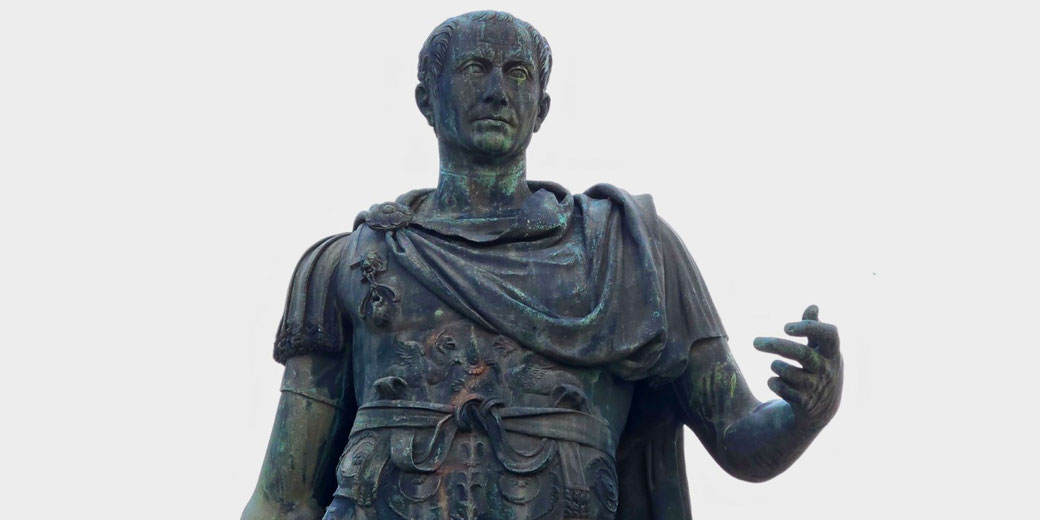
After he crossed the Rubicon in 49 BC, Julius Caesar broke apart the Roman Republic’s political balance with a speed that stunned many in Rome.
He claimed emergency powers and reshaped offices, and he filled the Forum with monuments to his personal authority as he often treated opposition as disloyalty.
By early 44 BC, he had secured the lifetime dictatorship and had received god-like honours, and he moved openly among the Roman elite as a ruler without equal, which made many fear that he would soon crown himself king.
The weight of roman anti-monarchy tradition
For centuries, many Romans had viewed monarchy as a threat to liberty. After expelling their last king, Tarquin the Proud, in 509 BC, they constructed a constitution built around shared power and strict term limits, based on a strong tradition of collective authority.
The office of consul rotated annually between two men and existed to prevent the rise of a sole ruler, and the Senate remained a check on personal power by distributing influence among hundreds of aristocrats.
Any attempt to claim the title rex after 509 BC carried the risk of execution under Roman laws that treated it as treason, especially under accusations of maiestas.
During the late Republic, however, the accusation of regnum cupere, a charge that a man wanted to become king, often came back into use as a political weapon.
Rivals accused Tiberius Gracchus of monarchical behaviour, and Marius faced similar charges when he kept his consulship going through popular support.
By Caesar’s time, senators remembered how dangerous those accusations had become, and they applied the same suspicion to Caesar’s fast build-up of power and public honours, together with his disregard for earlier custom.
Even without formal claim to kingship, his position disturbed many who had built their careers defending the Republic’s ideals.
To men such as Marcus Junius Brutus, Caesar appeared to be following the same path as Tarquin the Proud, and Brutus saw his own actions as continuing the tradition of his ancestor Lucius Junius Brutus, who had expelled the monarchy nearly five centuries earlier.

Dictator for life and other regal powers
After he defeated Pompey’s forces and returned to Rome, Caesar secured a ten-year dictatorship in 46 BC and then a lifetime appointment on 15 February 44 BC, which effectively removed all limits on his authority.
Until then, dictatorship had been a short-term emergency measure during war or crisis, and it always ended once order had been restored.
When he made the title permanent, Caesar abandoned the usual limits that had protected the Republic from one-man rule.
Soon after, he adopted visible signs that closely resembled monarchy. He sat on a gilded curule chair during public ceremonies and wore the toga picta and laurel wreath outside triumphs, and he arranged for statues of himself in public places.
Coinage minted under his orders now displayed his face with the inscription CAESAR DICT PERPETVO, which was a special right that had previously been reserved only for deities and deceased statesmen.
Religious honours soon followed. Priests offered sacrifices in his name and altars that honoured his genius were raised, and his image became part of state rituals, which joined worship of the gods with politics in a way that upset Rome’s usual power structure.
He also constructed and renamed temples to honour his patron goddess Venus Genetrix, and this further affirmed his claimed descent from Venus Genetrix.
At the same time, he exercised total control over elections and magistracies.
Although assemblies continued to vote, many outcomes had already been decided through Caesar’s nominations.
He appointed governors to key provinces and assigned military commands, and he dictated legislation without opposition.
In practice, almost every part of Roman government now operated under his instructions, and the institutions that had once protected the Republic had become extensions of his will.
The Lupercalia incident and public performance
On 15 February 44 BC, during the festival of Lupercalia, Marcus Antonius approached Caesar in the Forum and offered him a diadem, which symbolised royal status.
In front of the assembled crowd, Caesar refused the crown twice and gestured for it to be placed in the temple of Jupiter on the Capitoline Hill.
His gesture acknowledged the Roman belief that no mortal could claim kingship, and many spectators doubted the sincerity of the event.
For one, the performance appeared too carefully planned. Antonius had been Caesar’s loyal subordinate and would not have offered the diadem without prior discussion.
Some suspected the act had been staged to test public opinion, and others believed it revealed Caesar’s desire to accept kingship if it could be presented as popular demand.
The mixed response from the crowd showed that the title rex still carried danger, and Caesar’s careful refusal did little to calm the suspicion that he would try again under different circumstances.
According to Plutarch, some cheered when Caesar declined the diadem, and others remained silent.
The crown itself was a laurel wreath twisted together with a white fillet and blurred the line between triumphal and regal symbolism, which added to the uncertainty.
The Sibylline prophecy
Soon after Lupercalia, rumours spread that the Sibylline Books contained a prophecy that said only a king could conquer Parthia.
Ancient sources do not clearly confirm the existence of such a prophecy, but the story spread widely and clearly added to rising fear that Caesar intended to claim the throne while abroad.
He had assembled legions and planned to depart with a massive army through the eastern provinces before launching the invasion.
When two tribunes named Gaius Epidius Marullus and Lucius Caesetius Flavus attempted to block his honours and raised concerns about his growing power, he responded by having them stripped of office and removed from their tribunician status, an act that horrified many observers who saw them as defenders of old customs.
Under Roman law, tribunes enjoyed sacrosanctitas, which made it illegal to harm or interfere with them.
Caesar’s actions broke this long-standing rule and made clear that he no longer recognised legal protections for dissent.
In political terms, the incident showed how unwilling Caesar had become to accept Republican checks.
He no longer readily accepted public disagreement, even from legally protected officials.
The humiliation of the tribunes became a warning to anyone who dared question his authority.
To many senators, the event confirmed that Caesar had already moved outside normal legal limits and ruled with the same contempt for institutions that Rome’s ancient kings had shown.
The assassination and its justification
On 15 March 44 BC, as Caesar arrived for a Senate meeting in the Theatre of Pompey, a group of conspirators who opposed his rule stabbed him to death beneath the statue of Pompey Magnus.
Led by Cassius and Brutus, the plotters justified their act by claiming that Caesar aimed to restore monarchy and destroy Republican government.
They cited his lifetime dictatorship and his use of royal symbols, along with the growing hero-worship around his name, as proof that he had already become a tyrant in all but title.
According to Suetonius, Caesar suffered twenty-three stab wounds, though only one proved fatal.
After the murder, they marched into the Forum with bloodied daggers as they shouted "libertas" and appealed to the people to support the return of the Republic.
The response they received revealed how much had changed, since many citizens, especially those who had benefited from Caesar’s reforms and distributions, remained silent.
Others feared a return to civil war and hesitated to back the assassins, even if they disliked Caesar’s personal rule.
The conspirators had expected applause, but instead found themselves isolated, and their vision of reviving the old Republic collapsed within days.
Mark Antony's funeral speech, which included the public reading of Caesar's will, shifted public sympathy, since the will had granted 300 sesterces to every citizen and had left his private gardens for public use, which cast the conspirators as enemies of the people rather than defenders of liberty.