
The surprising Roman origins of our calendar and the names of the months
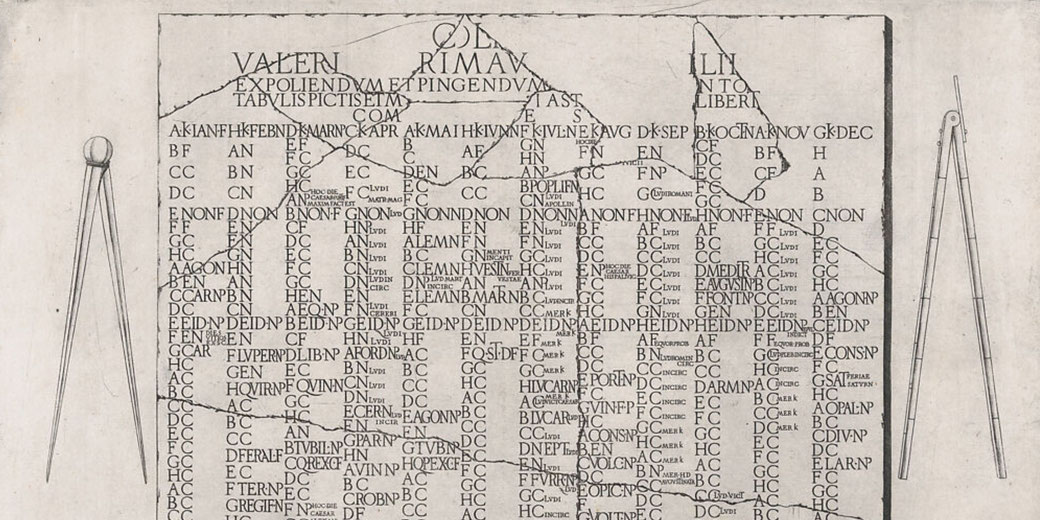
Every time someone marks 1 January or writes down the name of a month, they use a structure built in ancient Rome, and most people probably do not realise this connection.
The modern Western calendar, which is still used by over 150 countries today, preserves names, dates, and number patterns that originated under a ruling class of kings and priests, along with emperors who treated time as a tool of authority.
Roman decisions about religious festivals and agricultural seasons had worked together with calculations of political power and had largely determined the months we still use.
The original Roman calendar
According to Roman tradition, which many historians treat as partly legendary, Romulus, founder and first king of the city in 753 BC, created a calendar that divided the year into ten months.
He counted only 304 days, which began with Martius and ended with December, and he left the remaining winter days unnamed and untracked.
No source explains how officials managed this uncounted period, and scholars doubt that such a calendar worked well in daily life.
Some suggest that early Roman timekeeping may have drawn influence from Greek lunar models or Etruscan traditions.
To begin the year, the month of Martius honoured Mars, the war god whom Romans linked to agriculture and military strength, as well as the father of Rome’s mythical founders.
After that, Aprilis may have referred to aperire, which meant “to open,” a term that suited the flowering of spring, though some Roman writers connected the name to Venus.
Modern linguists, however, find no firm evidence for either origin so far. Maius and Junius likely derived from Maia and Juno, who were associated with growth and marriage.
Then came the numerical months: Quintilis (fifth), Sextilis (sixth), September (seventh), October (eighth), November (ninth), and December (tenth), all of which followed the Roman counting system and made up the full list of months under Romulus' system.
It looked something like this:
| Month No. | Latin Name | Meaning |
|
1 |
Martius | Named after Mars, the god of war |
| 2 | Aprilis | Possibly derived from "aperire" (to open) or "Aphrilis" (from Aphrodite, the Greek equivalent of Venus) |
| 3 | Maius | Named after Maia, a goddess of growth |
| 4 | Junius | Named after Juno, the queen of the gods and goddess of marriage |
| 5 | Quintilis | From the Latin word "Quinque," meaning five |
| 6 | Sextilis | From the Latin word "sex," meaning six |
| 7 | September | From the Latin word "septem," meaning seven |
| 8 | October | From the Latin word "octo," meaning eight |
| 9 | November | From the Latin word "novem," meaning nine |
| 10 | December | From the Latin word "decem," meaning ten |
Two months get added ... which confuses everyone
As the calendar had failed to align with the solar year, seasons and festivals had drifted apart, and this problem had affected both religious worship and agricultural planning.
To resolve the calendar’s gaps as he understood them, Rome’s second king, Numa Pompilius, added two new months: Ianuarius and Februarius.
When he placed them before Martius, he expanded the calendar to twelve months and increased the number of days to 355.
Although this still fell short of the solar year, it created a framework that allowed priests to insert an occasional extra month, Mercedonius, to maintain seasonal alignment.
This thirteenth month, which was typically inserted at the choice of religious officials, gave Rome a way to keep time in step with the seasons, though it was not used on a fixed two-year cycle and could be used for political reasons.
For religious and symbolic reasons, Ianuarius took its name from Janus, the god who looked forward and backward, whose image was carved above Roman doorways and temple gates.
As a sacred guardian of beginnings and endings, Janus provided a fitting patron for the transition into a new year.
Februarius, named after the Februa rites of purification, had connections with seasonal cleaning and agricultural renewal.
Initially, the official year continued to begin in March, and the new months formed an introduction.
However, in 153 BC, the Senate decreed that consuls would take office on 1 January.
That decision gave Ianuarius greater importance in Roman public life and gradually transformed it into the start of the year in both political and public life.
This is what it looked like now:
| Month No. | Latin Name | Meaning |
|
1 |
Ianuarius | Named after Janus, the god of beginnings and transitions |
|
2 |
Februarius | Named after Februa, an ancient Roman purification festival |
|
3 |
Martius | Named after Mars, the god of war |
| 4 | Aprilis | Possibly derived from "aperire" (to open) or "Aphrilis" (from Aphrodite, the Greek equivalent of Venus) |
| 5 | Maius | Named after Maia, a goddess of growth |
| 6 | Junius | Named after Juno, the queen of the gods and goddess of marriage |
| 7 | Quintilis | From the Latin word "Quinque," meaning five |
| 8 | Sextilis | From the Latin word "sex," meaning six |
| 9 | September | From the Latin word "septem," meaning seven |
| 10 | October | From the Latin word "octo," meaning eight |
| 11 | November | From the Latin word "novem," meaning nine |
| 12 | December | From the Latin word "decem," meaning ten |
How Julius Caesar created our calendar
By the mid-first century BC, Rome’s calendar had drifted badly out of line in the view of many contemporaries.
Intercalary months, which were added or left out by priestly decision, had come under political interference.
Religious festivals occurred in the wrong seasons, and many farmers struggled to choose the right time for planting.
Prominent figures such as Sulla and possibly Caesar himself had reportedly used the power to insert or withhold Mercedonius for political advantage.
As pontifex maximus, Julius Caesar used his religious authority to carry out a complete reform of the system.
To restore order, Caesar introduced the Julian calendar in 46 BC. He instructed the Alexandrian astronomer Sosigenes to base the new structure on a solar year of 365 days, with one leap day added every fourth year.
The calculation followed Egyptian models of the solar cycle. To fix the current error, Caesar extended that year to 445 days, so the calendar was brought back into line with the seasonal cycle.
The year became known as the “year of confusion” due to its unusual length.
After his assassination in 44 BC, the Senate honoured his memory by renaming Quintilis as Iulius, or July, which had matched the month of Caesar’s birth.
Later, his adopted son Octavian, who became Augustus, also received a month when Sextilis was renamed Augustus.
Senators justified the change by pointing to his many victories in that month, for example, the defeat of Cleopatra and the takeover of Egypt as a Roman province.
Later Roman sources claimed that February was shortened to increase August’s length, but modern historians view this as a myth.
August was assigned 31 days in a way that did not involve taking a day from February, which had already fluctuated depending on leap years.
These renamings broke the original numerical pattern, and the old names for September to December remained unchanged.
Even though they now appeared in the wrong place, those four months preserved their Latin roots and reminded Roman citizens of the calendar’s earlier structure.
We still use it today...
Over time, the Julian calendar, which had overestimated the length of the year, introduced a small but significant error.
That mistake, which was about eleven minutes each year, built up until the spring equinox fell ten days earlier than expected.
To correct this drift, Pope Gregory XIII ordered a reform in 1582. His new rule shortened the leap-year cycle and deleted ten days from the calendar that year, and under the revised system, leap years occurred every four years, except in years divisible by 100, unless also divisible by 400.
Most Catholic states adopted the reform immediately, and Protestant countries, which took longer to accept papal changes, hesitated.
England and its colonies waited until 1752, when they removed eleven days to synchronise with the Gregorian model.
Other regions, for example Russia and Greece, did not switch until the twentieth century.
Despite those changes, the calendar largely kept the Roman month names, preserved the twelve-month structure, and maintained 1 January as the start of the year.
The names of the months and the system of leap years work together with the very word “calendar,” which comes from the Roman kalendae, and they all preserve Roman methods of tracking time.
Even now, people can still see the calendar’s origins in every reference to July or August, in every mismatch between September’s name and its ninth-place position, and in the continued presence of a leap day in February.
Decisions made by Roman kings and priests combine with decisions made by later emperors and still influence, at least to some extent, the way people plan their days and mark their seasons, as well as the way they divide their years.
When the Romans named the months after gods, festivals, numbers, and rulers, they ensured that their influence outlived their empire.
| Month No. | Name | Latin Meaning / Origin |
| 1 | January | Named after Janus, the god of beginnings and transitions |
| 2 | February | Named after Februa, an ancient Roman purification festival |
| 3 | March | Named after Mars, the god of war |
| 4 | April | Possibly derived from "aperire" (to open) or "Aphrilis" (from Aphrodite, the Greek equivalent of Venus) |
| 5 | May | Named after Maia, a goddess of growth |
| 6 | June | Named after Juno, the queen of the gods and goddess of marriage |
| 7 | July | Named after Julius Caesar, Roman general and statesman |
| 8 | August | Named after Augustus Caesar, the first Roman emperor |
| 9 | September | From the Latin word "septem," meaning seven; originally the seventh month of the Roman calendar |
| 10 | October | From the Latin word "octo," meaning eight; originally the eighth month of the Roman calendar |
| 11 | November | From the Latin word "novem," meaning nine; originally the ninth month of the Roman calendar |
| 12 | December | From the Latin word "decem," meaning ten; originally the tenth month of the Roman calendar |