
Juanita, the Ice Maiden: A tragic young victim of Inca sacrifice

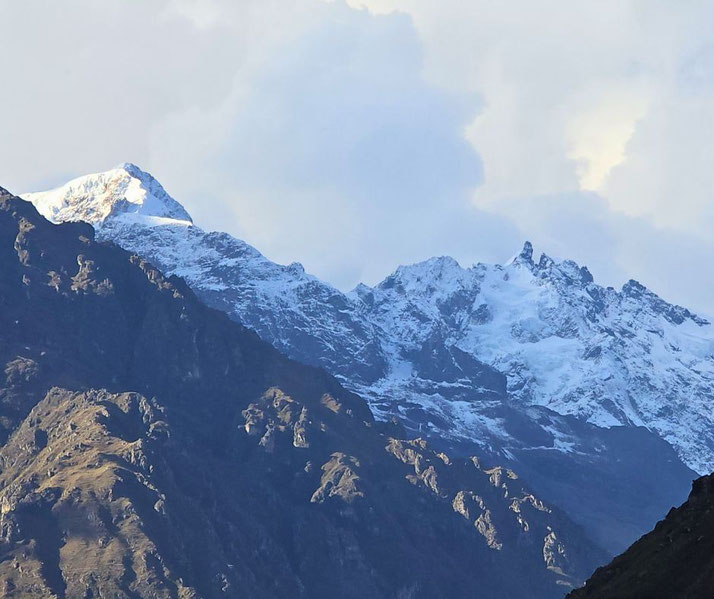
During a 1995 expedition on Mount Ampato in southern Peru, a frozen body surfaced from the melting ice, exposed by volcanic activity linked to the eruption of Mount Sabancaya.
Then, on 8 September, at 6,288 metres above sea level, archaeologist Johan Reinhard and Peruvian climber Miguel Zárate uncovered a girl who had likely been sacrificed by the Inca during the mid-fifteenth century, with her body sealed in a mountaintop shrine for over five hundred years.
Preserved in surprising detail, the body displayed braided hair, ceremonial dress, and ritual offerings, which has provided rare physical evidence of the capacocha ceremony, an imperial sacrificial tradition previously known only from Spanish colonial sources.
The significance of the find
Following the volcanic eruption, the snowcap on Ampato receded enough to expose a carefully arranged burial platform that had remained sealed since the height of the Inca Empire.
As the expedition climbed the slope, they located a stone-covered chamber that contained a seated mummy whose flesh and clothing were frozen in almost perfect condition.
The body was later named 'Juanita' and had been quickly identified as a child who had likely been sacrificed in a state ritual.
Due to the altitude and preservation, the body had retained soft tissue, blood, and traces of her final meals.
The cold, thin air at that height acted as a natural freezer, which slowed decomposition and preserved soft tissue in great detail.
She wore a red acsu, a traditional Inca dress made from finely woven camelid wool, as well as a shawl clasped with a silver tupu, or ornamental pin, often reserved for noble girls.
Nearby, carved figurines, miniature llamas, and ceremonial vessels had been arranged in a careful pattern, suggesting that the entire summit had been ritually prepared to host the sacrifice.
One of the figurines included spondylus shell, a material associated with fertility and rainfall, which the Inca valued for its marine origin and religious power.
Given the quality of the textiles and the presence of high-status items, scholars concluded that the child belonged to a local noble family.
Isotope analysis of her hair showed changes in her diet, which included a noticeable increase in maize and protein during the last year of her life.
As such, archaeologists determined that she had likely been brought to Cusco and placed under special care in preparation for the sacrifice.
Her body showed no apparent signs of malnutrition and only limited evidence of prior illness.
The final cause of death appeared to be a sharp blow to the right side of the skull, which was consistent with a forceful injury.
In fact, CT scans suggested the impact may have occurred after sedation, but whether a priest inflicted the blow or it was accidental remained unclear.
Tests later found coca alkaloids in her hair, which suggested that priests had used coca to sedate her before death.
All of these details seem to confirm she had been offered during a formal capacocha rite, possibly to honour the gods after a natural disaster.
Why did the Inca sacrifice children like this?
Under Inca rule, the capacocha ritual was seen as an imperial duty intended to restore harmony between the Sapa Inca, the gods, and the empire’s provinces.
Carried out during critical events such as solar eclipses, royal deaths, or volcanic eruptions, it involved the selection of children from across the Tawantinsuyu who were physically healthy and ritually clean.
Often, priests chose children from noble families in remote regions as a political gesture that reinforced loyalty to the capital.
Importantly, the Inca interpreted sacrifice as an honour, not as punishment. The chosen child became a go-between connecting the living and the divine spirits of mountains, rivers, and celestial forces.
To prepare for this transformation, as mentioned above, the child had spent months in religious instruction and ritual cleaning, and often lived near Cusco, where she received elite food and clothing.
Then, escorted by imperial attendants and priests, the child had undertaken a long pilgrimage along the Qhapaq Ñan, the empire’s main road network, until reaching a sacred mountain where the ritual death would occur.
By choosing remote mountaintops for these burials, Inca priests created sacred places where the sacrificed child could dwell closest to the gods.
The Inca believed that the soul of the child would become a guardian spirit who would watch over the region and protect it from drought, famine, or war.
Each sacrifice had both a religious and a political purpose, since it showed how far Cusco’s authority reached and how the state claimed a close connection to the gods.
In Juanita’s case, the location of her burial high on Ampato confirmed that her death had been intended to establish a sacred connection between the empire and one of the region’s most powerful apus, the mountain spirits.
Reconstructing her last moments of life
Prior to her death, Juanita had undergone a ritual preparation: her hair, carefully parted and braided, showed signs of recent grooming, and her body had been washed and clothed in special garments worn only for major religious ceremonies.
On the day of the sacrifice, she likely consumed chicha and coca leaves, substances that were used in ceremonial sedation.
Scientific analysis of her stomach contents revealed that she had eaten shortly before her death.
Once at the summit, priests would have led her to a stone platform prepared in advance, where they arranged the grave goods in a circular pattern, probably with some link to solar religious symbolism.
Her body had been seated in a foetal position, with arms crossed and head bowed forward.
The silver figurines and spondylus shell, along with small baskets of food, were placed around her to guide her spirit into the afterlife.
then, as the temperature on the mountain dropped rapidly after sunset, her body froze soon after death, and volcanic ash later helped seal the site.
Although the cause of death was traumatic, the careful positioning of her limbs and the undisturbed condition of the site indicated that the ritual had been performed with a lot of care.
Unlike other burials exposed to looting or weathering, Juanita’s tomb remained completely sealed, and the absence of scavenger damage or human interference allowed modern archaeologists to analyse an untouched ritual context for the first time.
Because of the preservation, researchers obtained an extraordinary view into the sacred rites and final moments of an Inca child destined for the gods.
Importance to archaeologists
Since her discovery, Juanita has provided archaeologists with one of the most complete and informative mummies from the pre-Columbian Andes.
As a result of her preservation, forensic scientists examined her tissues, organs, clothing, and hair with a very high level of detail.
The Instituto de Medicina Legal in Arequipa conducted many of the early studies, which were later supplemented by international teams.
Each analysis supported key aspects of what colonial Spanish chroniclers had described regarding human sacrifice, such as evidence that capacocha involved formal rites that incorporated coca and maize beer and that concluded with the deliberate interment of children on remote summits.
In the years following Juanita’s recovery, teams identified similar burials at other high-altitude sites including Llullaillaco, El Plomo, and Misti.
The children found at these locations had similar clothing, burial goods, and physical preparation, which demonstrated that capacocha ceremonies followed strict official protocols.
At Llullaillaco, located over 6,700 metres above sea level, archaeologists uncovered what is now considered the highest known ceremonial burial site on Earth.
Scholars compared textiles, cranial shapes, and genetic markers, which helped map the regional variety of the children and how far the state’s control reached.
Today, Juanita rests in a special refrigeration chamber at the Museo Santuarios Andinos in Arequipa, where visitors can view her body and learn about the science behind her preservation.
She is displayed under low lighting and stable humidity to prevent further deterioration, though curators occasionally rotate her with other mummies to protect against long-term exposure.
Her death was tragic and uncovered a structured religious system that used sacrifice as a sacred duty aimed at maintaining balance in a wide and ordered world.