
Hesiod: The rarest and oldest surviving account about the ancient Greek gods
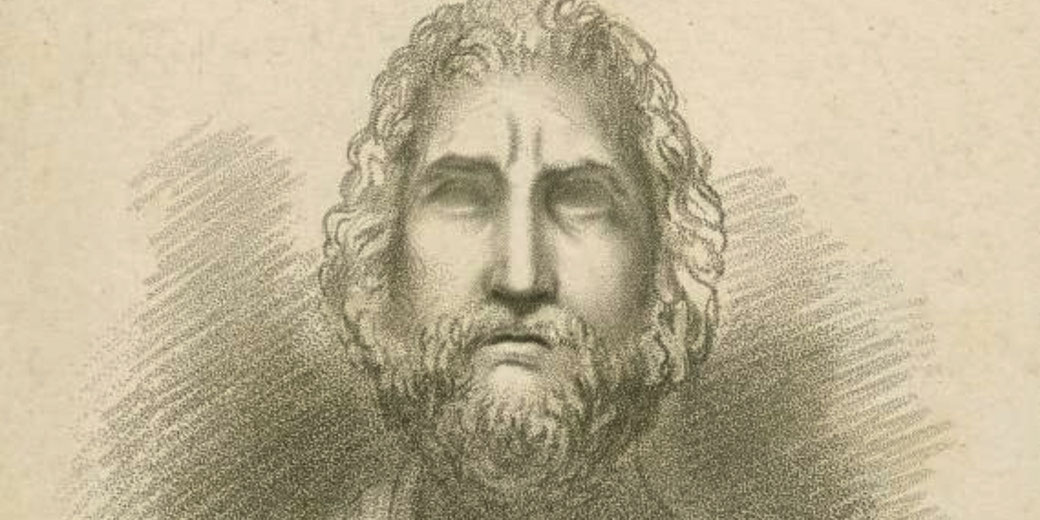
Long before philosophers developed ideas or tragedians dramatised punishments from the gods, a solitary poet from rural Boeotia preserved the earliest ordered view of the Greek gods.
Between the foothills of Mount Helicon and the dusty fields of Ascra, Hesiod composed two of the oldest surviving Greek texts that we know of, Theogony and Works and Days, which explained both the beginnings of the power of the gods and the cause of human hardship.
Written between approximately 750 and 700 BCE, his poetry carried older traditions into written form and created a line of myth and moral order that guided Hellenic religious and moral thought for generations.
What do we know about who Hesiod was?
According to lines in Works and Days, which remain the most reliable source available to historians about his life, Hesiod came from the small Boeotian village of Ascra.
He described it as bitter in winter, very hot in summer, and severe throughout the year.
His father had migrated from Cyme in Aeolis because he hoped to escape financial hardship, but his situation stayed difficult.
As a result, Hesiod had grown up in a world that was defined by agricultural struggle and injustice, as well as tension within the family.
By his account, he once tended sheep near Mount Helicon when the Muses approached him, handed him a laurel staff, and inspired him to speak truths through song.
Since Mount Helicon had long been associated with the Muses, this setting reinforced his poetic authority and inspiration from the gods.
That event was either a literal event or a poetic device and explained his authority as a poet and set him apart from ordinary entertainers.
His offered moral instruction and preserved family lines of the gods in a society that was still bound to oral memory and cult ritual.
He referred to a personal conflict with his brother Perses, who supposedly attempted to seize a greater share of their inheritance by bribing corrupt judges.
That dispute had determined the entire structure of Works and Days, where justice, fairness, and hard work became central themes.
Scholars have debated whether Perses was a historical figure or a poetic creation used to frame Hesiod's moral argument.
Some later writers added to his life story with accounts of his death and claimed that he was murdered in Locris and avenged by Apollo.
Although those tales likely came from local tradition rather than history, they indicated the level of respect attached to his name.
Theogony: The origins of the Gods
At the beginning of the Theogony, Hesiod invoked the Muses and declared that they had taught him to sing about what had come before and what would follow.
He then traced the beginnings of the universe to an empty gap named Chaos, from which Gaia (Earth) and Tartarus (the Abyss) appeared, along with Eros (Desire).
Hesiod portrayed these first gods as sacred beings rather than abstractions, and they gave birth to the next stages of creation.
Soon after, Gaia produced Uranus (Sky), and their union generated the Titans alongside the Cyclopes and the Hundred-Handers.
However, Uranus feared his children’s strength and forced them back into Gaia’s womb.
Eventually, at Gaia’s urging, Cronus attacked his father with a sickle and cut off his genitals, casting them into the sea.
From Uranus’s blood and foam, new beings arose, including the Furies and the Giants, and Aphrodite herself.
That act of violent change in power began a pattern that, in Hesiod’s account, repeated across generations of gods.
Cronus had seized power and later learned that one of his children would overthrow him.
To prevent this, he swallowed each child as they were born. Rhea, unwilling to lose another child, tricked him by hiding the newborn Zeus and giving Cronus a swaddled stone instead.
When Zeus reached adulthood, he forced Cronus to release his siblings and then led a war among the gods against the Titans, eventually imprisoning them in Tartarus.
In this Titanomachy, Zeus secured the aid of the Hundred-Handers, whose power turned the tide of battle.
With the Titans defeated, Zeus became king and reorganised the order of the gods under his rule.
After describing the war among the gods, Hesiod provided a very long list of gods and goddesses, recording their parentage and roles.
The result was both a history of the universe and a religious system. Hesiod created a clear structure in which relationships among the gods followed lines of descent, marriage, rivalry, and oath.
Importantly, he gave Zeus supreme authority without portraying him as a tyrant.
Instead, Zeus governed by justice and oath, although some later myths continued to portray him as severe or punitive.
That contrast with Uranus and Cronus highlighted a shift toward order and stability.
For many later Greeks, Hesiod’s family tree of the gods became the standard source for religious instruction.
By organising the gods into a generational sequence and connecting their powers to specific acts, he kept and confirmed beliefs that had likely once circulated as separate regional myths.
His poem was written in dactylic hexameter and was composed as a list of family lines of the gods, and it offered an organised way that temples and festivals later echoed in their own traditions.

Works and Days: Lessons on life
While Theogony addressed the beginnings of the gods and the changing rule of the gods, Works and Days turned attention to the daily burdens of mortal life.
Hesiod structured the poem as an address to his brother and used their inheritance dispute as the starting point for a wider discussion on labour and morality under the gaze of the justice of the gods.
His tone was generally instructive and critical, not heroic or nostalgic.
Early in the poem, Hesiod described the myth of the Five Ages of Man. First came the Golden Age, when men lived peacefully under Cronus’s reign and died in their sleep without sorrow.
Then came the Silver Age, where mortals lived long lives but failed to honour the gods, which led to their destruction.
Next, the Bronze Age produced warlike men forged from ash trees, who destroyed themselves through violence.
After them came the Heroic Age, known for noble warriors like those who fought at Thebes and Troy.
Lastly, Hesiod described the Iron Age, his own time, as an era of dishonesty and hardship that fed a steady moral decay.
Immediately after, he introduced the story of Pandora. As payback for Prometheus’s theft of fire, Zeus ordered Hephaestus to create a woman of beauty who would bring ruin to men.
Once Pandora opened the jar she carried, sickness and toil spread across the earth and carried suffering into every household. Hope remained inside.
However, Hesiod did not clearly state whether this was a final mercy or another trick.
He did not treat her story as symbolic of curiosity or disobedience but as a punishment from the gods carried out with planning and trickery.
That myth reinforced his wider view that human life required endurance and that all blessings came with risk.
Hesiod had earlier explained that Prometheus deceived Zeus during a sacrificial offering and presented bones wrapped in fat, which led the god to retaliate by withholding fire.
Also, he gave precise advice on when to sow and harvest, warned against sailing during certain seasons, and described star movements as markers for rural tasks.
Hesiod referenced constellations such as Sirius and the Pleiades to guide agricultural work and travel.
He even advised which days in the lunar month were lucky or unlucky for planting crops, making tools, or performing marriage rites.
While modern readers often see Works and Days as a mix of myth and almanac, it stood in ancient times as a guide for ethical and seasonal living grounded in the authority of the gods.
Comparisons to Homer
Later tradition connected Hesiod and Homer as the earliest Greek poets, but their purposes were different from the beginning.
Homer focused on warfare and questions of honour, along with the pull of fate, often using heroes to explore personal glory and tragic consequence.
In contrast, Hesiod rejected those themes, favouring instruction over entertainment and moral lessons over exciting plots.
Homer’s world involved kings and warriors in distant lands, where acts of the gods often appeared as a way to test character or fate.
Hesiod’s world remained smaller and more personal, based in fields and family life tied to the seasonal cycle.
His vision of justice had less to do with fate than with choice and work, guided by respect for the order of the gods.
While Homer praised kleos, or heroic fame, Hesiod warned against hubris and urged his listeners to respect the limits placed on human aims.
Both used the same metre and invoked the Muses, but the similarity ended there.
Hesiod addressed real grievances, used direct moral language, and structured his poetry to speak to practical realities rather than mythic deeds.
His value came from his steady view of the world and the clarity of his warnings, rather than from fancy storytelling.
While Homer depicted acts of the gods to glorify heroes, Hesiod focused on the justice of the gods as a guide for human behaviour.
Hesiod’s influence on Greek thought and culture
Across later centuries, Hesiod’s poetry guided, to a significant extent, how the Greeks understood the world of the gods and the cycles of human history, together with the responsibilities of individual conduct.
His Theogony became the main mythological guide for temples and festivals, as well as literary texts, guiding how priests and poets, along with historians, structured the pantheon.
Plato quoted his accounts in philosophical dialogues, and later thinkers used his picture of the gods to explore ideas of harmony and conflict under different ideas about rule over the unseen world.
His image of Justice (Dike) showed her walking the earth as the gods’ witness and reinforced a belief in watchful care of the gods that covered ritual as well as morality and law.
Aeschylus and other dramatists incorporated such ideas into their tragedies, in which punishment from the gods punished arrogance and upheld moral order.
Hesiod’s ethical focus had a strong effect in a culture where balance and measure allied with a strict respect for limits were considered central to virtue.
His agricultural guidance continued to hold practical value as well, as farmers read the stars, looked at his seasonal lists, and adapted his advice to local customs.
Roman authors such as Virgil had drawn directly from Works and Days and had turned its rural lessons into Latin verse.
Later, Christian and Byzantine writers often reinterpreted his myths as moral stories, further extending his influence into new religious traditions.
Today, Hesiod is still, as far as scholars can tell, the earliest named author in European literary history whose voice still survives in complete form.
His works kept an older way of thinking about the gods, as powerful and emotional figures rather than as distant, symbolic forces, who directed the lives of mortals through cycles of work and punishment, together with the possibility of reward.
While earlier myths appear in Linear B tablets and Near Eastern texts, Hesiod provided the first organised Greek account to survive intact.
Ancient sources such as Pausanias claimed his bones were transferred to Orchomenus, where he received local cult honours.