
Why Hamilcar Barca, the father of Hannibal, was the greatest Carthaginian general of his age
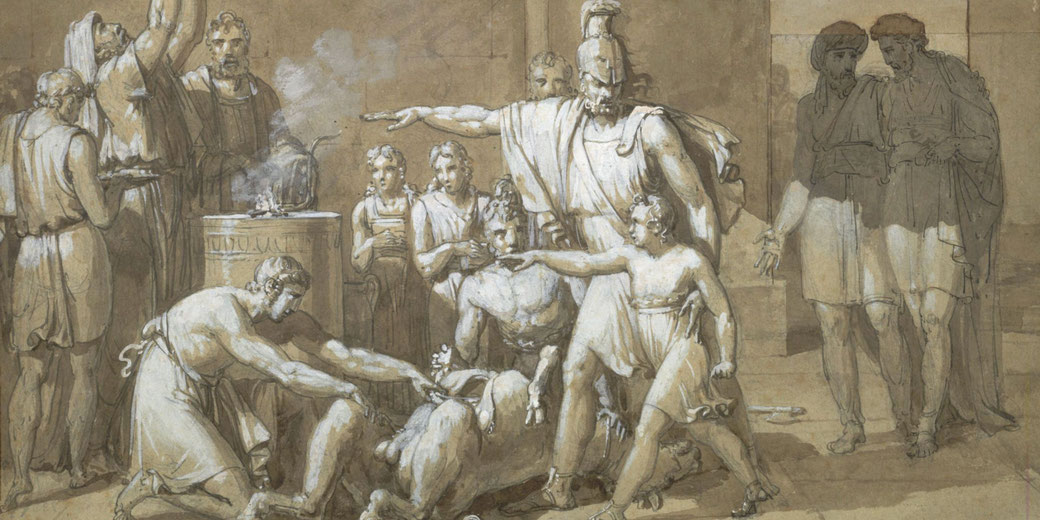
During the final decade of the third century BC, Carthage stood at perhaps its weakest point in generations. Roman victories in Sicily had largely shattered its influence across the western Mediterranean, and internal arguments blocked its ability to recover.
At the centre of this decline, one general refused to accept defeat. Hamilcar Barca was a commander of unusual determination and clear vision, who had taken control of scattered forces and had rescued his city from rebellion.
Then, he built a new empire in Iberia that would reignite Carthage’s rivalry with Rome.
The final years of the First Punic War
By 247 BC, Rome had overrun most Carthaginian strongholds across western Sicily, and it had drained Carthage’s treasury with constant naval action as it also restricted Carthaginian access to key supply routes.
At the same time, the ruling council in Carthage struggled to manage the war effort, and it lacked both the political will and the useful resources needed to counter Roman advances.
As a result, Carthaginian generals lost momentum and became confined to defensive positions along the coast.
At this turning point, Hamilcar Barca received command with few troops and no navy.
He did not attempt to win battles through conventional sieges or set-piece engagements.
Instead, he established a base at Mount Hercte, near modern-day Palermo, where high terrain offered both natural defence and access to Roman positions along the coastal plain.
Over the next three years, he launched constant raids that forced Roman commanders to divide their forces and respond to threats across multiple fronts.
According to Polybius, Roman efforts to isolate him repeatedly failed, since he changed position too quickly for a conventional response.
Eventually, Hamilcar transferred operations to the fortified heights of Eryx. There, his position near the port of Drepana allowed him to support the remaining Carthaginian fleet, and it also allowed him to launch attacks inland.
Since he held Eryx for several more years, he forced the Romans to stretch their resources and delay final victory.
However, in 241 BC, the naval defeat at the Aegates Islands left Carthage unable to maintain its position.
Under pressure, the ruling council agreed to peace terms that required Hamilcar to evacuate his positions and abandon Sicily altogether.
How Hamilcar saved Carthage in the Mercenary War
Shortly after his return, Carthage entered a new period of danger. Thousands of unpaid mercenaries who had served Carthage during the Sicilian campaign demanded compensation and revolted when the state refused payment.
Within months, rebel forces had seized key towns and recruited African allies, then marched on Carthage itself.
The council's indecision allowed the rebellion to grow stronger, while the loyalty of nearby territories began to erode.
At this moment, Hamilcar returned to the field. He began by securing the Bagradas River region, where he defeated rebel forces and secured access to vital grain stores.
Then, he launched a series of manoeuvres designed to isolate enemy leaders and break their alliances.
On one occasion, he negotiated the surrender of a rebel band, then executed its officers to prevent a future uprising.
When he surrounded key towns and cut their supply lines, he forced rebels to retreat to fortified strongholds such as Utica and Tunis, which he besieged until starvation forced surrender.
Among the rebel commanders he opposed were Spendius and Mathos, who had united different groups of Libyan and mercenary soldiers.
For nearly four years, from 241 to 238 BC, he carried out a war that demanded both severe discipline and careful tactical control.
By the end of 238 BC, rebel armies had been dismantled, and the authority of the Carthaginian state had been restored.
During the course of the war, Hamilcar had also tightened his control over his own forces, which owed loyalty to him personally.
As a result, he emerged from the war as a victorious general and as arguably one of the most influential military figures in Carthaginian affairs.
Hamilcar's expedition to conquer the Iberian Peninsula
Soon after he had stabilised Africa, Hamilcar proposed a new strategy to protect Carthage from Roman aggression.
He argued that the solution to Carthage’s weakness lay primarily in expansion into Iberia, where silver mines and fertile land offered material resources, and divided tribal groups could supply a new source of strength, instead of in the rebuilding of its fleet or in direct confrontation with Rome.
In 237 BC, he led an expedition to the Iberian coast with his sons and a veteran army of approximately 10,000 troops who had remained loyal from the Mercenary War.
First, he had taken control of Gades and other coastal towns, which he had fortified and used as staging points for inland campaigns.
Then, he forged agreements with friendly tribes such as the Turdetani and he defeated those who resisted, such as the Bastetani and Oretani, and he expanded inland into the Guadalquivir valley.
The mines near Castulo largely provided the silver needed to pay his army and mint coinage so he could fund local roads, buildings, and defences.
To support Carthaginian rule, he constructed military roads and supply depots, which allowed his forces to move quickly between key positions.
He largely financed his operations independently by using plunder and Iberian silver, and a loyal officer corps that had no need for council approval sustained his efforts.
During these campaigns, he ensured that Hannibal and Hasdrubal observed the methods by which an army could win loyalty and exploit tribal rivalries, and Mago also learned how such a force could govern conquered territory.
He trusted them with small commands, involved them in diplomatic missions, and laid the foundation for an almost family-based command system that would operate independently from Carthage’s political institutions.
Over time, the Barcid power structure in Iberia gradually developed into a second centre of power, and it possessed its own army, its own revenue base, and a political programme centred on revenge against Rome.
Hamilcar's sudden death and influence on Hannibal
In 229 BC, Hamilcar launched a campaign against the Vaccei, a tribe that was located further inland along the Tagus River.
During an attempted withdrawal from difficult terrain, he died under unclear circumstances, and some sources claimed he drowned while crossing a river, while others suggested betrayal by local allies.
Regardless of the specific event, his death left behind a working chain of command and an empire still apparently expanding.
His son-in-law was Hasdrubal the Fair, and he took command and continued his plan to build alliances and tighten Carthaginian control.
Under Hasdrubal’s leadership, the Carthaginians founded the city of Qart Hadasht, which later became the city of modern Cartagena and had a name that meant "New City" which echoed the memory of Carthage’s own foundation centuries earlier.
It became the main centre of government for the new Iberian empire. Although it was likely built atop an earlier Iberian settlement, Hasdrubal transformed it into a centre of Carthaginian administration.
After Hasdrubal had been assassinated, Hannibal took control in 221 BC and soon led an army across the Alps toward Italy.
That campaign, which began the Second Punic War, relied largely on the resources and loyalty created by Hamilcar’s efforts, along with the territorial depth he had secured.
When he bypassed the council and placed control in the hands of his family and army, Hamilcar helped change the structure of Carthaginian power.
He did not ask for support from traditional institutions, and instead he created an independent military and economic base that made Carthage capable of launching a second war on a continental scale.
His long-range planning and battlefield success, along with his political independence, helped ensure that Carthage remained a threat to Rome long after Sicily had been lost.