
Symposia: When ancient Greeks got drunk and argued about philosophy
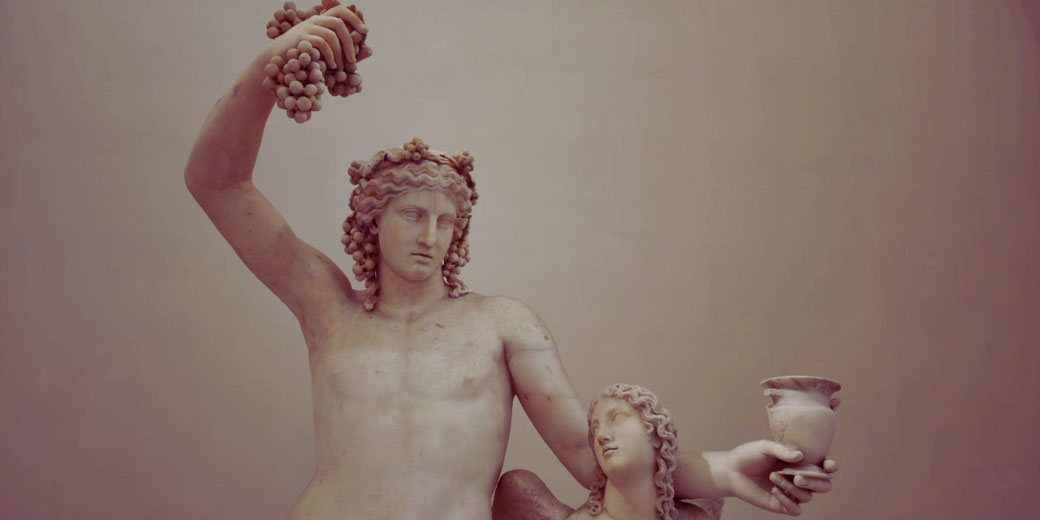
Among elite Athenian men during the fifth and fourth centuries BCE, the symposium often operated as a private ritual that blended alcohol and staged entertainment with structured philosophical exchange.
It did not normally operate as a casual party and instead reinforced class boundaries, encouraged political alignment, and became a testing ground for intellect and wit.
As wine circulated under Dionysus’ watchful eye, aristocrats debated love, ethics, and the soul’s nature as they reclined side by side in rooms lit by oil lamps and animated by music and poetry, along with provocative banter.
What was the ancient Greek symposium?
Inside the andron, couches lined the walls to create a small and private space, and only male citizens and invited courtesans gathered there.
Guests typically reclined on klinai while cradling ceramic drinking cups that were often painted with erotic or mythological scenes which revealed themselves only as the wine disappeared.
Usually, the group numbered between seven and fifteen, and invitations reflected social position within the aristocracy, with the host using the guest list to signal prestige or political loyalty.
Before anyone could drink, the event had begun with a libation to Dionysus, offered from the central mixing bowl or krater, which contained diluted wine in carefully maintained ratios.
By convention, Greeks viewed drinking unmixed wine as uncivilised and unrestrained, so each evening’s tone depended heavily on the mix chosen by the symposiarch.
Hosts often diluted wine at a ratio of one part wine to three parts water, though other ratios such as 1:2 or 1:5 were also common, and these ratios varied with the occasion and the desired mood.
He determined not just the wine’s strength but also the structure of the evening, deciding whether poetry, music, or conversation should dominate at different stages.
At the same time, household slaves circulated with trays and jugs, and they tended to food and drink without interrupting the spoken rituals.
Their presence emphasised the social gulf between citizens and the people who made the event possible.
Courtesans who were known as hetairai moved freely through the room in a way that set them apart from wives or daughters, and they performed songs or dances and sometimes took part in flirtatious exchange, but their inclusion still depended on their entertainment value rather than equal status as participants.
Among the most famous hetairai were Phryne and Aspasia, and Phryne gained fame for her beauty and wit, and Aspasia, whose exact status is still uncertain, became known for her close association with Pericles and her involvement in intellectual life.

Philosophy and intellectual debate
For the most part, philosophical discussion appeared often once the first few rounds of wine had softened tensions and stirred the intellect.
In Plato’s Symposium, Socrates and Aristophanes joined other prominent Athenians, including Agathon and Phaedrus as well as the physician Eryximachus.
Plato wrote this dialogue around 385 BCE and dramatically set it in 416 BCE at Agathon’s victory celebration, and each man took a turn offering a speech on eros, gradually raising the discussion from physical attraction to metaphysical reflection.
Although the Sicilian Expedition had not yet begun, the dialogue’s placement just before its planning added a sense of dramatic irony.
As each speaker responded to the last, the conversation shifted between mythic allegory and personal confession, then moved into more structured argument.
Eventually, Socrates drew on the teachings of Diotima and proposed that love acted as a means by which the soul could ascend from physical desire to the contemplation of a higher kind of beauty.
Before the group had fully absorbed his argument, Alcibiades, already drunk, burst into the room and delivered a wildly personal speech about his obsession with Socrates, which abruptly turned the philosophical conversation into a performance of emotional confession.
At that point, the fine line between reasoned speech and passionate excess became the subject itself, reinforcing the idea that philosophical understanding often came tied to human experience.
Often, humour and mockery entered the exchange without derailing the flow. For example, speakers regularly undercut each other’s arguments with irony, satire, or over-the-top praise, which made the dialogue resemble both intellectual contest and theatrical display.
Because wine emboldened speech and relaxed restraint, the symposium often allowed ideas to surface that would likely have been dangerous or inappropriate in a formal assembly.
Social function and exclusion
At its core, the symposium usually operated as a selective space in which elite men could perform their status and exercise influence over one another outside the reach of public institutions.
During the gathering, a man’s ability to speak persuasively, joke cleverly, or endure wine without losing control offered subtle evidence of his suitability for leadership or political partnership.
For that reason, young aristocrats often attended as part of their informal education in masculine comportment and the public culture of the city.
Importantly, the setting generally excluded most of the population. Women, unless they were hetairai, almost never entered the andron, and neither slaves nor foreigners normally joined the conversation.
While courtesans sometimes shaped the mood or steered the tone of debate, their role stayed decorative.
As a result, the symposium reinforced a closed circle of male citizenship, within which free speech operated under the unspoken guarantee of shared privilege.
At moments when the gathering turned toward political critique, it often did so through humour or poetic forms that masked intent.
Mocking verses that speakers delivered with a grin might accuse a general of cowardice or mock an unpopular magistrate, but the private setting gave such attacks room to breathe without inviting prosecution.
In that way, the symposium became both a mirror and a refuge, so it echoed public tensions and provided temporary escape from their consequences.
Games, drinking, and ritualised behaviour
As the night progressed and formal speeches gave way to competition and performance, the participants often engaged in drinking games that required skill and style.
The most popular game was kottabos and involved a player who flung the last drops of wine at a target across the room and relied only on wrist movements, a movement that required both grace and control.
The target, which was often a small saucer balanced on a stand, tested the player’s control and style, with the sound of a clean hit earning laughter or applause.
Some sources suggest that toasts and flirtation might follow a successful throw, particularly if a courtesan had been named as the object of attention.
Meanwhile, guests exchanged skolia, short improvised songs passed from one man to the next, each line that responded to the last or built upon it.
Since the verses often praised love, ridiculed public figures, or honoured the gods, the poetic exchange combined fun with commentary, and this drew participants into a shared rhythm of voice and mood.
At times, a clever verse could reshape the tone of the evening and introduce new themes or redirect attention toward a particular guest.
Although the wine deepened, disorder rarely became the aim because set behaviours helped maintain a balance between pleasure and restraint, and the symposiarch reminded guests when to drink, sing, joke, or pause.
Because excess threatened the self-respect of the group, each man remained aware that his reputation rested on what he said and on how he handled himself under influence.
Much like the convivium host in Roman dining traditions, the Greek symposiarch balanced festivity with discipline, and he used custom to moderate behaviour.
Literary depictions and historical evidence
Writers such as Plato and Xenophon left detailed portrayals of symposia as carefully written scenes for exploring the tension between philosophy and pleasure, rather than as factual reports.
For example, Xenophon’s Symposium presented a more restrained gathering than Plato’s, and Xenophon used the event as a background for moral instruction.
Both texts, however, revealed how carefully structured the conversation could be and how quickly mood could shift with the arrival of a new guest or a change in topic.

Outside the texts, archaeological discoveries offered further insight. Red-figure pottery from Athens, which dated to the late sixth and early fifth centuries BCE, displayed reclining men, kraters, musical instruments, and erotic scenes that echoed the activities described in literature.
Many of these vases, which originated from Attic workshops, had been recovered from both household and burial sites. Inscriptions such as kalos names, such as “Kalos Kleonymos,” which praised the beauty of specific boys, confirmed the presence of homoerotic courtship as part of the evening’s tone.
Taken together, the evidence painted a picture of the symposium as an event where art and power met under ritual’s control and drew desire into their orbit, rather than as idle recreation.
Among the most revealing artifacts are the painted kylikes, or drinking cups, which sometimes depicted satirical or strange or ugly images that guests saw only at the bottom of the cup.
By the time the image appeared, the drinker had already crossed into the second half of the evening, when the balance between reason and intoxication began to shift.
Notable examples include works attributed to the Berlin Painter, such as the kylix that is now housed in the Antikensammlung in Berlin (F 2294), which shows musicians and revellers mid-performance.
Some scholars debate the attribution, though the style remains consistent with his workshop.
Decline and transformation
During the Hellenistic period and under Roman rule, the traditional Athenian symposium in many places evolved into more showy versions of itself.
As kings and emperors had adopted Greek cultural forms, they expanded the guest list and introduced entertainers drawn from the theatre, then turned the banquet into a display of the ruler’s generosity rather than private dialogue.
For example, Macedonian rulers held feasts where guests were expected to praise the host in song or verse, and this turned conversation into formal display.
The Roman convivium later had adopted the habit of lying on couches and the luxurious setting of the symposium, though some gatherings retained intellectual content while others leaned toward show and performance.
At the same time, the idea of the symposium survived as a literary and philosophical form.
Writers continued to stage dialogues in symposium settings, and they used the event to frame long-lasting questions about desire and death, along with the problem of virtue.
Later readers generally understood that the real topic of such dialogues was the human capacity for reflection under pressure rather than wine or music.
In that sense, the symposium kept its symbolic power, even when its physical form had changed.
Among Greek intellectuals and Roman elites who valued the memory of the classical past, many people still treated the symposium as a model for how thought could arise from leisure and how reason might sharpen when tempered by ritual and social tension.
Within the walls of the andron, as candles flickered and songs echoed, aristocrats regularly tested one another in speech and in the way they conducted their lives as equals under wine’s slow spell.