
The 10 greatest philosophers from Ancient Greece and their revolutionary ideas
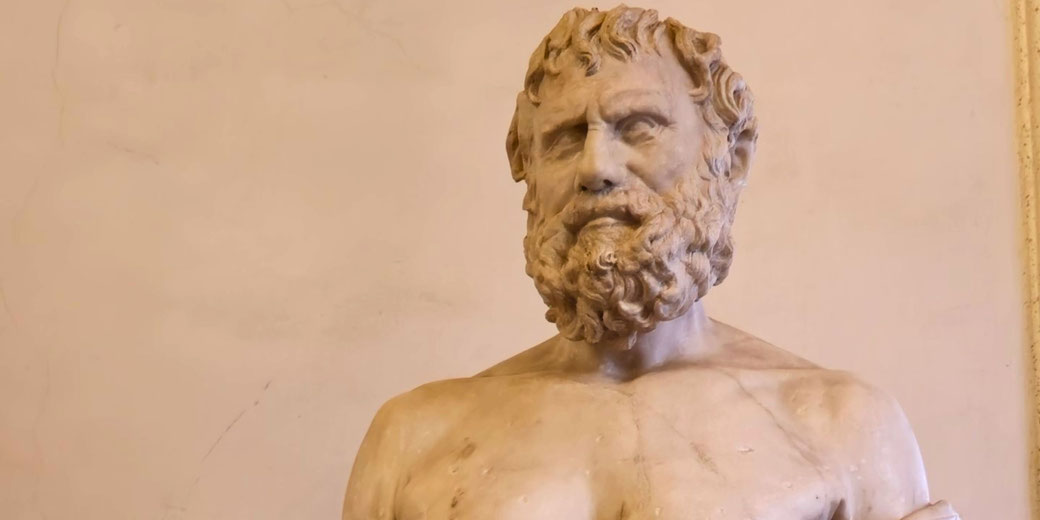
During the fifth and sixth centuries BCE, a wave of intense intellectual questioning spread across the Greek world and it began especially in Ionian cities such as Miletus and later flourished in Athens.
Thinkers questioned traditional mythologies and turned instead to disciplined reasoning and close observation in their search for knowledge.
As a result, they developed the earliest recorded systems of ethics, metaphysics, epistemology, and political theory, and their influence still guides philosophy and science and continues to influence education to this day.
1. Socrates
In 469 BCE, Athens witnessed the birth of a man whose ideas changed the moral ideas of later Western thinkers.
Socrates never published his philosophy, but his conversations were recorded by his student Plato, and they showed a method of argument that exposed problems in ordinary reasoning.
He walked barefoot through the streets of Athens and he challenged statesmen and artisans, along with groups of Athenian youths, to justify their beliefs.
At the centre of his method stood a process of critical questioning now widely known as the Socratic Method, although ancient writers described it as elenchus.
When he continually asked questions, Socrates guided others to uncover contradictions and refine their ideas.
He insisted that wisdom required the recognition of ignorance and believed that self-knowledge led to virtue.
Importantly, he said that moral failure came from intellectual error. When accused of impiety and corrupting the youth, he refused to flee and accepted his sentence.
In 399 BCE, he drank hemlock in prison, asserting that obeying unjust commands harmed the soul more than any punishment.
His trial and death were later recounted by Plato in Apology and Phaedo, which fixed Socrates in memory as a symbol of integrity and serious philosophical commitment.

2. Plato
After Socrates’ execution, Plato travelled across the Mediterranean before returning to Athens, where he established the Academy around 387 BCE.
His dialogues presented detailed philosophical ideas within dramatic conversations, often using Socrates as the central voice.
Unlike his teacher, Plato argued that reality included an immaterial domain of perfect and eternal Forms, which existed outside the world of appearances.
According to his theory, sensible objects resembled their perfect counterparts only imperfectly.
For example, all just actions imitated the Form of Justice, but none embodied it fully.
In The Republic, Plato proposed a state ruled by philosopher-kings who understood the Form of the Good and governed according to rational principles.
He distrusted democracy, which he believed placed power in the hands of those guided by emotion rather than knowledge.
Influenced by Pythagorean ideas, he viewed the cosmos as an ordered structure governed by rational patterns.
Over time, his thought influenced Neoplatonism and Christian theology and also guided centuries of metaphysical debate.
The original Academy had been destroyed in 86 BCE, and a later Neoplatonic revival emerged in the fifth century CE before it closed in 529 CE.
Although not continuous, the name and influence of the Academy persisted across centuries.
3. Aristotle
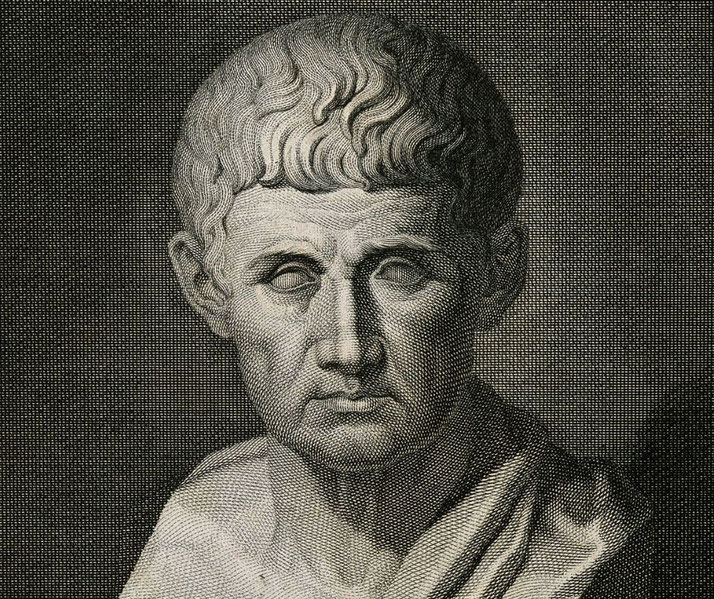
Born in 384 BCE in Stagira, Aristotle studied at Plato’s Academy for twenty years.
Eventually, he rejected the separation of Forms and matter, claiming that form existed within objects themselves and could be studied through experience.
He believed that, in general, knowledge began with sensory perception and progressed by abstraction toward universal principles.
After he had taught Alexander the Great, he returned to Athens and founded the Lyceum, where he taught using empirical investigation and logical classification.
In his Nicomachean Ethics, Aristotle described happiness as the highest human good and explained that it arose from practising virtue in accordance with reason.
By cultivating habits that balanced extremes, such as courage between cowardice and recklessness, individuals could live good lives that used their abilities well.
In politics, he analysed different constitutional systems and advised that the best governments promoted the common good.
His biological research included dissections and observations of over 500 species and laid early foundations for zoology.
His logical writings were especially concerned with syllogisms and formed the foundation of Western deductive reasoning until the modern era.
Among his many works, Politics, Metaphysics, Poetics, and De Anima stand out as long-lasting sources of philosophical understanding.
4. Pythagoras
Around 570 BCE, Pythagoras left Samos and migrated to Croton in Magna Graecia, where he founded a community that combined religious ritual with philosophical inquiry.
His followers lived communally and followed strict rules, and they believed that the soul passed through cycles of rebirth.
They maintained that reality could be understood largely through numbers and that mathematical relationships revealed the hidden structure of the cosmos.
Significantly, Pythagoras taught that harmony governed music and also ordered the entire universe.
His school discovered ratios that explained musical intervals and geometric patterns, reinforcing the belief that number controlled both sound and space.
They revered the tetractys as a sacred symbol that represented cosmic harmony, and it was a triangular figure of ten points.
Although earlier civilisations had known the principle behind the Pythagorean Theorem, the Greeks credited him with formalising it and placing it at the centre of mathematical thought.
His influence persisted in later mystical and philosophical traditions that connected mathematics to cosmic order and guided Neoplatonic metaphysics.
5. Heraclitus
In the city of Ephesus, Heraclitus developed a philosophy centred on flux and opposition.
He believed that the universe remained in constant motion and that fire symbolised this ever-changing process.
Unlike thinkers who sought permanent substances, he claimed that all things changed continuously and that apparent stability masked a constant underlying activity.
His sayings were written as puzzling short sayings, and they presented a vision of reality where conflict maintained order.
For Heraclitus, logos governed the cosmos, and it acted as a rational principle that united opposites and sustained balance.
He wrote that strife preserved harmony and that one could not step into the same river twice.
His doctrine of constant change challenged traditional beliefs about permanence, and later philosophers such as the Stoics incorporated his concept of logos into their understanding of reason that came from the gods.
His fragment "war is the father of all" captured his belief in conflict as a generative force.
When he placed contradiction and impermanence at the centre of his teaching, he prepared later thinkers for philosophical questions about identity and time in a world of continual process.

6. Democritus
Around 460 BCE, Democritus of Abdera proposed that all matter consisted of indivisible units called atoms, which moved through empty space and collided to form the objects and sensations of the world.
His atomism rejected supernatural explanations and argued that necessity, rather than purpose, governed nature.
Ancient sources name Leucippus as his teacher, though modern scholars debate whether Leucippus was a historical figure who actually lived.
Regardless, Democritus developed the theory into a clear physical system.
He explained vision, thought, and perception as results primarily of atomic interaction.
Importantly, he extended his theory to ethics, claiming that a calm inner life resulted from rational moderation and freedom from fear.
When he taught that the gods had no control over natural events, he challenged traditional religious authority.
Aristotle later criticised his views for failing to consider final causes, but his materialism laid foundations for later natural philosophy.
Although his works had survived only in fragments, his ideas reappeared during the Renaissance and Enlightenment, when natural philosophers rediscovered atomism as a framework for scientific investigation.
7. Epicurus
Born in 341 BCE on Samos, Epicurus later settled in Athens, where he founded a school called the Garden.
There, he taught that the highest good was pleasure, defined as the absence of bodily pain and mental disturbance.
He urged his followers to avoid public life and superstitious fear and to cultivate peace through rational understanding and strong friendships.
He adopted Democritean atomism and explained that atoms occasionally deviated from their paths, introducing a random atomic "swerve" that made room for human freedom.
The earliest surviving account of this appears in Lucretius’ De Rerum Natura, but the idea likely reflected Epicurean teaching.
Since he believed the gods lived in complete distance from human affairs, he saw no reason to fear punishment from the gods.
According to Epicurus, death meant the end of sensation and therefore had no consequence for the living, and his views were systematically expressed in Letter to Menoeceus and Principal Doctrines.
While his enemies misrepresented him as a hedonist, his surviving letters and maxims reveal a disciplined, thoughtful pursuit of inner peace through reasoned choices and self-restraint.
Later Roman authors helped preserve and spread Epicurean philosophy, and one important example in particular was Lucretius, who wrote De Rerum Natura.
8. Zeno of Elea
Zeno of Elea lived during the early fifth century BCE, and he composed paradoxes that defended the monist philosophy of Parmenides.
Parmenides had claimed that reality remained unchanging and that change and motion, along with any true plurality, were illusions.
To protect this view from criticism, Zeno crafted arguments that showed contradictions in ordinary assumptions about time and space.
According to Plato, he used these paradoxes to support rather than to advance his own doctrines.
Among his paradoxes, the story of Achilles and the tortoise argued that motion required completing an infinite number of tasks, which seemed logically impossible.
Another paradox was the dichotomy paradox, and it suggested that before reaching any destination, a traveller must reach halfway points without end.
He also formulated the Stadium and Arrow paradoxes to challenge assumptions about velocity and continuity.
These puzzles forced later thinkers to confront the problems of infinity and continuity.
Eventually, mathematicians in the nineteenth century addressed Zeno’s challenges by formalising limits and convergent series, but his paradoxes remain influential in discussions of logic and metaphysics.
Aristotle preserved many of Zeno's arguments in Physics.
9. Diogenes of Sinope
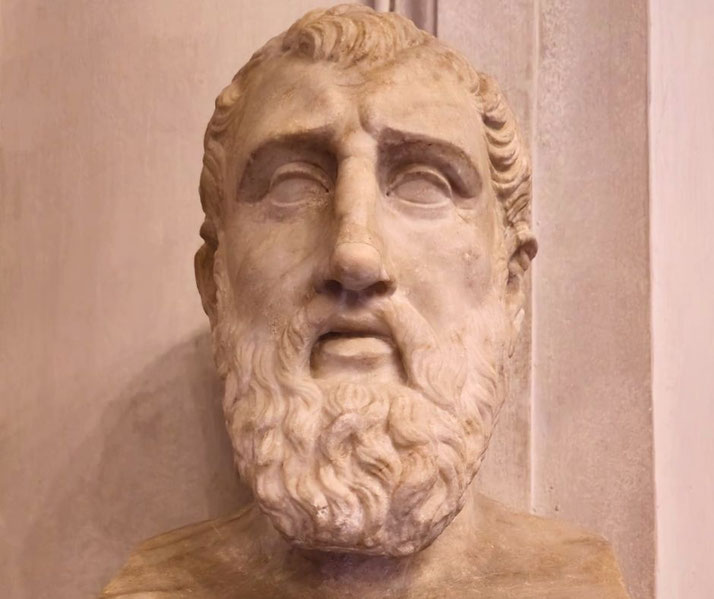
Around 412 BCE, Diogenes arrived in Athens and adopted a life of public poverty and deliberate shock tactics.
He practised Cynicism, a school that rejected wealth and social convention and treated public reputation as worthless in favour of natural living and individual self-sufficiency.
According to legend, he carried a lamp through the city during daylight as he claimed to search for an honest man.
He mocked both Plato and the sophists, claiming that philosophical discourse had become disconnected from practical virtue.
He discarded possessions and lived in a large pithos (a storage jar), then disrupted public gatherings to expose hypocrisy.
When he reduced his needs and ignored shame, Diogenes argued that virtue required nothing from society.
His encounter with Alexander the Great showed his defiance, and in that meeting he asked the conqueror to stand out of his sunlight.
His stubborn independence and blunt wisdom inspired Stoics such as Epictetus, who admired his focus on self-mastery and detachment.
He was influenced by Antisthenes, a student of Socrates, who helped lay the groundwork for Cynic philosophy.
10. Thales of Miletus
In the early sixth century BCE, Thales proposed that the world could be explained by natural causes rather than intervention by the gods.
He identified water as the primary substance underlying all matter and suggested that natural processes, rather than mythological forces, governed change.
As a result, he became the first known Greek philosopher to investigate the cosmos with rational methods, and he was later credited with a prediction of a solar eclipse in 585 BCE, though modern historians debate whether this prediction was based on known cycles or later attributions.
He calculated geometric proportions and helped initiate the tradition of scientific inquiry in Ionia.
Aristotle named him as the first philosopher in Metaphysics and credited him with shifting inquiry away from myth.
Thales also proposed that earthquakes occurred due to shifts in the watery foundations of the earth.
Although his elemental theory proved incomplete, he demonstrated that nature followed patterns that could be observed and understood.
His students continued to develop theories about the origins and structure of the universe, and this group included Anaximander.
As the founder of the Milesian School, Thales shifted philosophical thought toward empirical observation and logical reasoning.