
Why Queen Gorgo commanded respect in the hyper-masculine society of ancient Sparta

In a city-state where boys were torn from their mothers at age seven and trained to kill without hesitation, one woman held the ear of both Spartan kings and generals, as well as the most important foreign ambassadors.
Gorgo was queen of Sparta and the daughter of King Cleomenes I, and she navigated the rigid hierarchies of fifth-century BCE Lacedaemon with an intellectual authority that even the most powerful men in Greece could not dismiss.
Her story shows how Spartan women occupied a position of influence that was unlike anything found elsewhere in the ancient Greek world, and why Gorgo became the most documented Spartan woman in classical sources.
Why Spartan women were different to other Greek women
As Sparta organised its entire society around military readiness, the consequences for women were radically different from those in Athens or Corinth.
Spartan men spent most of their adult lives in communal barracks and mess groups.
As mentioned above, boys entered the agoge at age seven. After formal training had ended, young men still lived and ate in communal mess groups until about age thirty, with military drill and campaigning as normal expectations.
As a result of this prolonged male absence, women assumed direct control over property and finances, along with the daily management of estates.
According to Aristotle, who wrote in his Politics around 335 BCE, Spartan women controlled approximately two-fifths of all land in Lacedaemon.
He had connected this situation to inheritance patterns and the movement of land through dowries and heiresses.
Sparta’s laws were attributed to the legendary lawgiver Lycurgus and required girls to undergo physical training in running and wrestling, as well as javelin throwing.
Xenophon also described state support for female physical training in his Constitution of the Lacedaemonians.
Likewise, Plutarch, who wrote in his Life of Lycurgus, explained that the purpose of such training was to produce healthy mothers who could bear children for the state.
As a result, Spartan women possessed physical confidence and public visibility, while Athenian women were confined to the domestic quarters of their homes and did not experience anything similar.
Spartan culture viewed motherhood as the female equivalent of military service.
Plutarch wrote that only men who were killed in battle and women who died in sacred office received named grave markers.
Some modern writers have connected this rule to deaths in childbirth, and the surviving wording pointed to religious duty instead.
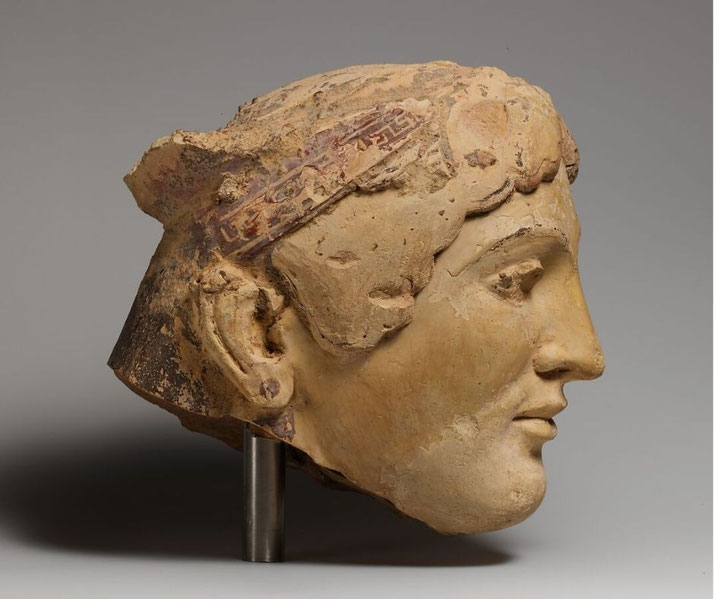
Gorgo as a confident child
As the only child of King Cleomenes I, who ruled Sparta from approximately 520 to 490 BCE, Gorgo was very aware of Spartan political life.
Cleomenes belonged to the Agiad royal house, which was one half of Sparta’s dual monarchy.
His father, Anaxandridas II, had children by more than one wife, which explains why Cleomenes and Leonidas were half-brothers.
Herodotus was our primary source for Gorgo’s early life, and he recorded an episode from around 500 BCE, on the eve of the Ionian Revolt of 499 to 493 BCE.
The young Gorgo was then about eight or nine years old and advised her father to reject the requests and bribes of Aristagoras of Miletus.
Aristagoras had travelled to Sparta to request military assistance for the revolt against Persia, and he explained that the journey to the Persian capital at Susa took about three months, which helped Cleomenes grasp the scale of the undertaking.
Aristagoras then attempted bribery and raised his offer from ten talents to fifty talents.
According to Herodotus in Book Five of the Histories, the child told her father plainly that the stranger would corrupt him if he did not send him away, and Cleomenes dismissed Aristagoras.
Herodotus wrote within living memory of the event, probably around 440 BCE, and the account likely preserved genuine oral tradition about Gorgo’s early political awareness.
Her willingness to speak directly to a reigning king on matters of state indicated that Spartan royal households generally expected daughters to understand political affairs.
After the death of Cleomenes around 490 BCE, Gorgo’s position had strengthened because she married King Leonidas I, who was her father’s half-brother, and she became queen consort of the Agiad dynasty.
Gorgo’s role during the Persian Wars
During the years immediately before Xerxes’ invasion, Gorgo demonstrated strategic intelligence that Herodotus considered worth recording in detail.
In 481 BCE, or early 480 BCE, a secret message arrived in Sparta from Demaratus, who was an exiled Spartan king that lived at the Persian court.
Demaratus sent a double writing tablet that appeared blank because he had scraped off the wax and inscribed a warning about Xerxes’ planned invasion on the wood beneath, and then he covered it with fresh wax.
No one in Sparta identified the tablet’s purpose until Gorgo suggested scraping the wax away to uncover the hidden text.
Her solution carried significant strategic consequences, because it gave Sparta and the wider Greek alliance advance warning of the invasion force that was assembling under Xerxes I.
Xerxes crossed into Europe in 480 BCE. Greek commanders then organised a defence plan that included a land stand at Thermopylae and a naval fight at Salamis.
Thermopylae took place in late August or early September 480 BCE, and Salamis followed in late September of the same year.
Herodotus credited Gorgo directly with the method that had exposed the warning, which indicated that her intellectual reputation was likely known among his contemporaries.
After the death of Leonidas at Thermopylae in late August or early September 480 BCE, when a Greek force had held the pass for several days and Leonidas had led a final rearguard that included three hundred Spartans alongside allied troops, Gorgo’s status took on additional weight.
She was the widow of the most celebrated Spartan war-dead of the age and the mother of his heir Pleistarchus, and she occupied a position of considerable informal authority.
Ancient sources did not record her acting as formal regent, since Sparta had appointed Pausanias, who was Leonidas’ nephew, for that role.
Regardless, her place as the figure who connected two Agiad kings still carried obvious political value inside Sparta.
What Gorgo tells us about Spartan society
Gorgo’s documented influence was telling because Greek historians rarely mentioned women by name unless they had done something extraordinary.
Herodotus had named very few women throughout the Histories, and his account included figures such as Atossa and Artemisia of Halicarnassus.
His repeated attention to Gorgo still pointed to a reputation that was arguably well known across the Greek world.
Plutarch later included several of her sayings in his Sayings of Spartan Women, which included her famous response to an Athenian woman who asked why Spartan women were the only ones who could command their men.
Gorgo reportedly answered that Spartan women were the only ones who gave birth to real men.
Plutarch also preserved a remark in which Gorgo mocked a foreign visitor who relied on a servant to lace his shoes, and she told him that he had no hands.
Ancient Greek societies often excluded women from public discourse, and that pattern generally held in many poleis.
Gorgo’s participation in political decision-making provided valuable evidence about Spartan social structures, and Sparta’s military culture had arguably created more space for female authority than Athens did.
For historians of the classical period, her life offered concrete evidence that ancient gender roles had varied across Greece, and Sparta’s distinctive social order produced women whose influence reached into the highest levels of political affairs.