
Why ancient Egypt’s best warriors were awarded with a golden fly
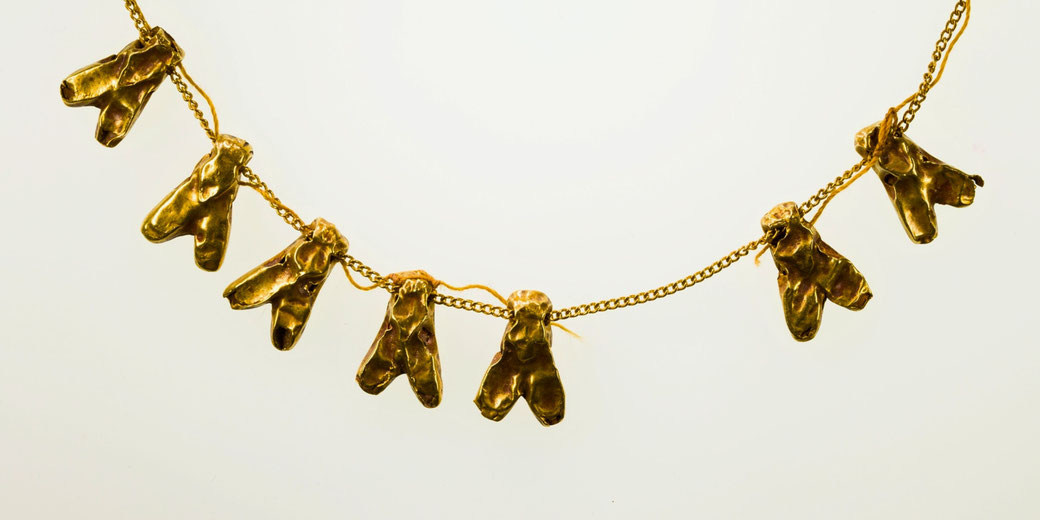
Among the burial goods recovered from New Kingdom tombs, few carry more unexpected symbolism than the golden fly pendant.
Archaeologists have found them in the tomb of Queen Ahhotep and among the grave goods of men who served in foreign campaigns, where they appeared as ornaments worn by generals of the 18th Dynasty.
Rather than symbolise decay or disease, the fly often came to signify the consistent endurance of soldiers who advanced under pressure and stubbornly held the line during sieges.
The fly as a symbol of persistence
In Egyptian military culture, symbolic meaning had a practical purpose that was often drawn from familiar experiences in their daily lives.
In particular, the fly buzzed endlessly around campsites and food stores, as well as near wounds, and it demonstrated a kind of persistence that officers began to admire.
Rather than vanish under pressure or flee from conflict, it returned again and again, and it was never stopped by violence or discomfort.
For warriors hardened by years of desert warfare, that behaviour seemed to match their own trials more than the strength of lions or the elegance of falcons.
Soldiers who marched across scorched terrain and maintained formation under missile fire during prolonged sieges of enemy cities without relief often became associated with this trait.
As a result, when scribes recorded honours for military conduct, they chose the fly as a symbol of those who had endured long campaigns with determination.
The fly refused to disappear. So did the men who wore it.
Origins during the 18th Dynasty
By the early 16th century BC, fly-shaped pendants had begun to appear as royal honours awarded to individuals who had proved themselves in warfare.
Excavations at Dra' Abu el-Naga' showed that Queen Ahhotep I had likely supported her son Ahmose I during the wars against the Hyksos and had received several golden fly pendants.
These were found in her tomb by Auguste Mariette in the mid-19th century and had been made of solid gold, carefully made, and had been buried with her as tokens of honour.
Their presence among ceremonial axes and gold armlets and among other royal items suggested that she probably held an important place in the effort to restore Egypt's independence.
Shortly after Ahmose expelled the Hyksos from the Nile Delta, his court appears to have introduced formal military honours for officers who had participated in the conflict.
As a result, the golden fly became one of the earliest known symbols of military distinction in the New Kingdom.
Charioteers and field commanders, together with elite guardsmen, received it for endurance in combat and for repeated acts of loyal service.
Its presence indicated that the wearer had fought under conditions that demanded persistence and unwavering resolve.
Use in military honours and burial goods
As well as a battlefield decoration, the golden fly worked as a ceremonial reward displayed during court processions and other public events such as religious festivals.
Officers wore them on necklaces or pinned to garments, where they showed everyone present that the wearer had usually completed very hard campaigns.
Even in the culture of the court, the fly conveyed honour more quietly than a title or land grant, but its meaning must have held extra weight among those who understood what it took to earn one.
Alongside the fly, recipients might also receive other honours, such as the "Gold of Honour" collar.
Over time, the pendants began to appear in tombs alongside weapons and bracelets, as well as carved stelae.
In tomb inscriptions, recipients often included references to the number of flies they had received, as a record of how many campaigns they had completed.
One such figure was Ahmose Pen-Nekhbet, who recorded service under three different kings.
He fought in Nubia and the Levant, in coastal cities where supply lines stretched thin and resistance remained fierce.
His own inscriptions at Tomb 2 in El Kab provided one of the most detailed records of New Kingdom military life.
They described his service as continuous and unbroken, and later traditions associated such service with the way the king awarded golden fly pendants.
Cultural and religious meaning
Interestingly, before it became a formal military honour, the fly had already appeared in earlier periods as a protective amulet.
Artisans carved small fly-shaped charms during the Middle Kingdom, which they placed in burials to guard the body or ward off unseen threats.
These earlier uses did not imply any military recognition. As Egypt entered the New Kingdom, the symbolic value of the fly appears to have shifted, and it still kept its connections with survival and resistance.
Once the decoration took shape in gold, its meaning expanded again, as gold never tarnished and shone with the light of the sun.
As such, it had religious connections to the power of the gods and to eternal life.
When the pharaoh granted a golden fly, it was both a gift and a public statement that the recipient’s deeds matched ma’at.
Within Egyptian thought, that meant that people maintained order against chaos and fulfilled duty in a way that balanced personal resolve with loyalty to divine authority.
Modern discoveries
Excavations of New Kingdom sites have brought dozens of fly pendants to light so far, many of which were recovered from the Theban necropolis or from burials in Saqqara.
Often, they appeared with other honours granted to military elites, such as gold collars and bracelets and also weapons.
Some pendants measured more than five centimetres across, with wings that were finely etched, eyes that were detailed, and loops so they could be worn at formal gatherings.
Examples that survive can be seen in the Egyptian Museum in Cairo and the British Museum (EA 63279), along with the Metropolitan Museum of Art in New York (26.8.117), which holds a pendant that measures 4.7 centimetres in length.
Written references to the fly strongly suggest its importance within the honour system of the Egyptian army.
In some cases, soldiers described that they had received a fly-shaped pendant in recognition of specific campaigns or that they had held their post under long periods of pressure.
These references use modern words when translated, but can show ancient kinds of merit.