
The ‘god’s wife of Amun’: The powerful Egyptian women who married a god
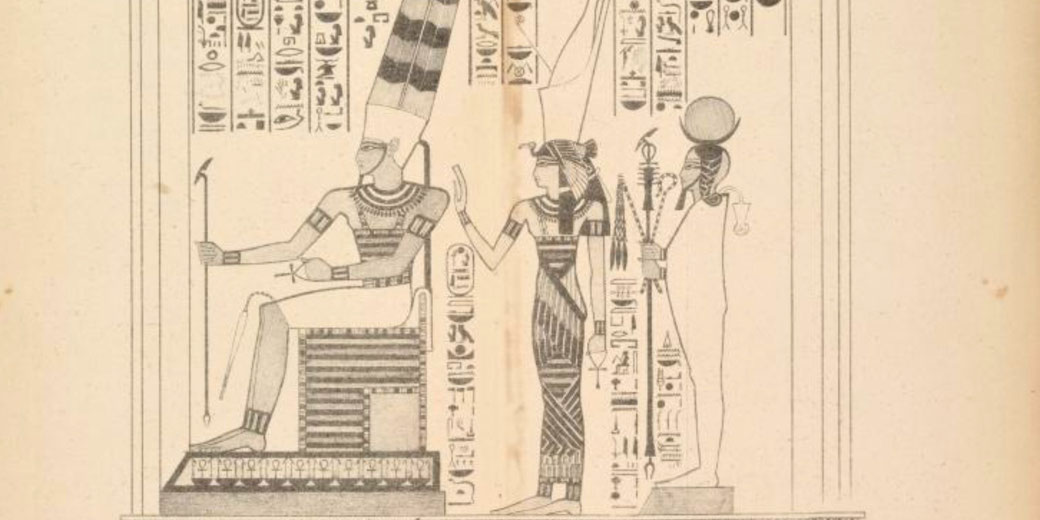
By the middle of the second millennium BCE, as Amun’s cult had become the most important in Egypt, a new ritual office appeared that changed the role of royal women in state religion.
At the temple of Karnak in Thebes, a very large temple site that would become one of the largest religious sites known from the ancient world, priestesses known as the ‘God’s Wife of Amun’ began to perform ceremonies that effectively positioned them as sacred consorts of the chief god.
This role granted them access to landholdings that generated incredibly levels of wealth and religious prestige.
What was the ‘god’s wife of Amun’?
The earliest known appearance of the title ‘God’s Wife of Amun’ occurred during the reign of Senusret I in the 12th Dynasty, around 1971 BCE.
Initially, the position held ceremonial value and involved help with offerings and processions tied to Amun’s cult, which had risen sharply in importance during the Middle Kingdom.
As the priesthood of Amun gradually expanded its presence in Thebes, royal women who held the title were given access to the temple’s religious hierarchy and began to take part in sacred duties central to the maintenance of ma’at.
Over time, particularly during the 18th Dynasty, the title appears to have become more than a formality.
Ahmose-Nefertari was queen of Ahmose I and received temple estates and staff that came with ritual authority that granted her access to temple income and decision-making power.
Her image appeared in mortuary temples long after her death, which indicates a cult that outlived her reign.
Inscriptions describe her as the “Second Prophet of Amun,” a role traditionally reserved for male priests, which suggests that her authority went further than simple symbolism and instead was administrative and ritualistic.
As Amun’s status grew, so did the prestige of the woman believed to be his earthly consort.

Later, during the Third Intermediate Period, the title had developed into a formal institution that could have wide political and religious effects.
Royal daughters, appointed as the God’s Wife, were installed in Thebes with official approval from the state.
Once there, they acted independently of the king’s court, controlled economic resources tied to Amun’s temples, and issued decrees under their own name.
As a result, their iconography changed. Reliefs depicted them crowned with the vulture headdress and showed them holding the sistrum and menat as they received life symbols from Amun himself.
Their role merged priesthood with royal patronage in a way that approached sovereignty in a single office.
Many carried additional titles such as “Chief of the Harem of Amun” and “Adoratrice of Amun,” which reinforced their fusion of spiritual and administrative authority.
How did someone become the ‘god’s wife of Amun’?
From the late New Kingdom onward, the process used to appoint a new God’s Wife followed a carefully planned ritual structure.
A reigning priestess adopted a royal daughter in a public ceremony that combined written stelae and witness accounts with formal temple endowments.
By adopting a successor, the current officeholder ensured a peaceful transfer of power, protected temple assets, and allowed foreign dynasties to maintain religious legitimacy in Thebes without the need for occupation or military control.
For example, Amenirdis I was the daughter of the Nubian king Kashta and received the position when Shepenwepet I adopted her as a royal woman who was likely affiliated with the 23rd Dynasty, which had Libyan connections.
Amenirdis held the position of God’s Wife from around 714 BCE and continued to hold it into the later years of Taharqa’s reign.
The adoption was formalised on a stela at Karnak that outlined her duties and rights within a fully integrated place in the temple hierarchy.
Later, Shepenwepet II, in turn, adopted Nitocris I, who was the daughter of Psamtik I of the 26th Dynasty.
Nitocris received lavish gifts and direct control of temple resources that granted her wide independence across Upper Egypt.
The sequence of adoptions gave the title continuity even as dynasties changed.
One of the most important surviving sources is the Adoption Stela of Nitocris I, which is still a key document for understanding how the office operated.
Significantly, God’s Wives appear to have lived celibate lives within the temple precincts and produced no heirs.
This policy ensured that their personal wealth and influence would not be transferred to a rival family or provincial clan.
Instead, all resources returned to the temple or passed to an adopted successor.
Their lives were structured around ritual activity and supervision of temple affairs that demanded constant letters about political matters.
Often, they resided within specialised temple quarters surrounded by personal staff, scribes, female attendants, and stewards who managed agricultural estates and religious workshops.
What did the god’s wife do?
Each morning, before the sun rose above the Theban hills, the God’s Wife had purified herself in sacred water and then entered the sanctuary to perform the sacred awakening of Amun.
She sang hymns and rattled the sistrum as she said prayers that reawakened the god’s statue, which had rested overnight in its shrine.
Her movements and chants followed set prayer texts that acted out the rebirth of the world and kept the human world in line with sacred order.
Some scholars have suggested that this ritual may have drawn from older rites such as the “Opening of the Mouth” ceremony, which was used to bring statues to life again and restore their sacred power.
The ritual placed her in the unique position of reviving Amun’s spirit daily, and her presence became essential to the temple’s operations.
During the year, she also took part in festivals such as the Beautiful Feast of the Valley and the Opet Festival, which carried the god’s image from Karnak to Luxor and back.
During these processions, the God’s Wife, who was surrounded by musicians and dancers, rode on a ceremonial barque alongside high priests.
She played a visible role when she led chants and burned incense as she received tributes from local elites and temple towns.
Her participation, which confirmed her sacred status, also showed the intended renewal of Amun’s favour upon the population.
Her authority also reached into economic life. She managed large areas of land linked to the Amun temple estates and employed large workforces of farmers, weavers, potters, scribes, and administrators.
In some periods, these estates supported thousands of people who relied on the temple across temple towns and rural holdings.
Some legal records that survive list her involvement in contracts and tax assessments related to property transactions.
She directed temple construction projects and restored damaged shrines, and she sometimes contributed resources to national building efforts.
Her household, which mirrored a royal court in scale, required constant oversight.
She wielded her seal to issue orders and grant privileges, and she maintained a network of officials who administered temple towns throughout Upper Egypt.
Political power beyond the temple walls
As Egypt’s central authority declined during the Third Intermediate Period, the gap in power in Upper Egypt allowed the God’s Wife to accumulate real power.
Dynasties from the Delta or Nubia often lacked direct access to Thebes, so they used this priestly office to spread their influence into the south.
When they installed their daughters into the role, they secured a religious anchor that legitimised their authority without confrontation.
In practice, the God’s Wife often acted as a regional governor in Thebes, though her power stemmed from ritual rather than royal edict.
For instance, Amenirdis I maintained close ties to her brother, Pharaoh Shebitku, and later supported Taharqa, who was another Nubian ruler.
Her authority in Thebes was so firmly established that even rival dynasties left her in place, and Shepenwepet II, her successor, held office during a period of political division and shifts in regional power, and no king removed her.
The political importance of the office reached a peak with Nitocris I, whose inscriptions seem to show legal and economic authority that surpassed any other female official in Egypt.
She oversaw temple revenues and issued administrative orders, and she maintained her own judicial staff.
Statues of both Shepenwepet II and Amenirdis I, which have been found at Karnak, provide physical confirmation of their long-term presence in Thebes.
Because the office did not involve military command, its influence largely rested on religious legitimacy and economic strength that depended on ritual centrality.
The God’s Wife resolved disputes and maintained stability among the priesthood, and she acted as the spiritual linchpin of pharaonic rule in Upper Egypt.
Even pharaohs who ruled from Memphis or Sais often depended on her cooperation to retain loyalty among Theban elites.
For this reason, inscriptions often present her as an essential partner in government rather than as a subordinate.
The decline of the god's wife of Amun
Under Persian occupation, the political and religious balance that had once supported the God’s Wife collapsed.
When Cambyses II conquered Egypt in 525 BCE, his administration distrusted local priesthoods, especially those tied to Amun’s temple.
They cut back the economic independence of temples and reduced the estates that did not pay tax, and they restricted the authority of their internal offices.
As a result, the God’s Wife lost her financial independence and her ability to act as a regional power.
Later, during the Ptolemaic period, Greek rulers largely preserved Egyptian temple traditions to satisfy local populations, but they did not restore the position to its earlier prominence.
Instead, queens such as Arsinoe II took on sacred epithets and participated in cultic life without reviving the office itself.
Religious authority now followed Hellenistic models, with royal women styled as goddesses but operating under formal rules set by the royal court.
By the Roman period, the office no longer existed, but some rituals had continued, and Amun’s temple still operated into the early imperial centuries, and the specific duties once held by the God’s Wife had been distributed to temple priests or absorbed by state officials.
Although her name still appeared in inscriptions and statues, her voice no longer echoed in the sanctuary each morning.
The office had passed into memory, and for over a thousand years, the God’s Wife of Amun had spoken to the gods and directed the wealth of the south, and she had maintained the heartbeat of the most powerful temple in ancient Egypt.