
How Roman slaves escaped their masters and the horrifying punishments they received if caught
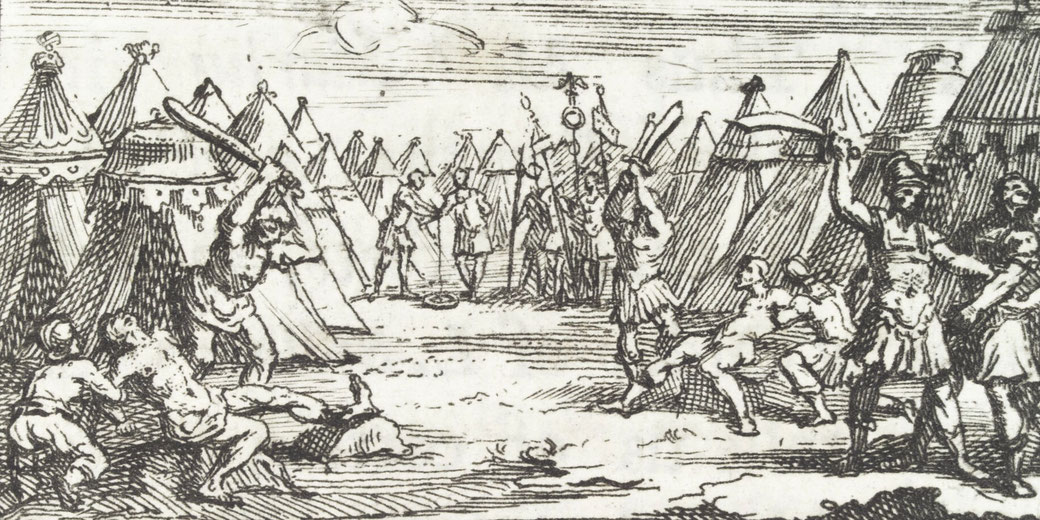
Throughout the Roman Empire, slavery often operated as the foundation of agricultural estates, domestic service, artisan trades, and urban infrastructure, with some modern estimates that indicated that around 25 to 30 percent of Italy’s population lived in slavery during the first century BC, particularly in urban centres like Rome.
However, beneath this system of enforced labour, countless acts of resistance often unfolded, from subtle refusals to overt defiance.
Among the most dangerous choices an enslaved person could make was to escape, since flight carried the risk of mutilation or death, and it also triggered collective punishment and mass revenge punishments designed to crush even the possibility of freedom.
The methods of escape and the places of refuge
To escape slavery in Rome generally required both courage and a realistic understanding of the terrain and the social networks that controlled movement across the Empire.
Often, urban slaves had greater chances to disappear into a crowd, since cities like Rome, Carthage, or Antioch were crowded with thousands of people, many of whom held no citizenship or wore no distinctive clothing.
In districts such as the Subura in Rome that had crowded streets and dense tenement housing, slaves could vanish into the alleys or among the masses.
Slaves were usually tasked with runninf a variety of errands, undertake deliveries, or deliver written communications.
Therefore, those who wanted to escape could flee during their duties and vanish among traders and dockworkers, as well as among freedmen who moved within the same spaces.
However, some escaped on ships where they paid bribes to crews or when they passed themselves off as passengers.
By contrast, rural slaves faced greater isolation and fewer opportunities to leave unnoticed.
However, even on large agricultural estates, known as latifundia, some escaped into nearby forests, caves, or mountainous regions.
Over time, small bands of fugitives sometimes formed fairly permanent communities.
For example, during the First Servile War in 135 BC, one such movement had come together under the leadership of Eunus, a slave who had claimed prophetic visions and had led a force estimated by some ancient sources to have reached over 20,000 in open rebellion against Roman control in Sicily.
Although ancient writers exaggerated the numbers, modern scholars accept that the uprising became very powerful.
His movement had lasted nearly four years before the Senate sent legions to crush the uprising and execute the survivors.
Occasionally, slaves sought protection from those who held political or economic grudges against Rome.
For example, during the Second Punic War, Carthaginian generals such as Hannibal sometimes welcomed fugitive slaves into their ranks and offered food and supplies, although their involvement in military service stayed limited.
At other times, individuals forged manumission papers (such as false libelli manumissionis) or assumed false identities as freedmen, particularly when they had skills in literacy or trade.
Some made their way to border provinces where enforcement was weaker, and where local populations held little loyalty to Roman masters or courts.
How Rome responded to slave escapes
To maintain control, Roman society relied on punishment and close watch over slaves, along with a range of legal tools that discouraged flight and made recapture profitable for free citizens.
Once captured, a slave might be fitted with an iron collar riveted around the neck that carried a message such as “I have run away. Capture me. Return me to my master Zoninus, and you will receive a reward.”
Archaeological evidence strongly suggests the use of such collars from Gaul to Britannia.
One well-known example was CIL XV 7193, which still exists with nearly identical wording.
Often, professional slave-catchers called fugitivarii patrolled towns and ports and looked for runaways whose appearance, accent, or any behaviour that attracted suspicion.
These hunters sometimes relied on informants or worked in teams to scour busy markets and harbour districts.
If successful, they handed the fugitive back to the owner and collected payment.
Roman law supported this arrangement through various measures, including the Lex Fabia de plagio, which originally targeted the kidnapping and illegal detention of free persons but was also used in some cases against those who harboured escaped slaves.
As a result, few fugitives could rely on sympathy from free citizens, and many depended on secrecy, forged identities, or the goodwill of strangers who operated outside Roman law.
On large estates, masters appointed overseers from among the slave population who monitored others and reported disobedience.
These vilici enforced rules and meted out punishment, and they often received special treatment or minor extra rights in exchange for loyalty.
Some estates also trained Molossian hounds or similar dogs that guarded storehouses or tracked fugitives across open country.
In heavily guarded provinces, watchtowers and checkpoints restricted movement and discouraged travel without documents.
As a deterrent, masters inflicted punishments that permanently marked the body.
The act of branding was especially common on the forehead and permanently scarred the escapee and showed their criminal status to others.
Occasionally, an owner who had recaptured a fugitive might order that the hamstring be cut or that a foot be removed to prevent further flight.
These cruel practices generally received legal approval and were widely considered the master’s right under Roman law.
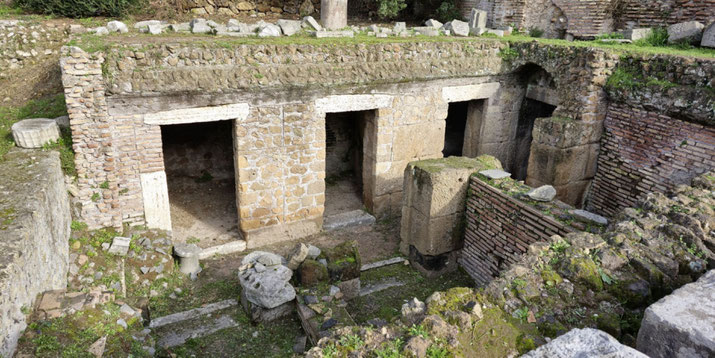
Some estates also confined recaptured slaves in ergastula, heavily built prison barracks, sometimes underground, where they endured severe conditions under constant watch.
The horrors of slave punishment
Punishment for escape often worked as discipline and as a public display, as it reinforced the message that slaves held no legal protection against pain or execution.
Recaptured fugitives could be beaten, burned, scourged with iron rods, or slowly tortured before they returned to work.
Also, if the master wished to make an example of the individual, death followed.
Roman legal tradition was recorded in the Digest and permitted a master to kill a slave without trial, particularly in cases that involved repeat offences or attempted rebellion.
For example, Seneca wrote in the first century AD and acknowledged the cruelty with which some masters treated their slaves, though he urged restraint as a mark of civilisation.
More public punishments often occurred after large-scale revolts or acts of violence.
In 71 BC, when the general Crassus had finally crushed the revolt led by Spartacus, he ordered the crucifixion of 6,000 captured slaves along the Via Appia between Capua and Rome.
The executions stretched over nearly 200 kilometres and took days to complete, and their bodies remained on display for months as a warning to other slaves and a demonstration of Roman authority.
Importantly, Roman law also applied collective punishment. According to the Senatus consultum Silanianum, if a master died under suspicious circumstances, all household slaves could be tortured and executed unless they could prove they had actively tried to defend him.
This law showed elite worries about the trustworthiness of domestic slaves and the need to eliminate possible plotters.
In AD 61, after one of his slaves had assassinated the urban prefect Pedanius Secundus, the Senate ordered the execution of all 400 slaves in his household.
Although some Romans voiced opposition, the ruling held, and the fear of mass reprisal worked as a tool of control.
Rebellions, fear, and legal control
Large-scale slave revolts were rare and sometimes exposed serious weaknesses in the Roman system of control.
The three Servile Wars we've mentioned so far, which were fought between 135 and 71 BC, used up Roman military resources and forced senators to address the scale of resistance.
Each had begun with small bands of fugitives, often from Sicilian plantations or gladiator schools, and then grew into movements that challenged provincial governors and required several years of military action to suppress.
The Second Servile War was led by Tryphon and Athenion from 104 to 100 BC and broke out in Sicily once more, and the Third Servile War was led by Spartacus and Crixus and included Gannicus as another well-known leader and spread through southern Italy with very destructive effect.
Authors such as Livy and Tacitus often wrote with worry about the scale and speed with which slaves could organise and take up arms.
The repeated need to crush uprisings with force showed how fragile the peace truly was.
In response, the Senate typically reaffirmed the rights of masters to discipline slaves without restriction, while emperors issued edicts that tightened laws on concealment and reward payments for informants.
Eventually, some emperors introduced reforms under pressure from religious or moral voices.
For instance, Constantine issued a law in AD 319 (Codex Theodosianus 9.45.4) that permitted bishops to accept escaped slaves into sanctuary.
If mistreatment could be proven, the bishop could require the master to improve conditions or allow the slave to be transferred.
However, this change applied only in narrow cases and did not weaken the overall system of slave control.
Slavery largely remained essential to Roman economic and social structures, and masters retained the right to punish severely.