
How the development of the chariot changed ancient Egyptian warfare forever
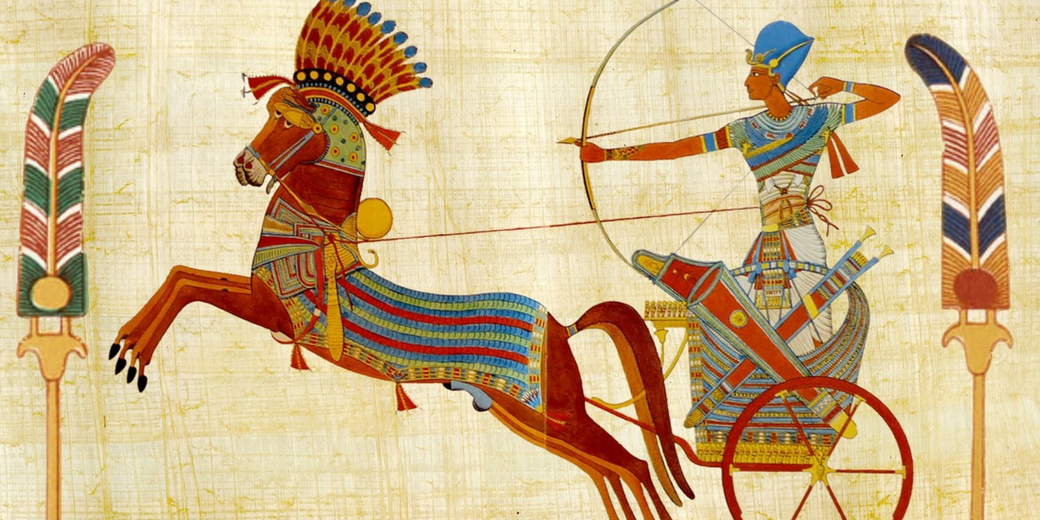
During the Hyksos occupation of northern Egypt in the seventeenth century BC, a new weapon of war arrived that would redefine how the Egyptians fought.
The horse-drawn chariot was first introduced into Egypt during this period between c. 1650 and 1550 BC and brought a new mix of speed and mobility supported by focused missile power that Egyptian forces had never encountered.
Although the Hyksos are often credited with its introduction, the wider spread of chariot technology from the Near East likely contributed to its arrival.
As pharaohs of the New Kingdom adopted and refined this technology, the chariot transformed from a foreign import into perhaps the most powerful tool of military control in war that the ancient Egyptian state had ever commanded.
The arrival of the chariot with the Hyksos
By the time the Hyksos seized control of Lower Egypt, they had already mastered a range of military technologies that often outclassed traditional Egyptian warfare.
Among their most effective innovations stood the horse-drawn chariot, which they used with speed and accuracy from their fortified capital at Avaris.
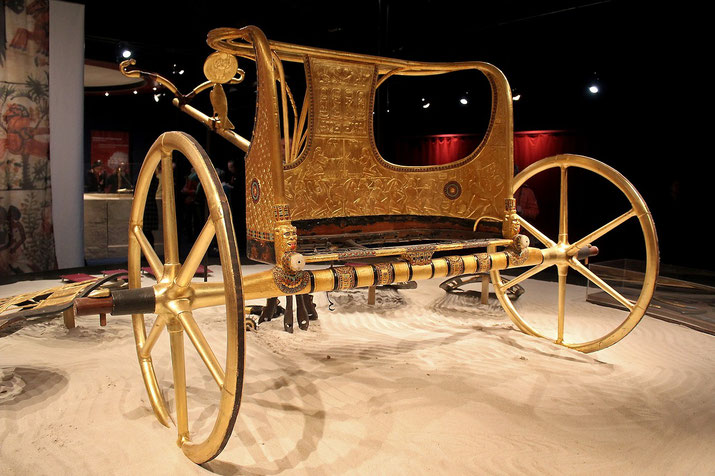
Their chariots relied on teams of horses and lightweight wooden frames supported by spoked wheels, and they carried a driver and an archer who could fire powerful composite bows as the team moved swiftly across open terrain.
Excavations at Tell el-Dab'a have taken place at a site identified as ancient Avaris and have uncovered horse burials and chariot parts that confirm the Hyksos' use of this technology.
Although direct evidence of individual rulers developing this system remains limited, military advancement likely occurred under the reign of Apepi.
Egyptian infantry units, which relied on hand weapons and leather shields organised into massed formations, often could not close the distance or effectively counter the hit-and-run tactics used by Hyksos charioteers.
During engagements, Hyksos forces disrupted battle lines, isolated commanders, and avoided retaliation because they repositioned quickly across the battlefield.
Faced with this level of mobility, Theban rulers in Upper Egypt began to study their enemy’s tactics with growing urgency.
Eventually, under Ahmose I, the Thebans learned to construct, operate, and deploy their own chariot forces.
Although no surviving records describe the details of these early Egyptian chariots, later developments suggest that they began adapting Hyksos models shortly after their victory.
After a series of military campaigns, they eventually succeeded in retaking the Delta and driving out the Hyksos.
The chariot had once been used against Egypt and now became the centrepiece of its reformed army and the instrument by which it would assert power abroad.
Transformation under the New Kingdom
Over the following century, Egyptian craftsmen improved upon Hyksos designs by producing chariots that were both lighter and more durable.
They added six-spoked wheels for better weight distribution, reinforced joints with bronze fittings, and introduced leather bindings that made the vehicle more flexible over rough terrain.
Egyptian chariots used a dual-crew system, where the driver managed the reins while the archer fired arrows, hurled javelins, or occasionally wielded a khopesh in close quarters.
However, the khopesh likely saw more use after dismounting, because it was difficult to swing such a weapon from a moving chariot.
During the reign of Thutmose III, chariots often played a central part in campaigns into Syria and Canaan.
At the Battle of Megiddo in the fifteenth century BC, he relied on his chariot corps to outflank the alliance of rebellious city-states and block their retreat into the fortified town.
Egyptian sources included the Annals of Thutmose III, carved at Karnak, and recorded hundreds of captured chariots and horses, along with thousands of enemy casualties, which showed the scale of the engagement and the impact of mobile units on the outcome.
Although Egyptian inscriptions are vague on the total number of Egyptian chariots used, modern estimates suggest several hundred likely participated.
By this point, the Egyptian army had begun organising its forces into divisions that included a chariot corps as a separate, highly trained arm of battle.
Chariot units received their own barracks and supply trains under direct administrative oversight, and they operated with a high level of independence on campaign.
Tactically, commanders used chariots for charging, for skirmishing and scouting, and for relaying orders across rapidly changing battlefields.
Symbolism and status of chariotry
Over time, chariotry became closely connected with royal power and the privilege of the nobility, as Egyptian kings regularly portrayed themselves in chariots in battle scenes carved on temple walls and in scenes of lion hunts and ceremonial parades.
These images showed strength and control grounded in sacred authority, aligning the pharaoh’s physical power with the swift, decisive force of chariot warfare.
Chariots were generally expensive to produce and maintain because they required trained horses and skilled drivers supported by ongoing repairs.
As a result, their ownership remained restricted to the king and his military elite.
Royal grants of chariots often rewarded officers who had proved themselves in war, and their appearance in tombs signalled a status that extended into the afterlife.
The burial of Tutankhamun had included six chariots, some of which had shown wear consistent with regular use.
Scholars remain divided on whether the damage reflects training, hunting, or ceremonial driving.
One of these chariots, JE 61884, which is now held at the Egyptian Museum in Cairo, shows signs of repeated use.
Within the military system, stables and training areas that had to hold the growing number of horses and crews expanded.
At Pi-Ramesses, excavations led by Manfred Bietak took place in Ramesses II’s capital and uncovered large-scale stables and storehouses, indicating the presence of a standing chariot corps ready to be deployed for war or public display.
Tactical and strategic influence
During the late Eighteenth and early Nineteenth Dynasties, chariot warfare guided Egypt’s strategic planning and standard methods of fighting.
Chariots generally provided mobility that far exceeded that of most infantry, and their long-range weapons enabled Egyptian commanders to strike from a distance before engaging in hand-to-hand fighting.
As armies grew larger, commanders used chariots to perform flanking attacks and to disrupt enemy formations, then to respond quickly to ambushes or breaches.
At Kadesh, where Ramesses II clashed with the Hittite Empire in 1274 BC, chariots had filled every part of the battle’s unfolding.
Initially, Hittite charioteers launched a surprise attack on the Egyptian vanguard, which pushed it back and created confusion.
Once reinforcements arrived, Ramesses countered by rallying his remaining chariots and leading a charge that pushed the Hittites into retreat.
Although the battle ended without new land being won, Egyptian inscriptions at Abu Simbel and the Ramesseum presented it as a heroic triumph, with chariots at the centre of the narrative.
Modern estimates suggest that up to 2,000 chariots may have been involved, though the exact number remains uncertain.
Strategically, the use of chariots required relatively flat and open terrain, as well as access to fodder and maintenance equipment.
Commanders planned their campaigns with terrain in mind, and military scribes recorded detailed lists of equipment, crew assignments, and spare parts.
The Poem of Pentaur was inscribed on temple walls and also described the tactical drama of the battle.
The logistical demands were high, but so were the tactical advantages. Egyptian chariots often acted as shock troops, messengers, scouts, and elite bodyguards, and their performance often helped to determine the outcome of many open-field engagements.
Long-term military and technological impact
As iron weapons and mounted cavalry became widespread in the Near East, the chariot gradually declined as a practical battlefield unit in many regions.
It required smooth terrain and careful maintenance, which depended on coordinated teams of horses and crew, and cavalry offered greater flexibility at lower cost.
By the later stages of the Third Intermediate Period, cavalry had largely replaced chariot units in many areas of war.
Even so, the organisational systems built to support chariot warfare, which included centralised logistics and permanent garrisons supported by specialised training, outlived the vehicle itself.
From a cultural point of view, depictions of pharaohs in chariots had often continued long after their battlefield use had declined, as reliefs from Karnak, Luxor, and Abu Simbel continued to show the king in motion as he loosed arrows from a moving platform and as his horses trampled enemies beneath them.
These images helped to strengthen the idea of the warrior-pharaoh in the Egyptian imagination, regardless of how warfare evolved.
Military papyri from the Late New Kingdom, such as Papyrus Anastasi I, include sections that reference inspection procedures and logistical concerns together with duties related to chariotry.
While the text does not describe tactical manoeuvres in detail, it provides useful detail about some of the administrative and operational aspects of managing a chariot corps.
In such records, the role of chariotry kept symbolic importance and it connected Egypt’s later rulers to the conquests of Thutmose III and the victories claimed by Ramesses II.