
How Emperor Diocletian prevented Ancient Rome from imploding
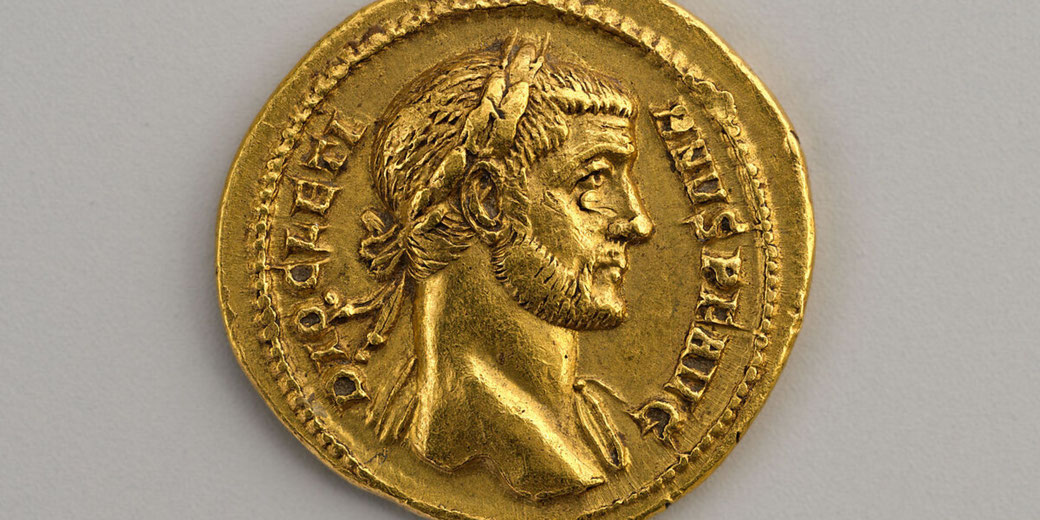
By the 270s AD, the Roman Empire faced collapse. About twenty-six emperors had ruled in fifty years, most of whom died violently and few of whom achieved anything more than survival.
As civil wars tore apart the provinces and Germanic and Persian forces crossed unguarded borders, inflation soared and agriculture declined sharply, which rapidly eroded confidence in imperial authority.
Into this broken world stepped Diocletian, who was a military commander from Dalmatia and who seized power in AD 284 and transformed the empire through authoritarian reforms and by concentrating power in a disciplined military and a tighter administration.
How Diocletian rose to power
Around AD 244, Diocletian was born in Dalmatia, which was a province along the Adriatic coast and was far removed from the centres of Roman aristocracy and politics.
His original name was Diocles, and he came from humble provincial origins. He had entered the army during a period of ongoing warfare, and over time, he rose through the ranks by taking command of frontier forces and by showing that he was reliable in unstable regions.
He may have held the position of Dux Moesiae, which would have given him control over troops along the Danube, where he earned a reputation for both skill at organising and personal authority.
Eventually, Diocletian became commander of the imperial bodyguard under Emperor Numerian.
In AD 284, during the return from a campaign in Persia, Numerian had died under unclear circumstances, possibly near Nicomedia.
Soon after, Diocletian summoned the army at Chalcedon, accused praetorian prefect Arrius Aper of murder, and executed him publicly, and the soldiers acclaimed Diocletian as emperor on the spot.
He did not yet control the empire, for the western provinces still answered to Carinus, who was Numerian's brother.
However, in AD 285, Diocletian met him in battle at the Margus River, which was in present-day Serbia, and won, possibly with the help of Carinus' own unhappy officers who had turned against him due to reports of misconduct.
So, from that point, he ruled alone.
Soon after securing sole control, Diocletian named Maximian as Caesar and, a year later, promoted him to Augustus.
He understood that one man could not manage the entire empire, which stretched from Britain to Arabia and had to respond to crises on every frontier.
This two-man system allowed for rapid deployment of troops and closer supervision of governors under military control.
Diocletian trusted Maximian largely for his loyalty and for their shared military experience.
By AD 293, Diocletian had expanded this system into what became known as the Tetrarchy.
He and Maximian ruled as senior emperors (Augusti), while Galerius and Constantius Chlorus held the junior rank of Caesar.
Each governed a region of the empire and prepared to succeed the Augustus above him.
This structure broadly distributed responsibility so as to reduce the chance of rebellion and to establish an orderly plan for succession, which Diocletian considered essential for long-term stability.
Saving an empire
After decades of disorder, Diocletian imposed a new structure on imperial rule that aimed to prevent the return of civil war and restore confidence in government.
He changed the image of the emperor, deliberately preventing rulers from presenting themselves as first among equals.
Instead, he deliberately projected a divine image and adopted the imperial style of the Dominate, surrounding himself with formal ceremonies that staged sacred symbolism and enforced strict court protocol.
These rituals included proskynesis, in which officials bowed or knelt before the emperor, and the wearing of robes dyed in Tyrian purple.
This strategy distanced the emperor from the people and projected divine authority.
Soon after the Tetrarchy took effect, the empire was divided into four administrative zones, with each emperor basing himself in a different capital: Nicomedia, Mediolanum, Trier and Sirmium, where he could respond to threats quickly and enforce policy without delay from distant command.
Diocletian ruled from the East, where he directed state reforms and military operations from his new court at Nicomedia.
Taxation became one of the most urgent practical issues, as Roman finances had suffered for decades from inflation and the reduction in the value of the currency, which produced problems in tribute collection.
As a result, Diocletian responded by issuing the Edict on Maximum Prices in AD 301, which attempted directly to fix the prices of essential goods and services, ranging from grain and clothing to labour and transport.
The penalties were severe, including death for violations, and enforcement proved impossible across such a wide territory.
As such, merchants often ignored the edict and black markets emerged in many regions. It soon proved unworkable.
Yet its purpose combined economic aims with political control, and it reflected Diocletian's attempt to control and stabilise an empire where unrestricted profit and hoarding had become common.
More effectively, he instead changed the tax system by introducing capitatio et iugatio, which was a calculation based on both land and people.
This model linked tax obligations to agricultural output and population figures, and it allowed the imperial administration to estimate revenue more accurately.
It also enabled census officials to assess resources consistently across provinces, which cut corruption among local governors.
To enforce these reforms, Diocletian increased the number of provinces from around fifty to over one hundred.
Each was made smaller chiefly to limit the power of individual governors, which continued a trend that earlier emperors had already begun, and which Diocletian expanded greatly to ensure closer supervision.
Above these provinces sat twelve dioceses, each headed by a vicarius who reported directly to the emperor.
This tiered structure gave Diocletian and his co-emperors considerably clearer oversight of each level of administration, which strengthened control and reduced the ability of regional officials to build personal power bases.
Diocletian's military campaigns
At the time of Diocletian's accession, the empire faced ongoing attacks along its frontiers due to Germanic tribes crossing into Gaul, while the Sarmatians raided the Danube, and the Sassanid Persians threatened Roman territory in the East.
Diocletian understood that only a well-equipped military, properly supplied and directly commanded, could repel these threats and restore confidence in Roman defence.
So, soon after he established the Tetrarchy, he began expanding and restructuring the military.
He significantly increased the number of legions and split the army into two main groups: limitanei, who defended the frontiers, and comitatenses, who formed mobile field armies that could respond to invasions.
This made it easier to reinforce weak zones without weakening other borders.
Diocletian also invested heavily in roads, supply depots, and communication systems to support faster troop movement.
In the East, Galerius led campaigns against the Persian king Narseh. After he had suffered early defeats, Galerius regrouped and won a clear victory in AD 298 near Satala, after which he captured the royal family, including Narseh's wives and children, according to Roman accounts, and forced the Persians to sign the Treaty of Nisibis.
This agreement restored Armenia to Roman control and expanded Roman territory into Mesopotamia.
To celebrate the success, Diocletian held a triumph in the East and dedicated monuments to the victory.
In the West, Constantius Chlorus reclaimed Britain after defeating the usurpers Carausius and Allectus, who had ruled independently for nearly a decade.
Constantius defeated Allectus near the southern coast of Britain and soon after retook Londinium, reasserting imperial control.
Diocletian had delegated the task, but the success seemed to prove the strength of the Tetrarchic system.
Meanwhile, along the Danube, Diocletian himself led campaigns against the Carpi and Sarmatians, and he pushed them back across the river and reinforced defensive positions.
He restored parts of the limes system and reoccupied key forts in Dacia and Moesia.
As military victories continued, Diocletian systematically focused on protecting them with reliable supply systems, by which he created new fortresses, restored watchtowers, and secured river crossings.
He also expanded the state-run weapons production and ensured that frontier provinces received priority access to grain and equipment.
Without these reforms, the military achievements of his co-rulers could not have been sustained.
The Great Persecution
In AD 303, Diocletian initiated a campaign against Christians that became widely regarded as the most severe persecution in Roman history.
By then, Christian communities had expanded across major cities, and their refusal to participate in public sacrifices caused them to be seen as opponents of imperial unity.
Diocletian believed that continued defiance threatened both the gods' favour and state stability.
To counter this, he issued a series of orders from Nicomedia that required the destruction of churches, the burning of scriptures, and the imprisonment of clergy.
These included four edicts issued between 303 and 304, each of which grew harsher.
Officials posted the orders on government buildings, and local authorities began enforcing them immediately.
Some regions carried them out with eagerness, and others, especially those under Constantius Chlorus, showed restraint.
In many cases, the refusal of Christians to comply led to public executions, and stories of martyrdom began to spread.
Christian writers like Lactantius and Eusebius later described these events in vivid detail.
Galerius pushed for stricter enforcement and extended the persecution across the eastern provinces because he had long viewed Christians as a political threat and used his authority to increase pressure on governors who showed leniency.
By contrast, Constantius limited his efforts to symbolic acts, such as demolishing church buildings, without pursuing widespread arrests or violence.
The campaign continued until Diocletian's retirement in AD 305. Afterwards, Galerius initially maintained the policy for several more years, but by AD 311, he issued an edict of toleration that effectively ended the persecution.
Despite the brutality, the effort failed. Christianity survived and became stronger, which made martyrdom a powerful force for communal unity.
Diocletian's shocking decision to retire
On 1 May AD 305, Diocletian officially stepped down from the throne in a ceremony at Nicomedia, where he appeared before the army, removed the imperial robes, and transferred power to the next generation of rulers, namely Galerius in the East and Constantius in the West.
Maximian stepped down at the same time in the West. This moment was the first time in Roman history that an emperor had willingly surrendered control without pressure, rebellion, or coercion.
He retired to a fortified palace at Split in Dalmatia, where he lived out his remaining years in seclusion.
His palace was both a personal residence and a military compound whose remains still form the historic core of modern-day Split.
Later reports, such as the account of Lactantius, claimed that he had refused all appeals to return, even as civil war erupted among the successors.
According to legend, when asked to resume power, he replied that nothing could tempt him to leave the peace that came from tending his cabbages.
The withdrawal clearly showed the weakness of the Tetrarchic system without Diocletian's personal authority.
Galerius attempted to maintain control by appointing loyal Caesars, but rival claims appeared soon after.
Within a year, Constantine, who was the son of Constantius, seized power in the West, and new conflicts began.
Even though the Tetrarchy collapsed within two decades, Diocletian's efforts had largely preserved imperial stability long enough for the Eastern empire to adapt and survive.
His vision of absolute rule, which established a rigid structure reinforced by military discipline, substantially helped to form the later Byzantine model and delayed the fall of Rome's eastern half for nearly a thousand years.
He is widely remembered as a ruler who imposed order during chaos, held an empire together, and then stepped away before it fell apart again.