
Crucified upside down: The brutal nature of apostle Peter's death
Under the severe violence of Nero’s crackdown that followed the Great Fire of AD 64, the execution of the apostle Peter was meant to destroy the influence of one of Christianity’s central leaders.
In the arena of imperial violence, his inverted crucifixion showed how Roman punishments combined theatrical cruelty with political messaging.
When he requested to be crucified head downward, Peter accepted a position of greater suffering, which increased the horror of his death and strengthened his role within early Christian memory.
Peter’s later life and imprisonment
After he had spent decades in missionary activity across Judea and Syria into Asia Minor, Peter travelled to Rome, where, according to early Christian tradition, the Christian movement had already begun to attract a hostile reaction.
Before arriving there, he had led the Christian community in Jerusalem and, according to later tradition, helped establish the church in Antioch, where his influence helped form the early pattern of Christian leadership.
By the time of Nero’s rule, public suspicion of Christians had increased, especially among officials who viewed their refusal to honour the imperial cult as a direct challenge to Roman authority.
After the disastrous fire that swept through the city on 19 July AD 64, Nero tried to shift public blame by accusing Christians of arson.
Ancient sources do not name Peter among the victims, but early Christian tradition placed his execution within this period of violent punishment.
Roman historian Tacitus, who wrote in the early second century AD, later described how Christians had been subjected to terrible executions, including those who had been burned alive as torches and those who had been torn apart by dogs.
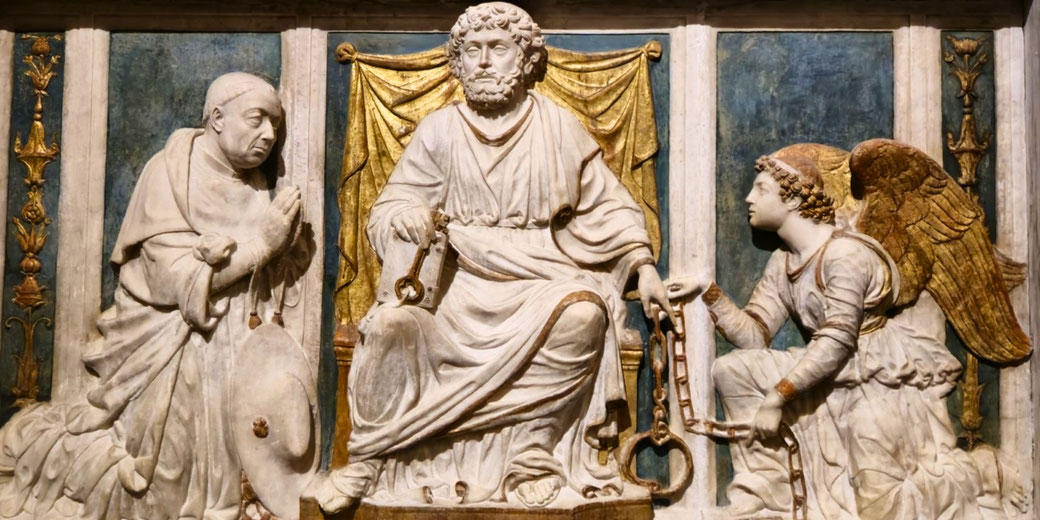
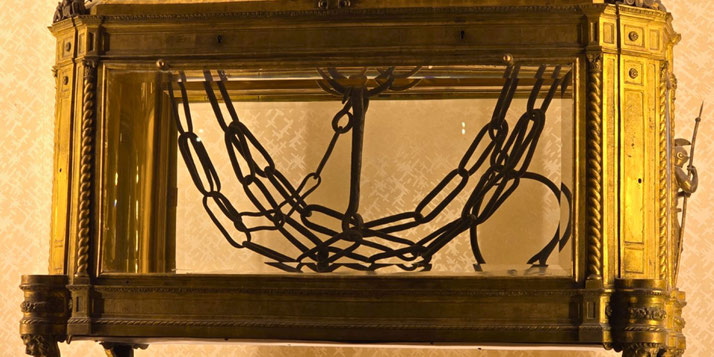
According to later sources such as the Acts of Peter, Roman authorities placed Peter in the Mamertine Prison, an underground cell beneath the Capitoline Hill.
There, in terrible conditions, he reportedly continued to preach to his guards and worked to strengthen the resolve of the Christian community in Rome.
Later accounts identified his jailers as Processus and Martinianus, who later received honour as saints in Christian tradition.
As his death sentence approached, he maintained his refusal to recant or cooperate, which ensured that his execution would act as both a warning and a public show.
The Roman use of crucifixion
Among the many punishments available to Roman officials, crucifixion was used as a public display of power reserved for those without rights or status.
It was often inflicted on slaves and rebels, as well as on foreign criminals, and it combined physical torment with visual humiliation, as victims were stripped and flogged as soldiers fastened them to crosses in open spaces.
Crowds watched as the condemned died over many hours or even days, so that their suffering was drawn out by exposure and exhaustion as restricted breathing intensified their distress.
To reinforce its power, the Roman state staged such executions outside the city’s sacred boundary.
In fact, later Christian tradition held that Peter died near the Circus of Nero on Vatican Hill, where condemned Christians were killed as part of mass spectacles.
The area formed part of the Ager Vaticanus, a burial ground outside the city walls, which by the first century had become a site for imperial executions.
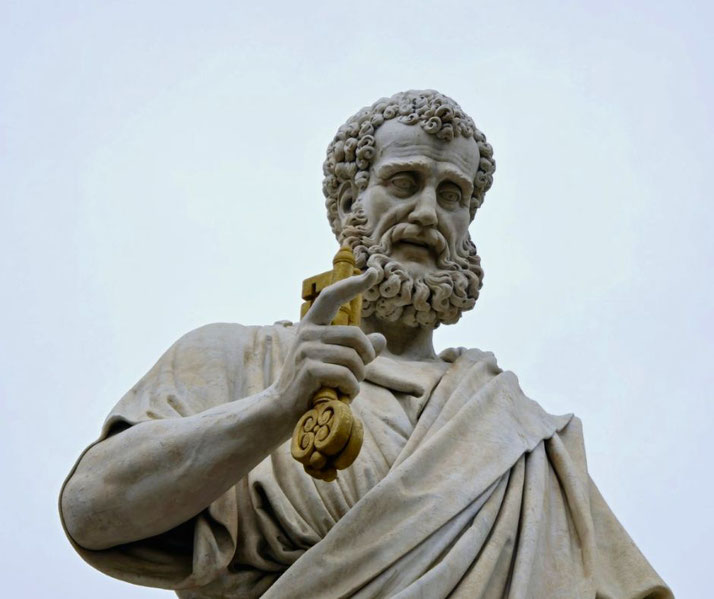
According to the writings of Church Fathers such as Origen and Jerome, Peter requested that his cross be inverted, declaring himself unworthy to imitate the death of Jesus.
This detail came from the apocryphal Acts of Peter, and Roman soldiers, with no concern for religious symbolism, reportedly granted the request, which they simply interpreted as a further act of humiliation.
Death upside down
From a medical perspective, an inverted crucifixion caused unique forms of torment.
When the head was positioned downward, blood rushed rapidly toward the brain, creating extreme pressure behind the eyes and inside the skull.
As a result, victims suffered from sharp headaches, swelling, vision problems, and growing confusion.
In some cases, the pressure may have caused subconjunctival haemorrhaging and injury inside the skull.
At the same time, the weight of the body strained joints and made breathing increasingly laboured, even though the usual mechanism of suffocation was altered by the unnatural posture.
Importantly, Roman executioners designed such deaths to be slow and very public.
When they prolonged agony and increased visibility, they reminded onlookers of the consequences of resistance.
Within the public space of Vatican Hill, which was filled with crowds and imperial functionaries, Peter’s suffering acted as a warning display.
The upside-down cross later became a symbol of Christian humility, but in its original setting it helped to increase the dishonour and pain inflicted on the condemned.
Legacy and burial
After his execution, Peter’s followers are believed to have retrieved his body and probably buried it in a shallow grave near the site of death.
Although the original grave stayed unmarked, early Christians had begun to visit the location in secret, during which they treated it as a place of deep respect.
During the reign of Constantine in the early fourth century, Roman officials granted Christians permission to build places of worship.
The original St Peter’s Basilica began construction in AD 319 and rose above the site that was long associated with his burial.
Pope Sylvester I played a role in dedicating the basilica, which stood for over a thousand years.
During the 1940s, archaeological excavations beneath the present-day basilica uncovered human bones and a wall inscribed with Christian graffiti, which included possible references to Peter.
Italian archaeologist Margherita Guarducci led the effort and identified a niche beneath the high altar, known as the "Trophy of Gaius", where bones were found wrapped in purple and gold cloth, which she argued supported the tradition that this was Peter’s resting place.
One fragmentary Greek inscription on the wall has been interpreted by some scholars as reading "Peter is here", though the reading is still debated.
While scholarly discussion continues over the identity of the bones, the consistency of historical tradition with the physical location and with epigraphic evidence has led many to accept the site as his tomb.
Over time, the story of Peter’s inverted crucifixion spread widely, and it appeared in sermons and in hagiographies as well as in church iconography as a reminder of both his sacrifice and the severity of Roman persecution.