
Why Athens isn't called 'Poseidonia': The battle between two gods to claim the city
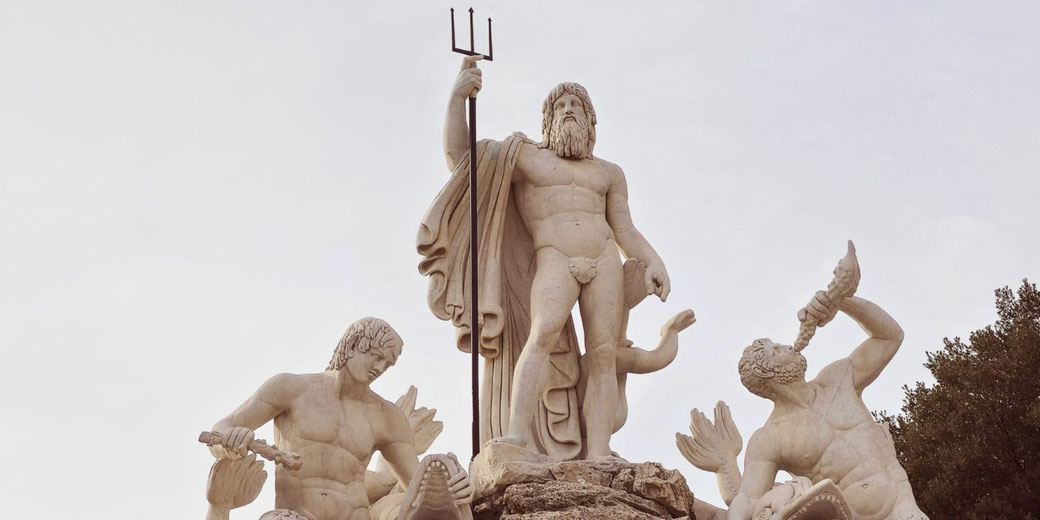
Greek cities often explained their origins through myth, and in the case of Athens, the story turned on a conflict between gods.
At the heart of the tale stood a sacred contest between Athena, the goddess of wisdom and warfare, and Poseidon, the god of the sea.
Both gods offered gifts to a new city in Attica, in the hope that they would secure lifelong support and loyalty. According to tradition, the choice determined its values and priorities, especially its long-term cultural identity.
The contest between Athena and Poseidon
According to one version of the myth recorded by Apollodorus (Bibliotheca 3.14.1) and referenced by Pausanias (Description of Greece 1.24.5), and Hyginus (Fabulae 164), who repeated the story in a later account, the two gods arrived on the rocky hill that would later hold the Acropolis and made competing claims before a council of gods.
To assert his claim, Poseidon struck the stone with his trident. As the rock split, a saltwater spring gushed forth, which some said formed a small pool known in antiquity as the sea of Erechtheus.
In later Athenian lore, writers claimed that this site remained visible as a sacred well.
In an alternate version of the myth, Poseidon also created the first horse, a symbol of military strength and warfare that nobles led, though earlier sources had not directly tied this version to the contest for Athens.
In either case, he presented an emblem of power tied to movement and force, together with a sense of command over the natural world.
By contrast, Athena responded when she stepped forward and planted an olive tree directly into the ground.
It grew instantly, which made its usefulness obvious. The tree offered fruit for food and oil for cooking and lighting, and its wood supplied material for tools and construction.
As a symbol, it suggested peace and economic independence, together with a sense of careful thinking.
Her gift carried practical rewards, and it also spoke to ideals of wisdom and restraint, together with a concern for future planning.
Fragments from the west pediment of the Parthenon later appear to have depicted the mythic moment, which they preserved in sculpture.
The decision of the Athenians
According to one version, the gods left the judgment to mortals. King Cecrops was a legendary early ruler who appeared with the upper body of a man and the lower coils of a serpent, and he oversaw the matter.
His part-human, part-serpent form was born from the earth itself and reinforced Athenian claims to autochthony and their belief in a special connection to the land.
As the myth developed in later periods, some claimed he had conducted a vote among the people.
In this version of the story, the men favoured Poseidon, but the women voted for Athena.
Since women outnumbered the men, the goddess received more support.
Poseidon was enraged by the outcome and flooded parts of Attica in revenge.
According to these later additions, Athenian women were punished when officials stripped them of their vote in public affairs of the city and barred them from naming children after the city or giving citizenship to their children through the father's line.
These details do not appear in early versions of the myth and likely arose to explain existing social rules through mythic storytelling.
In another account, the Olympian gods themselves declared the winner. According to this version, Zeus and a panel of gods acting as judges considered the long-term benefit of the gifts.
Since Athena’s olive tree offered lasting value to the city’s daily life and prosperity, they granted her the patronage.
Regardless of the storyteller, all known versions preserved her victory and the naming of the city in her honour.
The legacy of the myth in Athenian culture
By around the sixth century BCE, Athenians had placed the story at the centre of their religious identity.
On the Acropolis, they built the Erechtheion directly over the spot where the contest supposedly occurred.
Constructed between 421 and 406 BCE, the temple housed cults to Athena Polias and Poseidon, as well as the legendary king Erechtheus.
Some Athenians treated Poseidon and Erechtheus as distinct figures, though later forms of worship occasionally fused them into a joint cult under the name Poseidon-Erechtheus.
Inside the temple, priests claimed to preserve both the trident mark and the sacred olive tree.
The saltwater well, which people referred to as the sea of Erechtheus, was also visible in antiquity and was believed to be the same spring Poseidon had created.
In this way, Athenians honoured both gods while making clear that the city belonged to Athena.
During the Panathenaic Festival, which took place every four years and began in 566 BCE under the reforms of Peisistratus, citizens honoured their patron deity with parades and sacrifices, together with a wide range of competitions.
Victors in the games received olive wreaths made from the sacred grove, while new garments woven by elite women were offered to the goddess in procession.
Known as the peplos, this robe was carried to the Acropolis as a ceremonial gift.
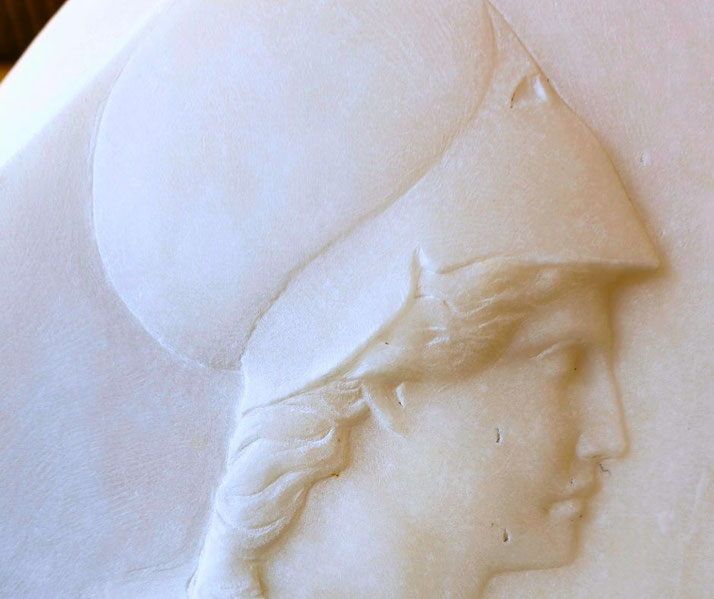
On the city's coinage, Athena appeared in a helmet and aegis, which reinforced her role as protector and strategist.
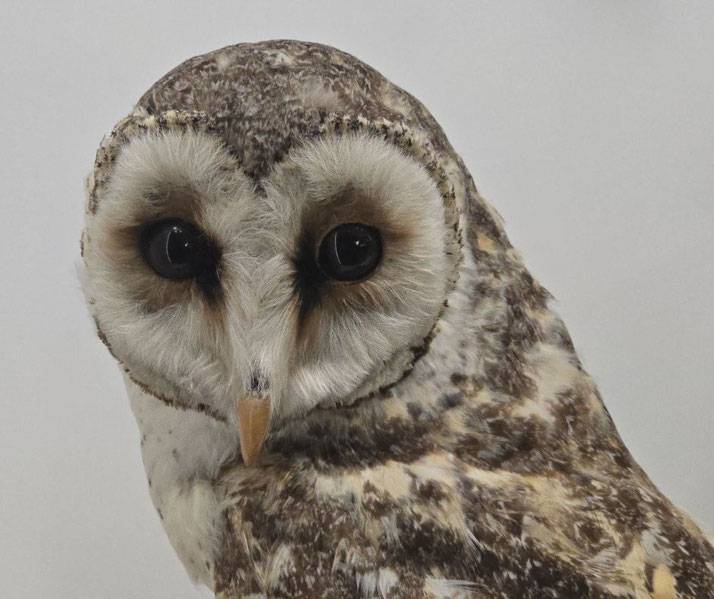
On the reverse, her owl and the inscription “ΑΘΕ” declared the coinage as property of the Athenians.
The alternative: If Poseidon had won
Had Poseidon won, the city’s priorities may have shifted toward control at sea and reliance on naval strength.
A city called Poseidonia could have based its values on conquest and movement, together with a readiness to accept the uncertainty of sea trade.
Although Athens later developed an extraordinary navy during the Persian and Peloponnesian Wars, its origin story rested on Athena’s quiet power and the idea that knowledge and discipline, with an emphasis on careful planning, held more lasting value than raw force.
Over time, a number of Roman rulers took up the story in their own myths, and they often equated Athena with their goddess Minerva.
Travellers in the imperial period continued to visit the sacred olive and trident scar on the Acropolis.
Emperor Hadrian visited the city in the second century CE, and he supported repair work and building projects at the Erechtheion and helped preserve the site’s connection to the goddess.
The continued presence of the myth, repeated in rituals and carved into stone, then spoken aloud in public celebrations of the city, helped ensure that the memory of Athena’s gift never faded from the city's identity.