
The mysterious childhood years of Jesus that were left out of the Bible
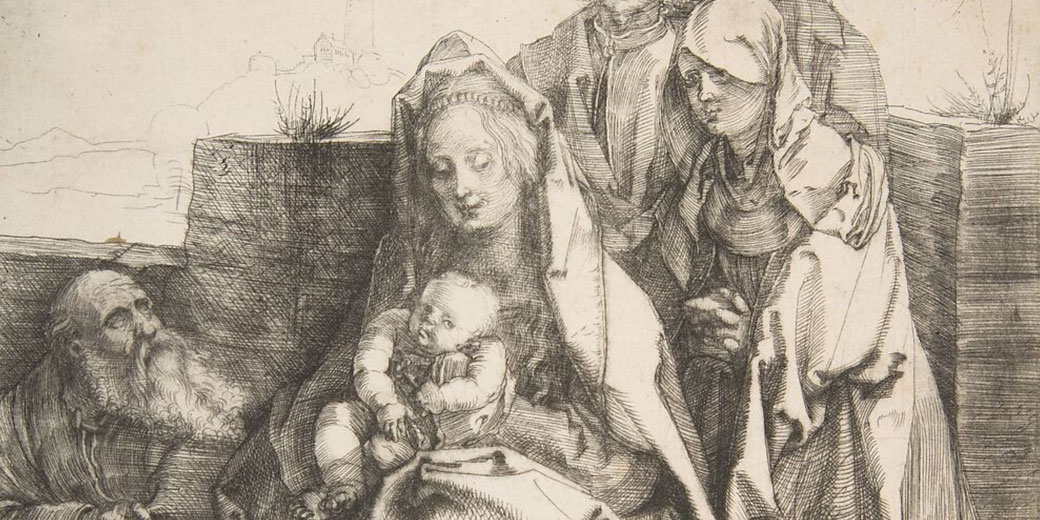
Between the nativity accounts and the moment Jesus appeared beside the Jordan River, the Gospels provide almost no detail about his early life.
Only one event from his youth survives in the canonical record, which describes a single visit to the Jerusalem temple at the age of twelve.
As later Christian writers attempted to explain what might have happened during his silent years, they created what became a significant amount of speculation, which was motivated by a theological purpose.
The silence of the canonical gospels
The Gospels of Matthew and Luke devote a lot of attention to Jesus’ birth as they list his genealogy and describe angelic visitations that present his arrival as a story of God’s intervention.
Their accounts present how the Holy Family had most likely fled Herod’s violence and later had returned from Egypt before they settled in the small village of Nazareth.
After that, the narrative falls silent for more than a decade.
Only Luke clearly breaks this silence. According to his Gospel, when Jesus was twelve years old, he travelled to Jerusalem for Passover with his family.
After the festival, he stayed behind in the temple, where teachers listened to him, and he both asked and answered questions.
His parents were unaware of his absence, and they searched for him anxiously before finding him seated among the elders.
That short episode ends with a return to Nazareth and a comment that he grew in wisdom and stature, and he found favour with both God and people.
That brief moment in the temple is the last detail recorded until Jesus reappears at the age of thirty to begin his public ministry (Luke 3:23).
Their choice to exclude that period likely reflected a concern with theological purpose rather than historical completeness.
Patristic authors such as Irenaeus suggested that Jesus sanctified every stage of human life by living through it, and they seemed to show little interest in the details of his development.
As a result, early Christians found themselves drawn to that gap, which seemed too long and too silent to ignore.
Apocryphal infancy gospels and forgotten stories
Over time, other writers attempted to reconstruct what might have occurred during Jesus’ youth, often with imaginative detail and miraculous elements.
Among the most famous examples, the Infancy Gospel of Thomas was probably written in the mid-2nd century and presents a young Jesus who performed dramatic wonders, such as when he formed clay birds and brought them to life, or when he struck a neighbour dead and then restored him.
In one episode, a child bumped into Jesus, who responded in a way that caused his death, and Jesus later brought him back to life at Mary’s request.
His actions often caused confusion or fear, and the stories suggest that he had power without full control.
In several of the episodes, adults scold him for disobedience or mischief, while Joseph and Mary express concern over his unpredictable behaviour.
At times, the young Jesus appears aware of his nature as the Son of God, but in other moments, he acts like a child provoked by frustration or curiosity.
Taken together, the collection paints a picture of a boy unlike any other, caught between divinity and human inexperience.
Meanwhile, the Protoevangelium of James predates Thomas and was likely written in the mid-2nd century, and it focuses on Mary’s early life and her role in God-given prophecy.
However, it also contributes to the portrayal of Jesus’ early environment, particularly in its emphasis on purity, temple service, and God’s protection.
Much later, the Arabic Infancy Gospel was written in the 6th or 7th century and added more material that came from Eastern Christian tradition.
In that version, Jesus heals the sick, tames wild animals, drives off robbers, and shows knowledge of events that took place far away.
At face value, such stories do not appear to offer reliable historical material. Even so, they show how Christian communities tried to deal with the tension between Jesus’ status as the Son of God and the ordinary conditions of childhood.
Their survival over centuries, despite exclusion from the biblical canon and despite dismissal by early Church authorities, which included historians such as Eusebius, shows how powerfully the silence of the Gospels captured the imagination of believers.
Archaeological and historical clues
When they had examined archaeological finds from Nazareth, scholars pieced together a picture of daily life in the town where Jesus likely spent most of his youth.
Excavations have revealed stone-built homes, cisterns, olive presses, and ritual baths, all of which seem to point to a Jewish village that adhered to purity customs and relied on subsistence agriculture.
A 1st-century house was discovered beneath the Sisters of Nazareth convent and may have belonged to a family that lived in that period.
In such a setting, boys typically learned to read Scripture in the synagogue and memorised large sections of the Torah.
Since the Gospel writers refer to Jesus as a tekton, a term often translated as carpenter but which more accurately suggests a skilled manual labourer, he probably worked with Joseph.
One Gospel uses the term for Jesus (Mark 6:3), and another applies it to Joseph (Matthew 13:55).
The term may have included work with stone or metal, which would have brought him into contact with nearby towns such as Sepphoris, which was expanded and rebuilt after its destruction by Varus in 4 BCE.
Family life generally revolved around religious duties. Dietary rules and keeping the Sabbath, together with pilgrimage to the temple in Jerusalem, formed the foundation of Jewish identity, and the brief temple story in Luke confirms that Jesus’ family participated in those customs.
In Galilee, economic pressures from taxation and imperial rule strongly influenced village life.
Roman officials were supported by local leaders and imposed taxes that strained rural populations and added to growing social unrest.
During Jesus’ youth, several resistance movements appear to have arisen in the region.
One of the most significant was led by Judas the Galilean in 6 CE and opposed the Roman census ordered by Quirinius and preached that God alone ruled Israel.
Although the Gospels do not mention these events directly, they almost certainly formed part of the world in which Jesus grew up.
His later teachings about wealth and justice, as well as God’s authority, suggest that those early experiences left a lasting impression.
Speculation, devotion, and the human imagination
Throughout Christian history, believers have offered many different explanations for why the Gospels remain silent about Jesus’ youth.
Some claimed that his divinity required no elaboration, while others suggested that his hidden years reflected humility.
In either case, his silence became meaningful in itself as a symbol of patience, obedience, or preparation.
During the medieval period, images of the young Jesus became widespread in religious art, especially from the later Middle Ages into the Renaissance.
Painters and sculptors showed him as he worked beside Joseph, read sacred texts, or blessed those around him.
Works such as Giotto’s "Christ Among the Doctors" helped believers picture his humanity and made him easier to relate to as a child who shared the experience of ordinary life, even if touched by a sense of God’s purpose.
Later, writers in both East and West wrote religious stories and reflections that imagined his inner world, and some of them speculated about his thoughts, his friendships, or his relationship with Mary.
Others focused on his education and religious awareness, presenting him as one who gradually came to understand his role more clearly over time.
In the modern era, such pictures of his life appeared in novels and stage plays, along with films that attempted to fill the silence with drama or philosophy.
Some scholars, such as James D. Tabor, have even suggested possible contact with groups like the Essenes, though no evidence supports this theory and it is still a speculative view.
Although none of these versions of his life can claim historical authority, they show a desire to understand Jesus as a whole person.
For many, the years of hidden growth offer a way to relate to him as a teacher and saviour, and also as one who lived among others and who learned with them, and he waited until the right moment to act.