
How did a 50,000 strong Persian army suddenly vanish?
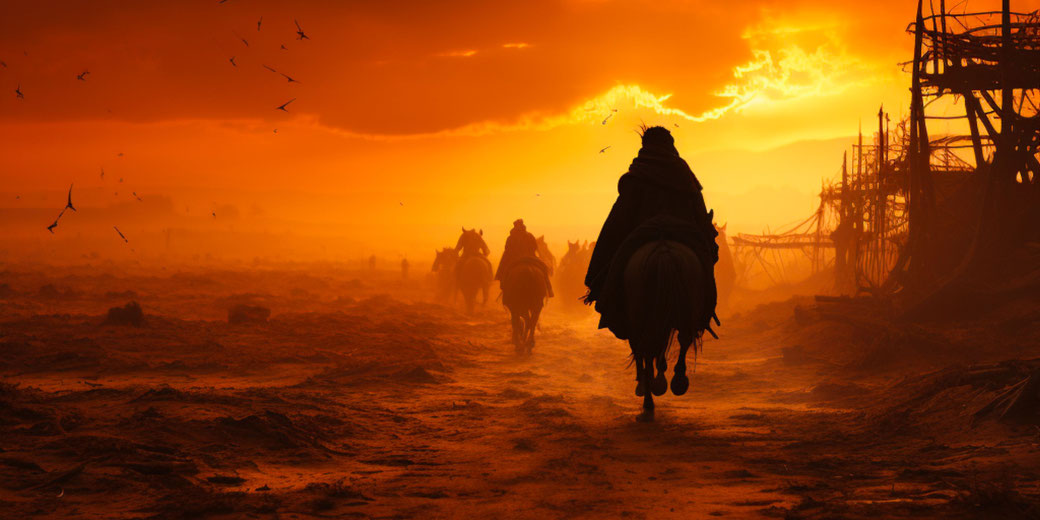
Across the empty plateaus west of the Nile, the story of a vanished Persian army has puzzled many historians for over two thousand years.
Herodotus wrote in the fifth century BCE and reported that what he described as a large force marched into the Egyptian desert under orders from Cambyses II and disappeared without a trace.
Later writers repeated the tale, and explorers hunted for evidence as archaeologists tested the sand, and still no definitive answer has ever appeared.
The claim that such a force could vanish into thin air is still, for many scholars, one of the most baffling mysteries of the ancient world.
Why were the Persians in Egypt?
In 525 BCE, Cambyses II was the son of Cyrus the Great and ruler of the Achaemenid Empire, and he launched a full invasion of Egypt and defeated Pharaoh Psamtik III at the Battle of Pelusium.
After he had captured Memphis and had forced the surrender of the local elite, Cambyses declared himself pharaoh and installed Persian administrators across the region.
According to Egyptian sources recorded by Herodotus, the Persian king showed disrespect for sacred customs and mocked local religious traditions, such as the worship of Apis, which caused widespread anger among the native population.
Herodotus later described Cambyses as mentally unstable, and other ancient sources accused him of cruelty and irrational behaviour, which may have influenced his strategic decisions during this period.
As tensions grew between the Persian court and Egyptian priesthoods, Cambyses issued orders for a series of military campaigns that were intended to secure his western and southern borders.
One force prepared to move against the Carthaginians, although the operation failed to proceed after Phoenician sailors, many of whom were culturally tied to Carthage, refused to attack their own kin, according to Herodotus.
Another expedition targeted Nubia, but reportedly failed due to poor supplies and difficult terrain.
A third, and more mysterious, operation received orders to destroy the Oracle of Amun at Siwa Oasis, located deep in the western desert.
Although the oracle later became more important during the time of Alexander the Great, its exact political and religious importance during Cambyses' reign is less clear.
According to Herodotus, it was this mission that led to the army's disappearance.
Herodotus' account of the event
According to Histories Book III, section 26, Cambyses sent a force westward from Thebes with instructions to reach Siwa and neutralise the oracle.
After marching to the Kharga Oasis, the army crossed open desert for seven days.
Later traditions claim that they reached the Dakhla Oasis, although Herodotus does not mention it by name.
He reported that, after this point, the soldiers marched toward Siwa but never arrived.
At some point during the journey, as they prepared their midday meal, a powerful sandstorm struck.
Herodotus wrote that the wind swept across the open desert and buried the entire force alive.
Importantly, Herodotus acknowledged that he could not confirm the story from firsthand evidence.
He repeated what local Egyptians had told him, and he relied on oral accounts that people had passed down for generations.
However, he included the story because the people of the region believed it strongly and spoke of it as a real event.
Since no survivors had returned to report what happened, the fate of the army was a mystery even in antiquity.
Explorations and doubts about the theories
Over time, explorers grew interested in the story and attempted to trace the route that Herodotus described.
From the late nineteenth century onwards, interest had gradually turned toward the Bahariya and Farafra oases and toward Siwa, where terrain features matched parts of the ancient journey.
In the 1930s, Hungarian explorer László Almásy later inspired the fictional main character of The English Patient, and he suggested that the army may have taken a wrong turn near the Gilf Kebir plateau.
This theory, however, lacks archaeological evidence and rests mostly on guesswork.
Eventually, as no mass grave or large concentration of human bones had turned up, scholars began to question whether the army ever existed on the scale Herodotus described.
He did not provide a number for the force, and the often-cited figure of 50,000 appears in later versions of the story.
Some historians have proposed that the tale probably developed as a religious story with a moral, intended to frame Cambyses’ disrespect toward Egyptian gods as a cause of divine punishment.
Since Siwa was a centre for the cult of Amun, an attack on the oracle may have been considered a serious violation, and stories of the army’s complete destruction may have grown in the telling.
Alternatively, the theory of a supply failure has drawn support from some modern analysts familiar with desert warfare.
In such a very dry environment, even a small miscalculation could have had fatal consequences.
A Persian soldier may have required three to four litres of water daily, and the need to feed thousands over a journey of several hundred kilometres without reliable wells or landmarks presented very serious difficulties.
If the troops ran out of water or became lost in terrain without natural landmarks, they could have perished over a wide area.
Because sands shifted and wind caused erosion in an area without stone structures, any physical traces might have scattered or been buried long ago, so archaeologists had little to find.
The Castiglioni claims and the archaeological response
In 2009, Italian researchers Angelo and Alfredo Castiglioni announced that they had located ancient Persian military artefacts west of Siwa, such as arrowheads and metal scraps, together with human bones.
Based on their analysis, the researchers argued that the items that dated to the sixth century BCE indicated a Persian military presence.
According to their documentary The Lost Army of Cambyses, the distribution of human bones and their position beneath layers of sand, which together formed the main evidence, supported the theory of a sudden disaster.
Soon after the announcement, professional archaeologists and Egyptian officials expressed caution.
The artefacts lacked proper excavation records, and no academic publications had verified the claims in studies that used established archaeological methods.
Without secure stratigraphy and precise dating, and without clear supporting evidence, the objects could not confirm the existence of Cambyses’ lost army.
Desert winds frequently transport lightweight material across vast areas, so it is difficult to draw conclusions from scattered finds.
Eventually, Egypt’s Supreme Council of Antiquities refused to accept the discovery as certain.
Critics noted that while the story had captured public imagination, the available evidence failed to meet the standards required to prove a mass death event on the scale Herodotus described.
Until controlled excavation produces a large volume of consistent material, the mystery cannot be considered solved.
Exaggeration or invention?
Certainly, Herodotus’ willingness to report local accounts without confirmation does not automatically invalidate the entire event.
Ancient historians often recorded stories that they could not personally verify, but that they considered valuable as part of collective memory.
Since Cambyses had real motivations to neutralise the Oracle of Amun, and since Siwa lay outside his immediate control, the idea of sending an expedition is still reasonable.
The Achaemenid Empire maintained extensive administrative records, but no known Persian archive references the campaign, which weakens the historical case for its occurrence.
Significantly, the number of 50,000 likely reflects exaggeration, since ancient sources rarely gave accurate military figures and Herodotus often inflated numbers in other campaigns, such as those involving Xerxes.
A smaller force that perhaps numbered several thousand could have attempted the journey, only to vanish due to heatstroke and dehydration in conditions that created intense confusion.
In the absence of written records or of survivors who returned, later generations may have turned the disaster into a legend of mass destruction.
Despite reasonable doubt, no definitive evidence exists to rule out the story entirely.
While the loss of 50,000 men to a single sandstorm seems improbable, the complete failure of a desert expedition due to natural forces and poor planning is still possible.
However, comparisons to events such as Crassus' defeat at Carrhae or failed Roman expeditions in Arabia Felix are not the same kind of event, as those campaigns are documented with survivor accounts and reliable historical records, and the disappearance in the western desert is, for now, an unsolved episode formed as much by legend as by evidence.