
The supernatural warnings before Caesar was assassinated
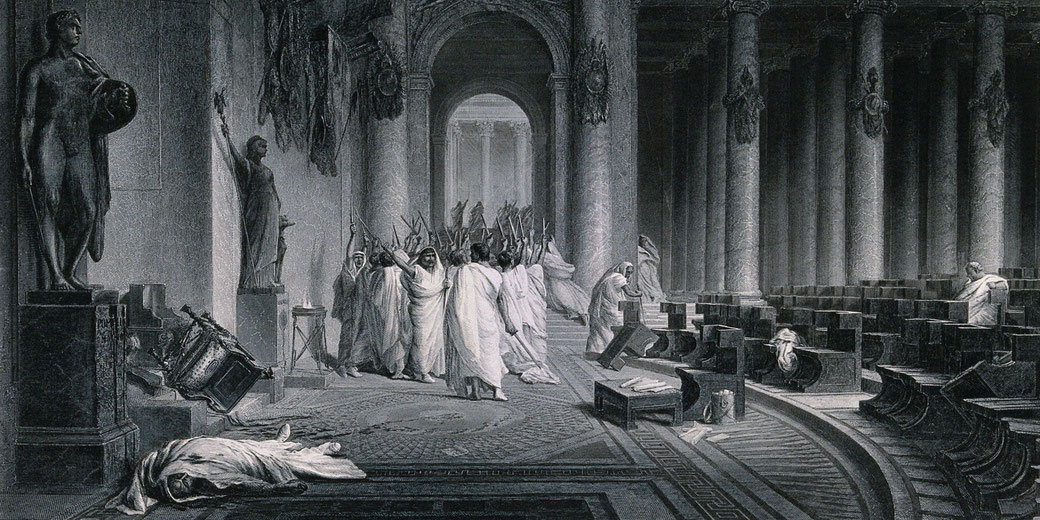
In early March of 44 BC, as Julius Caesar prepared to attend a session of the Senate, signs of the gods' anger seemed to spread across Rome.
Reports of strange lights in the sky and bizarre animal behaviour, along with stories of ritual failures, which circulated widely among both priests and citizens, filled the capital with a sense of dread.
Roman religion taught that the gods communicated through omens, and many who later reflected on Caesar’s death believed that the heavens had sent warnings too serious to ignore.
Portents in the heavens and earth
During the final days before the Ides of March, some observers described very unusual scenes that unfolded in the skies above the city.
According to Plutarch’s Life of Caesar, men saw ghostly armies that clashed in the clouds and fiery streaks that cut across the darkness, and thunder followed with no visible storm.
Others heard strange voices that seemed to come from nowhere and that echoed above the Forum.
Some later added that weapons had seemed to appear and vanish in the air, though this detail does not come from the surviving Roman accounts.
At the same time, unsettling events occurred throughout the city’s streets. Packs of dogs, which sometimes gathered and howled late into the night for no clear reason, added to the sense of unease.
Birds reportedly behaved in a strange and unpredictable way, and one account described a domesticated animal that refused to eat and acted aggressively.
Elsewhere, livestock suddenly ran away from threats no one could see, and flocks of birds took to the sky in strange flight patterns that disrupted public gatherings.
Citizens grew increasingly uneasy, particularly those familiar with the priestly teachings that linked such behaviour to the displeasure of the gods.
Across several temples, some reports stated that statues toppled, and sacred fires often failed to stay lit.
Earthquakes were also later described by some writers as events that occurred in central Italy, but no direct record connects earthquakes to the events before the Ides of March.
However, at least one widely circulated account described how the doors of the Temple of Jupiter Optimus Maximus opened by themselves in the middle of the night.
Each of these incidents added weight to the belief that the gods warned of a disaster that would strike the city’s most powerful man.
Calpurnia’s dream and Caesar’s dismissal
Inside Caesar’s household, fear took a more personal form. On the night before his assassination, his wife Calpurnia awoke in distress after she had dreamed of his death.
According to Plutarch, she saw his body, which lay in her arms with blood covering it and no life in it.
In another version, she witnessed their home as it collapsed, and he was attacked by armed men.
As soon as she rose, she pleaded with Caesar not to attend the Senate meeting and urged him to seek guidance from the priests before he left.
Although troubled, Caesar initially decided to stay home and asked the household priests to conduct fresh sacrifices.
After the first had failed to produce a favourable sign, he hesitated. Then, Decimus Brutus arrived.
As one of the conspirators, he encouraged Caesar to ignore his wife’s fears and reminded him that the Senate waited for him at the Curia of Pompey.
Brutus warned that postponement could damage his reputation and suggested that rumours of weakness might spread.
Eventually, Caesar allowed himself to be persuaded. He left with Brutus, stepped over Calpurnia’s protest, and walked toward his death.
According to Suetonius, a man tried to approach Caesar with a written warning on the way, but Caesar never took the time to read it.
The soothsayer’s warning
Among the many warnings, one stood out. A haruspex named Spurinna, who had previously conducted public sacrifices, found troubling signs in the entrails.
Most significantly, he had discovered a sacrificial victim whose heart was missing, which the priest interpreted as a clear signal of grave danger for Caesar.
He advised him to beware the Ides of March. Roman religious custom placed great importance on haruspicy, which interpreted the condition of animal entrails as messages from the gods.
The absence of a heart seemed to suggest a complete loss of the gods' protection.
Shortly before Caesar entered the Senate, he saw Spurinna in the crowd.
Confident, Caesar joked that the Ides had arrived. Spurinna answered quietly that they had come, but not yet gone.
Roman audiences who later heard this exchange considered it chilling. The phrase later passed into history as a final, ignored warning from the gods.
Although Caesar had built his reputation on military daring and public spectacle, Roman religion taught that no man could escape fate.
Even so, signs such as missing organs and violent weather, together with periods of unnatural silence, rarely appeared together.
Those who interpreted the auguries after the fact believed that the gods had spoken plainly.
Later interpretations and historical memory
In the decades after Caesar’s death on 15 March 44 BC, historians and writers who studied his life collected and retold almost every detail of the omens.
Suetonius described the sacrifices and the dreams in The Twelve Caesars, and he also mentioned the cries of animals.
Plutarch included visions in the sky and prophetic statements in his Life of Caesar.
Cassius Dio wrote about this in his Roman History, and he listed supernatural events that had occurred across the empire, not only in Rome.
Many of these details may have been added after the fact, but they matched what Romans believed to be true.
Many ancient audiences accepted that the gods had spoken. In their view, Caesar’s mistake came from both pride and a failure to read the signs correctly.
The soothsayer’s words, Calpurnia’s dream, the failed sacrifices, and the strange animals all seemed to point toward a single conclusion.
The gods had warned him, and he had ignored them.
Shakespeare later captured the atmosphere of dread when he used Plutarch’s accounts to dramatise the Ides of March in Julius Caesar.
His portrayal of prophecy, dreams, and fate echoed Roman views rather than Renaissance ideas about reason.
In popular imagination, the Ides of March became more than a political assassination.
It became a moment of warning from the gods that came true in blood.