
The forgotten Second Battle of Thermopylae which happened 200 years after the first
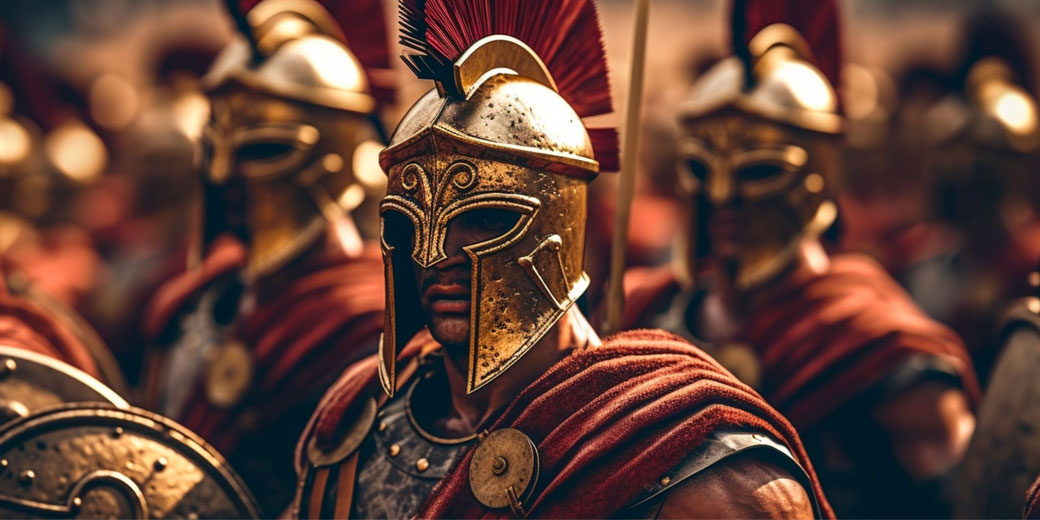
When most people think of Thermopylae, they imagine Leonidas and his 300 Spartans, who made their stand against the Persian invasion in 480 BCE.
Yet that same narrow pass became the site of another fierce battle two centuries later, when a group of Greek defenders faced a massive Gallic invasion under the leadership of Brennus.
In 279 BCE, the Greeks once again gathered at Thermopylae out of urgent necessity to block a northern force that was seeking plunder.
Why were the Gauls in Greece?
By the late fourth and early third centuries BCE, Gallic tribes had begun to move south from Central Europe largely after disputes over leadership and shortages of land and food pushed bands to seek plunder in wealthier regions.
Many of these groups, which included the Tectosages, Tolistobogii, and Trocmi, had already stormed into northern Italy and clashed with various Balkan kingdoms.
Their encounter with the weakened Hellenistic world, which followed the death of Alexander the Great, had created opportunities they could not ignore.
In 281 BCE, a Gallic force had killed Ptolemy Keraunos, the king of Macedon, during a disastrous battle that left the region leaderless and exposed.
Brennus led a larger force estimated by some modern scholars at approximately 40,000 warriors, though ancient sources offered much higher and likely exaggerated figures, and marched through Thessaly and into central Greece, and aimed directly at the temple at Delphi.
Greek cities, still divided and distrustful of each other, had little time to respond before the Gauls appeared near the borders of Phocis.
Some Greek writers later described the Gauls as disrespectful and reckless, especially in how they treated religious sanctuaries and looted temples.
Although such descriptions often exaggerated northern brutality, they showed genuine Greek fears at the time.
Delphi had long been widely viewed as the spiritual centre of the Greek world and lay directly in the invaders’ path.
Memories of another leader named Brennus who had sacked Rome in 390 BCE may have influenced Greek perceptions of the threat.
The rush to form a united defense
As reports of the advancing Gauls spread, the poleis of central and southern Greece began to prepare a defence quickly.
The Aetolian League largely took the lead, motivated both by the need to protect its own territories and by religious duty to defend Delphi.
Athens, though diminished from its classical height, still contributed ships and soldiers.
Boeotian cities, especially Thebes, also sent hoplites to the front. Other regions such as Locris and Epirus, which included the Molossians, provided more troops.
Their commanders chose Thermopylae as the ideal location for resistance, as the coastal pass still offered one of the few points where a smaller army could slow or stop a larger force.
Although river deposits had gradually widened the pass since 480 BCE, its narrow terrain continued to restrict movement and provided natural defences that could offset the numerical advantage of the Gauls.
To extend their strategy off the battlefield, Aetolian commanders sometimes launched raids on Gallic supply routes and small detachments, and they used local knowledge and speed to disrupt enemy movements.
Instead of concentrating all their forces at the pass, the Greeks aimed to stretch out the campaign and inflict damage on multiple fronts, and they generally trusted that time and fatigue would wear down the invaders.
What happened in the Second Battle of Thermopylae?
When Brennus reached Thermopylae in early 279 BCE, he found the pass relatively well-defended, and repeated attacks failed to break the line.
Gallic warriors were known for their bravery in open combat, but could not easily manoeuvre in the narrow confines.
As such, their manoeuvres failed. With shields locked tightly together, the Greek phalanxes absorbed wave after wave of charges, even when rocks, spears, and arrows rained down from the heights above.
Eventually, Brennus sent a force to find a mountain path around the Greek position by which he hoped to replicate the flanking move that had doomed Leonidas two centuries earlier.
However, Aetolian fighters had already blocked the route, possibly by taking the Anopaia path that the Persians had once used.
With speed and some agility, Aetolian peltasts attacked the Gallic column, and they ambushed it along the narrow tracks, driving it back before it could outflank the defenders.
Meanwhile, fighting at the pass continued and Greek morale remained high, while their position held firm.
Once the failure of the flanking force became clear, Brennus abandoned the attempt to break through Thermopylae and turned his army west toward Delphi.
The Greek defenders had delayed the invasion and inflicted heavy casualties, and withdrew during the night to prepare for the next phase of resistance.
The Gallic attack on Delphi
Driven partly by rumours of vast treasure hidden in the temple at Delphi, Brennus marched his army toward the city, unaware that his enemies had already gathered again.
According to several sources, storms reportedly erupted as the Gauls advanced.
Rain and hail turned mountain paths to mud while lightning struck trees and startled men and animals.
Some accounts later described these storms as divine interventions sent by Apollo.
Soon after, defenders launched a full assault, and Delphians, Phocians, and more troops from the Aetolian League struck from multiple directions.
Fighting took place along ridges and within ravines during which many Gauls fell, unable to maintain formation in such rugged terrain.
Greek accounts claimed that the gods protected Delphi directly.
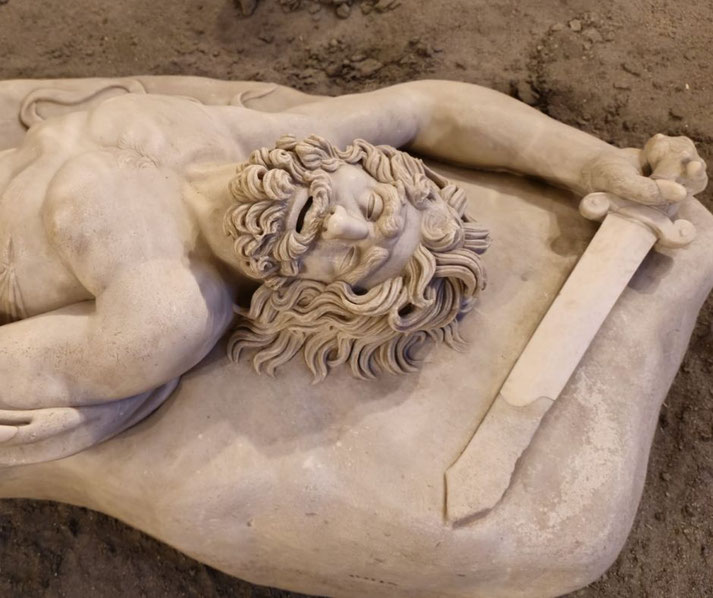
Brennus himself had been badly wounded in the chaos and was unable to restore order, so he retreated with the soldiers who were left from his army.
Due to his wounds, some sources later reported that he died, while others claimed he took his own life by drinking too much wine after the defeat, unwilling to face capture or disgrace.
Either way, his death shattered the command structure of the Gauls and helped their forces fall apart faster.
What happened to the remaining Gauls?
As the scattered survivors of the Gallic force tried to flee northward, Greek fighters from Aetolia and Thessaly followed close behind.
Raiding parties struck groups that were retreating in narrow passes, intercepted supply wagons, and scattered isolated bands.
Panic then spread quickly. Some Gauls dropped their weapons and tried to hide in forests or mountain caves. Very few made it back across the border.
Eventually, a surviving group had crossed into Asia Minor around 278 BCE, probably after being invited by Nicomedes I of Bithynia, and settled in central Anatolia, where they became known as the Galatians.
Over time, they fought as mercenaries, allied with regional powers, and later came into conflict with Rome.
Their new homeland generally offered some form of stability, but the memory of their failure in Greece continued to be part of their reputation.
In 275 BCE, Antiochus I Soter reportedly defeated a Galatian force in what later became known as the Battle of the Elephants, which ended their early expansion.
Delphi had been largely safe from plunder and declared that divine power had preserved it, and festivals and inscriptions honoured Apollo and celebrated the human resistance.
The Soteria Games commemorated the rescue of the sanctuary. Yet the Second Battle of Thermopylae, although important, did not enter Greek myth to the same extent as the first.
This may be due to the fact that Leonidas died in a heroic final stand while Brennus retreated in disgrace.
Still, the campaign of 279 BCE showed that, on this occasion, a determined and well-coordinated defence could defeat a larger invading force.