
How Thutmose III achieved victory at the Battle of Megiddo in Canaan
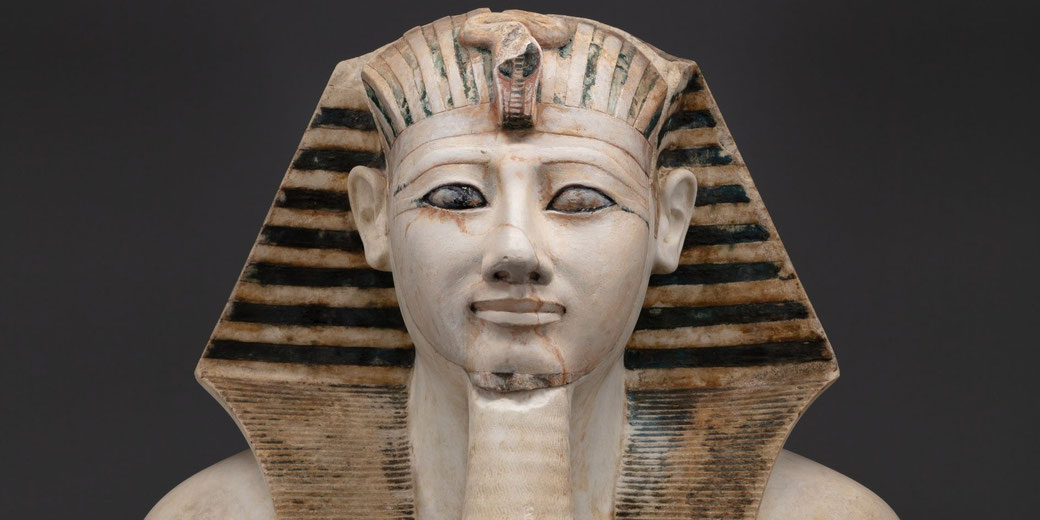
In approximately 1457 BCE, Pharaoh Thutmose III led an Egyptian army through a dangerously narrow mountain pass to confront a coalition of rebellious Canaanite and Syrian city-states at the fortress city of Megiddo, in modern-day northern Israel.
The engagement that followed is generally recognised as the first battle in recorded history to be documented with detailed military accounts, including troop movements and strategy debates, as well as an itemised list of captured spoils.
From the inscriptions that were carved into the walls of the Temple of Amun-Re at Karnak, historians possess an extraordinary window into Bronze Age warfare and the military mind of arguably one of ancient Egypt’s most capable pharaohs.
The political crisis that triggered war
Since the expulsion of the Hyksos invaders around 1550 BCE by Pharaoh Ahmose I, Egypt had maintained a network of vassal states across the Levant, which was the region between Sinai and Syria.
The buffer provinces owed loyalty to the Egyptian throne and provided a strategic shield against rival powers to the north and east.
For much of the early 18th Dynasty, Egyptian pharaohs kept this arrangement intact through military presence and diplomatic pressure.
When Thutmose III’s father, Thutmose II, died in approximately 1479 BCE, the heir was only about three years old.
As a result, his stepmother Hatshepsut assumed the position of regent and eventually took full pharaonic power, and she ruled Egypt effectively for roughly two decades.
During her reign, Hatshepsut maintained stability and kept the military at peak readiness, and she promoted Thutmose III to commander of the army once he had proved capable.
After Hatshepsut’s death in around 1458 BCE, Thutmose III became sole ruler of Egypt.
Almost immediately, the vassal states in the Levant saw an opportunity to break free.
The King of Kadesh was a powerful Syrian city-state ruler who organised a coalition, which Egyptian sources present as involving around 330 Canaanite rulers and princes, with backing from the Kingdom of Mitanni, which was Egypt’s main rival for influence in northern Syria and Upper Mesopotamia.
The ruler of Megiddo himself joined the revolt and gave the coalition one of the strongest fortresses in southern Canaan.
The rebel forces gathered at Megiddo, a fortress city that controlled the roads through the Jezreel Valley and the main commercial routes between Egypt and northern Syria, which were later known as part of the Via Maris.
Thutmose III recognised that losing Megiddo would cripple Egyptian power across the entire region, so he assembled roughly 10,000 to 20,000 soldiers and 1,000 chariots before marching north without delay.
Thutmose III’s gamble through the Aruna Pass
After departing from the frontier fortress of Tjaru, the Egyptian army travelled along the ancient Horus Road.
The Karnak annals date the march closely: Thutmose III was at Tjaru on the twenty-fifth day of the fourth month of the second season, reached Gaza on the fourth day of the first month of the third season in Year 23, departed again the next day, and arrived at Yehem on day sixteen.
From Gaza, the army then continued north to Yehem, south of the Carmel mountain range.
At Yehem, Thutmose III held a war council to determine the best route to Megiddo.
Three paths existed through the Carmel range. The northern route, via Zefti and Yokneam, and the southern route, through Taanach, were both longer and significantly safer because the roads were wide enough for the army to travel in proper formation.
The third option was the Aruna Pass, which is known today as Wadi Ara: a direct route through a narrow ravine that would force the entire army, including its chariots and horses, to move in a long single-file column.
If the enemy had positioned troops at the exit of the pass, the Egyptians would have been slaughtered one by one as they came through.
Thutmose III’s generals urged him to avoid the Aruna Pass and argued that the risk was too great.
According to the Karnak inscriptions, the pharaoh overruled them because he reasoned that the enemy would expect him to take one of the safer routes and would therefore leave the central pass unguarded.
His gamble paid off. The Egyptian vanguard came through the pass around midday and formed a defensive perimeter to protect the rest of the army as it filed through.
Seven hours later, the entire force had cleared the ravine. That night, the Egyptians camped near the Kina Brook, south of Megiddo, with the enemy encamped outside the city walls.
How did the battle unfold?
On the morning of the 21st day of the first month of the third season in Year 23 of Thutmose III’s reign, the Egyptian army advanced in a concave formation with three wings.
The inscription presents the pharaoh setting out in a chariot of electrum, arrayed in his weapons like Horus, and Thutmose III personally commanded the centre as his forces struck the coalition army at dawn.
The element of surprise arguably proved devastating, as the rebel forces were caught unprepared by the speed and direction of the Egyptian approach and broke formation quickly, and they retreated in disorder toward the walls of Megiddo.
At this critical moment, the Egyptian soldiers made a serious tactical error. Instead of pursuing the fleeing enemy into the city, the troops stopped to loot the abandoned rebel camp, and they stripped valuables from the dead and seized goods and supplies from the tents.
According to the Karnak account, Thutmose III was furious, because the delay allowed the defenders to retreat behind Megiddo’s walls.
The city’s inhabitants hauled their fleeing soldiers over the fortifications using ropes made from clothing, since the gates had been shut to prevent the Egyptians from entering.
The King of Kadesh himself escaped during the confusion.
The siege and its aftermath
With the rebels now sheltering inside the fortified city, Thutmose III ordered a full siege.
His engineers constructed a ditch and a wooden palisade around Megiddo, which cut off all supply routes into the city, and the enclosure was given the formal name “Menkheperre Thutmose III-is-the-Surrounder-of-the-Asiatics.”
The siege lasted approximately seven months before the city’s inhabitants surrendered.
According to Thutmose's official records, the captured spoils were extraordinary: 924 chariots, 200 suits of armour, 502 bows, 2,041 mares, 191 foals, 1,929 cattle, and 22,500 sheep, along with the gold-worked chariot and armour of the enemy leader and the fine chariot of the prince of Megiddo.
Importantly, Thutmose III chose not to destroy Megiddo or execute its rulers.
Instead, he required each defeated king to send a son to the Egyptian court at Thebes, where they would receive an Egyptian education.
The strategy was calculated: by raising the heirs of conquered rulers within Egyptian culture, Thutmose III ensured that the next generation of Levantine leaders would be loyal to Egypt.
Megiddo was the first of Thutmose III’s seventeen recorded campaigns, and over the following two decades, he conducted repeated expeditions across the Levant and into Syria, and he consolidated Egyptian control and expanded the empire to its greatest territorial extent.
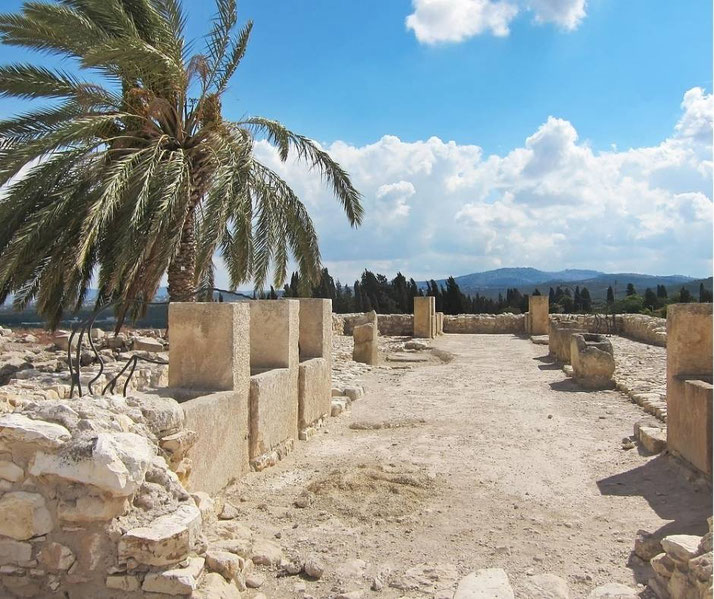
Why Megiddo matters as a historical record
The Battle of Megiddo has exceptional place in the study of history because the quality and detail of its documentation are unmatched in the ancient world.
Tjaneni was Thutmose III’s personal scribe, and he maintained a detailed daily journal on leather scrolls throughout the campaign.
Years later, around the 42nd year of Thutmose III’s reign, the contents of this journal were inscribed onto the walls of the Temple of Amun-Re at Karnak in Thebes, which is now modern Luxor.
The inscriptions describe troop numbers, route decisions, the pharaoh’s debates with his generals, the sequence of the battle, and the itemised spoils of war.
Arguably, no earlier military engagement in human history possesses this level of recorded detail.
The account provides historians with concrete evidence about Bronze Age military organisation and chariot warfare, as well as siege tactics and the political dynamics of the ancient Near East.
At the same time, it was an official royal inscription, so it recorded the campaign from the victor’s point of view.
Even thousands of years later, British General Edmund Allenby studied Thutmose III’s tactics before his own September 1918 Battle of Megiddo in the Palestine campaign, where he defeated Ottoman forces in the same geographical region.
The city of Megiddo itself has given its name to one of the most recognisable words in Western culture: Armageddon, from the Hebrew Har-Megiddo, meaning “Mount of Megiddo,” which the Book of Revelation identifies as the site of a final apocalyptic battle.