
What were ancient Greek families like?
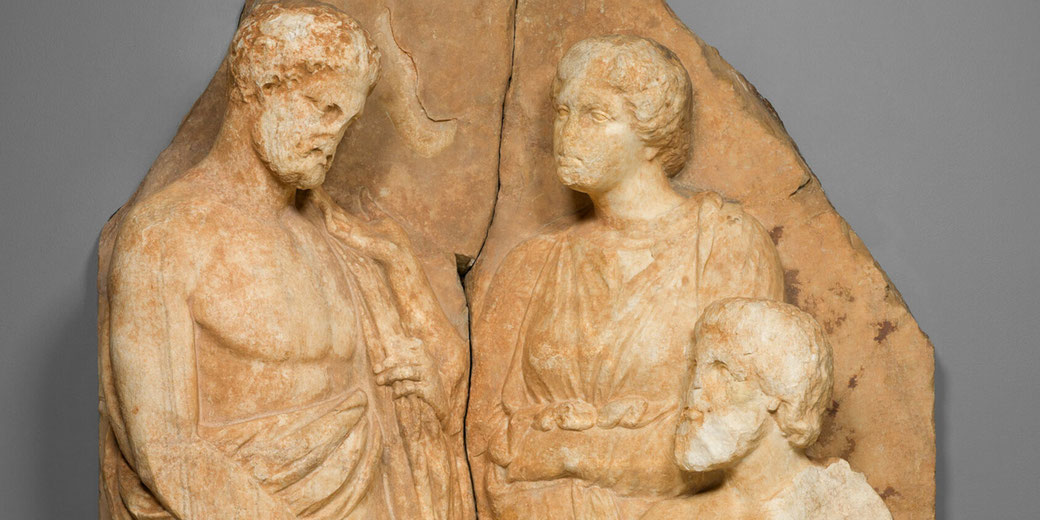
Although the agora hummed with commerce and debate, and the polis gave Greek citizens their legal identity, it was the household that governed daily life.
Every legal right and economic transaction traced back to the oikos, and the religious rituals of the household did so as well, since the term described both the physical dwelling and the family line that lived within it.
Across centuries of Greek history, from the Archaic period (c. 800–480 BCE) to the Classical age (c. 480–323 BCE), the oikos had remained central to inheritance and property ownership, which also covered the way the family kept its obligations over time.
The oikos: The family and the household
To help preserve order within the city-state, the Greeks generally relied on the oikos, which included the immediate family and enslaved labourers, along with the ancestral property that defined the household’s living space.
At its head stood the kyrios, the male citizen who normally possessed full legal authority over all members of the household.
He represented his family in law, arranged marriages, oversaw property, and conducted religious rituals at the hearth.
Since Athenian law demanded that inheritance pass through the male line, the absence of a son, who would normally inherit the property, often placed the household at risk of dying out.
Therefore, laws required an epikleros, a daughter without brothers, to marry a suitable male relative, often a paternal cousin or uncle, to ensure her father's estate remained within the family.
That requirement ensured that a son born from the union would inherit both property and family rites.
Legal speeches, such as those by Demosthenes, show the tension and legal disputes that sometimes arose from these arrangements.
Often, larger oikoi included multiple enslaved individuals who completed household tasks, worked in workshops, or managed farms.
Some wealthy families owned enough slaves to divide responsibilities between domestic work and business management.
In such households, enslaved tutors educated children, clerks handled financial records, and stewards worked as agents for the family at market.
Estimates suggest that some very wealthy Athenian families owned between 10 and 50 slaves, though this higher range likely applied only to the wealthiest households.
How people got married in ancient Greece
Within Athenian society, families typically arranged marriages to produce heirs and build up wealth, which in turn helped preserve citizen status.
Fathers selected husbands for their daughters, often before the girls turned fifteen, while the grooms tended to be older men who had completed military service and received citizenship rights.
The dowry, which passed from the bride’s father to her husband, helped make the marriage secure and ensured the woman’s support.
The formal contract of betrothal, known as the engyē, confirmed the arrangement.
Once married, the wife usually entered her husband’s household and came under his control.
He acted as kyrios for her and for any children they had. Women, who managed food stores and instructed servants, also performed rituals for fertility deities.
In most poleis, respectable women were expected to avoid frequent public exposure and typically lived in the women’s quarters, or gynaikonitis, separated from visitors and neighbours.
The layout of many Greek homes included both a gynaikonitis and an andron, or men's dining room, to preserve gender boundaries.
By contrast, Spartan women married later and received physical training, which prepared them to oversee estates and raise strong children.
Since Spartan men often lived in shared barracks, their wives managed households independently.
Over time, those women had come to control a large share of the city’s land.
Aristotle claimed in the 4th century BCE that they owned around two-fifths of it, though modern scholars debate the accuracy of this figure due to the limited evidence.
Nevertheless, Spartan women were still excluded from formal politics.
Important life milestones for children and adults
At birth, a father had the legal right to accept or reject a child. If he accepted it, the infant joined the oikos and received protection and status.
If he rejected it, the child was exposed, which usually resulted in death or enslavement.
Writers, such as Aristotle and Plutarch, had described this practice as common, especially for female infants.
Those who stayed within the family were raised according to strict social expectations that divided sharply along gender lines.
Until the age of seven, boys stayed with their mothers or enslaved wet-nurses.
Afterward, they began formal education if the family could afford it. They learned reading, writing, music, and athletics from private tutors.
Standard texts included Homer’s epics and the works of Hesiod. A trusted slave, called a paidagogos, often accompanied them and enforced discipline.
Some boys later received rhetorical training to prepare for political life.
Meanwhile, girls continued to learn domestic skills from their mothers. They mastered tasks such as spinning wool and managing supplies, as well as observing household rites.
Most girls did not learn to read or write, though in rare cases, aristocratic families provided a broader education.
Among the Spartans, however, girls learned music and choral recitation and took part in physical drills alongside boys, since the city valued strength in women as essential to producing strong warriors.
Slaves, servants, and non-citizens in the household
Each oikos generally depended on the labour of enslaved people, whose tasks varied based on the household’s wealth.
In small homes, a single enslaved woman might perform every domestic task. In wealthier homes, slaves cleaned, cooked, taught, and managed financial records.
Some even represented the family at market or collected rents from tenant farmers.
Female slaves often raised the children of their masters. Wet-nurses, in particular, played a crucial role in infant care and sometimes developed ties to the family that lasted for many years.
Despite their personal closeness, they remained property without legal protection, and if sold or punished, they had no legal recourse.
In some cases, wet-nurses continued to live in the household after their duties ended, and in many cases, they maintained a secondary maternal presence.
Resident foreigners, who were known as metics, usually lived in Greek cities without the rights of citizenship.
Many worked in trades or rented land and occasionally lived within households as labourers or servants.
Though metics sometimes achieved financial success, they could not own land or pass citizenship to their children.
Their presence strengthened the strict boundaries of citizenship that defined the Greek family system.
In Athens, the metoikos could pay taxes and contribute to military service, but stayed legally distinct from citizens.
Other poleis placed additional restrictions on their roles.
Religious obligations and ancestral duties
Daily life within the oikos generally followed religious routines. The household hearth was sacred to Hestia and was the religious centre of the home.
The kyrios often led household rites, but other family members, particularly women, performed rituals that honoured fertility and health within the household, along with a sense of domestic protection.
Before meals, at birth, or after returning from travel, family members made offerings and poured libations to ensure favour from the gods and household protection.
Religious duties connected families to the past, and each household maintained its own ancestral cult, which often included tomb visits and sacrifices.
Sons usually had the duty to bury their fathers and continue the family rites.
Without a male heir, the cult could fall into neglect, which created religious pollution (miasma) that affected both the household and the wider community.
Funerary customs followed a traditional pattern of prothesis (laying out of the body), ekphora (procession), and perideipnon (banquet).
Women also played key roles in religious life, especially during festivals related to fertility and the agricultural cycle.
During the Thesmophoria, which was a three-day festival held in the month of Pyanepsion (October/November), married women honoured Demeter and Persephone in rituals that reinforced their domestic and religious responsibilities.
At the same time, private ceremonies highlighted significant moments such as marriage and childbirth, together with the ceremonies that surrounded death, all of which required proper rites to satisfy divine expectations.
The polis and the role of the family
Every city-state to a large extent depended on its oikoi to support its people and field its army, as well as to fund its institutions.
In 451 BC, Pericles introduced a law that limited citizenship in Athens to the sons of two Athenian parents, a significant shift from earlier rules that had allowed citizenship through the father alone. T
his law meant that questions of marriage and inheritance became a matter of legal and political importance, and issues of legitimacy did so as well.
Families that failed to produce legitimate sons disappeared from the rolls of the citizen class, and in cases where both parents died, the city assigned a guardian, or epitropos, to protect the orphan’s interests until adulthood.
Philosophers such as Aristotle and Xenophon wrote a lot about the importance of household management.
In Xenophon’s Oeconomicus, the conversation between Socrates and Ischomachus outlines how a well-ordered household helps keep the city orderly.
They argued that the oikos taught discipline and obedience, together with a form of practical wisdom.
If a man could rule his family well, he would usually contribute to a stable and orderly polis.
By contrast, household disorder threatened the family's fortune and also harmed the social fabric of the city.
During war, plague, or political unrest, families often suffered most of the hardship.
Sons died in battle, fathers came home badly injured or did not return at all, and widows often struggled to maintain property.
In response, wider family networks and larger households sometimes took in orphans, provided dowries, or managed land until children came of age.