
Why a room full of gold was not enough to save the last Inca emperor from Spanish execution
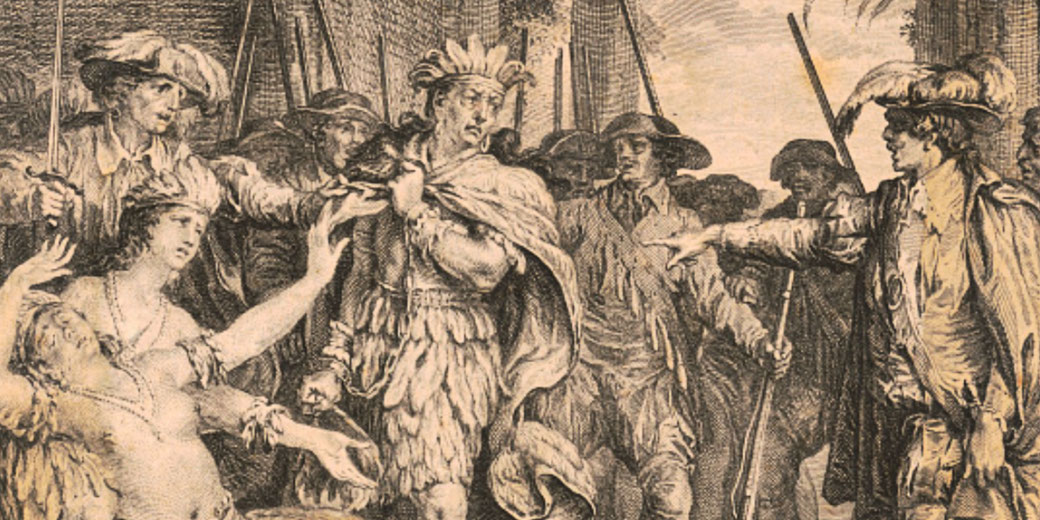
In the northern highlands of Peru, where the town of Cajamarca lay beneath Andean peaks, an emperor once reportedly offered his captors a large ransom: a chamber filled with gold and two more filled with silver.
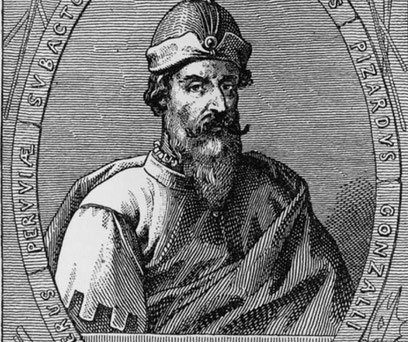
That offer came from Atahualpa, the last undisputed ruler of the Inca Empire before the Spanish installed puppet rulers, who had fallen into the hands of Francisco Pizarro’s Spanish expedition in 1532.
Within months, despite receiving the full treasure, the Spaniards executed Atahualpa. This showed that European conquest wanted more than precious metals.
The Spaniards wanted to remove anyone who might threaten their rule.
Two mighty empires
At its height, the Inca Empire, or Tawantinsuyu, ruled a territory that stretched over about 3,000 kilometres along the Andes, which covered modern-day Peru, Ecuador, Bolivia and parts of Chile, Argentina and Colombia.
The empire, which was estimated to have governed more than ten million people, relied on a central government, provincial governors, and a wide network of roads and messengers to manage difficult terrain.
State storehouses supplied food and clothing to workers and soldiers, while work obligations under the mit’a system supported public works and farming.
The Sapa Inca was viewed as the son of the sun god Inti and held both religious and political power in Cusco, the empire’s capital.
After the Spanish Crown rewarded Hernán Cortés for defeating the Aztecs, interest grew in new expeditions to unexplored territories.
Pizarro, who had led exploratory trips along South America's western coastline, asked for permission to conquer the southern lands where gold was said to be plentiful.
In 1532, he landed near the port of Tumbes with only 168 men, including 62 cavalry and 106 infantry.
However, his troops carried steel swords, firearms, and rode horses, technologies that were unfamiliar to Andean peoples.
Many had not previously faced cavalry or firearms. Some coastal groups had seen earlier Spanish landings.
At the same time, the Inca Empire had already been disrupted. Around 1527, smallpox likely reached the Andes and killed Emperor Huayna Capac and much of the royal court, according to later Spanish accounts that described smallpox symptoms.
Without a clear successor, the empire had fractured as Huáscar and Atahualpa, two of his sons, fought a civil war for the throne.
After years of fighting, Atahualpa had won victory and had taken control of the empire, although internal divisions had remained deep and key regions had grown restless.
The capture of Atahualpa
Shortly after his victory, Atahualpa paused with his army near Cajamarca to rest and reorganise.
Pizarro sent messengers ahead to request a peaceful meeting. Atahualpa, confident in his authority and unaware of European military tactics, agreed and entered the town with a small ceremonial group.
His soldiers remained stationed outside the town, unaware of the danger awaiting their ruler.
On 16 November 1532, as Atahualpa entered Cajamarca’s plaza, a Dominican friar named Vicente de Valverde stepped forward and held a Bible as he demanded that the emperor accept the authority of the Christian God and the Spanish king.
Atahualpa inspected the unfamiliar object, discarded it, and reportedly said that it "told him nothing," according to Francisco de Xerez.
Immediately, the Spaniards launched an attack. Hidden cavalry charged from the surrounding buildings and artillery fired into the crowd.
Dozens of Atahualpa's attendants were killed before they could react. The emperor was captured, while his men scattered or died where they stood.
In fact, Pizarro’s half-brothers Hernando and Gonzalo and Hernando de Soto played key roles in orchestrating the ambush and securing the prisoner.
As the Spaniards held him in custody, they quickly realised the advantage that keeping him alive offered, since Atahualpa’s presence allowed them to issue orders in his name and keep the Inca population cooperating.
Many local nobles remained loyal to him and obeyed his commands, which gave the illusion that the empire continued to operate under native leadership.
For several months, Pizarro used this to strengthen his position and secure supplies.
The offer of a ransom
Soon after his capture, Atahualpa proposed to pay a ransom in exchange for his release, in which he promised to fill one room measuring about 6.2 by 4.8 metres with gold, stacked up to a height of roughly 2.4 metres.
In addition, he offered to fill two more rooms of similar size with silver. The Spaniards agreed, and word spread across the empire that the emperor demanded gold and silver from temples, palaces, and sacred sites.
Today, the original ransom room, which was known as El Cuarto del Rescate, still survives in Cajamarca and is considered to be a historical landmark.
Within weeks, messengers had quickly travelled to distant provinces to collect gold statues, ceremonial items, temple ornaments, and jewellery, as artefacts from the Coricancha, which was the central temple of the sun in Cusco, were stripped and sent to Cajamarca.
Gold animals, masks, vessels, and plaques, which were all crafted by Inca artisans for religious purposes, were were often melted into bars by Spanish blacksmiths, which destroyed their cultural meaning and made them easier to carry.
The total treasure included nearly 6,000 kilograms of gold and more than 11,000 kilograms of silver, which, according to estimates from Spanish chroniclers, which would amount to hundreds of millions of dollars in modern value.
By July 1533, the ransom had been delivered in full, so Spanish officers began to discuss Atahualpa’s future.
Some feared that he remained too influential, especially after news spread that his rival Huáscar had been executed, likely on Atahualpa’s orders.
Others warned that keeping him alive might risk rebellion. Eventually, Pizarro and his men staged a trial and charged him with conspiracy, idolatry, polygamy, and treason, a charge based in Spanish legal thinking that imposed their framework onto a foreign sovereign not subject to Spanish authority.
Atahualpa stood before a temporary court, which had already decided the outcome, and on 26 July, he was sentenced to death.
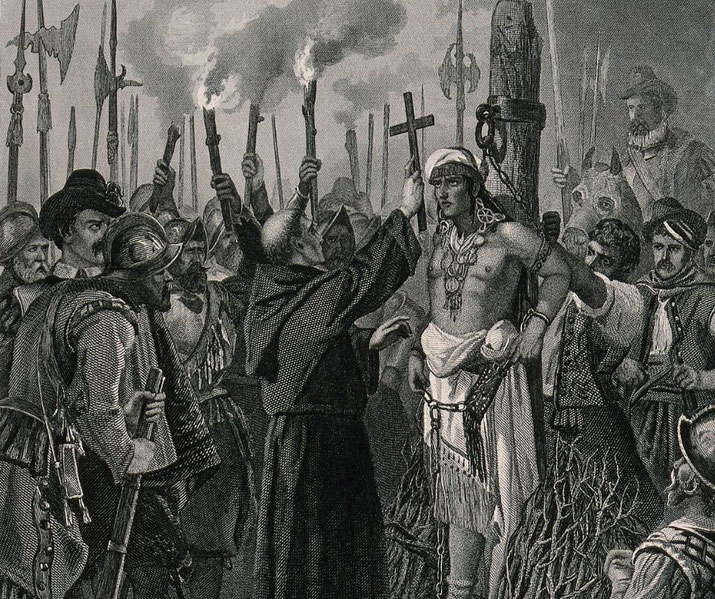
A priest offered him a final choice. If he accepted baptism, he would be spared the agony of burning.
Atahualpa agreed and took the Christian name Francisco. That night, the Spanish executed him by garrote in the square where he had first been seized.
The device crushed his neck using a tightening iron collar, which caused death by strangulation.
Consequences and legacy
After Atahualpa’s death, no single Inca noble immediately held the same authority or won the same loyalty.
As such, Spanish troops entered Cusco in November 1533, supported by some indigenous groups such as the Huanca, Chachapoya, and Cañari, who had opposed central Inca control during the civil war.
Although resistance persisted in outlying areas, no organised defence formed to drive out the invaders, and Spanish rule spread over the highlands.
Pizarro's decision to execute Atahualpa showed that conquest needed more than treasure: the Spaniards removed anyone who could bring people together to resist them.
The ransom had satisfied Spanish greed, but the emperor's influence and authority over his people posed a greater long-term threat.
By killing him, the Spaniards removed the only person capable of leading a counter-offensive, and they made clear that they intended to break down the imperial system completely.
Following the conquest, colonial authorities systematically introduced forced labour systems such as the encomienda and, later, the repartimiento and mita, which extracted work from indigenous communities to supply mines and plantations.
Temples became churches, sacred sites were often turned into churches, and Andean beliefs were often suppressed by missionaries.
The gold collected from Atahualpa’s ransom and other plundered cities travelled across the Atlantic, where it funded Spanish military campaigns in Europe and helped Spanish power in Europe.
In 1535, Pizarro founded Ciudad de los Reyes, later known as Lima, which became the administrative capital of Spanish Peru and was named in honour of the Epiphany.
Pizarro's own fate showed the violence he had used, as he was assassinated in 1541 during a feud with followers of Diego de Almagro.
Today, the story of Atahualpa’s capture and death is often cited as a clear example of the brutality of colonial conquest.
A chamber filled with gold had failed to protect a ruler who had once commanded the loyalty of millions, and his death brought about the fall of an empire and the start of a new system.