
How the 'Save Our Sons' movement changed Australia's course in the Vietnam War

When Australian mothers gathered in 1965 to protest the conscription of their sons, they directly challenged what they saw as the government’s right to send unwilling civilians into a foreign war.
The Save Our Sons movement was launched by women in Melbourne and stood against national service during a time when Australia became more involved in Vietnam.
As casualty lists began to increasingly include conscripted soldiers who had been chosen by lottery rather than by choice, their voices reached outside their suburbs and into the national debate about war and morality, especially questions of democratic responsibility.
Why did Australian mothers oppose conscription?
After Prime Minister Robert Menzies had reintroduced national service in November 1964, all 20-year-old men became subject to a ballot system that could force them to join the army.
The first draw took place on 10 March 1965. Officials claimed that the policy would help increase Australia’s defence strength and assist regional allies.
The ballot used a process in which officials drew birth dates from a barrel, and those whose birthdays were selected were required to report for duty.
However, the situation changed in an important way in April 1965, when Menzies committed troops to Vietnam, and the government confirmed that conscripts would be sent to combat zones.
As public funerals began to follow the draft notices, many parents across the country began to question whether a randomly chosen young man should be required to die in a conflict that the government had entered without a formal vote or full parliamentary debate.
In response, a group of women met in Melbourne in May 1965 and established a movement called Save Our Sons that did not support any political party.
Among the founders were Jean McLean, Joan Coxsedge, Chris Cathie, Irene Miller, and Jo Maclaine-Cross.
They insisted that their view came primarily from moral duty rather than party politics, and they focused their protest on the issue of forced military service rather than on foreign policy.
Early membership was made up mostly of mothers and teachers, joined by other women who had not previously taken part in public protest.
They framed conscription as a violation of parental rights and democratic freedoms.
Within months, the movement spread quickly to other cities such as Sydney, Adelaide, Brisbane, and Perth.
By 1967, Save Our Sons had established branches in at least five capital cities and had drawn in hundreds of active members.
Save Our Sons protests at Fairlea prison
From the outset, SOS mainly relied on carefully organised and peaceful ways to protest in public.
Members distributed pamphlets outside army recruiting centres and stood in quiet, silent gatherings in central locations, and they wrote often to newspapers and elected officials as well.
They also regularly supported the families of draft resisters and attended court proceedings to show solidarity.
Well-known draft resisters such as Simon Townsend helped draw attention to the cause through public statements and imprisonment, and he later became a television presenter.
At key moments, their ability to use maternal identity to gain public sympathy often proved especially effective.
Unlike university students or political radicals, SOS members spoke with a calm, firm belief, which forced both the press and politicians to acknowledge their arguments.
By 1971, their protest had grown more direct. In April of that year, five SOS members, Jean McLean, Joan Coxsedge, Chris Cathie, Jo Maclaine-Cross, and Lucy Craze, entered the Department of Labour and National Service in Sydney to protest the jailing of draft resisters.
They refused to leave until authorities addressed their demands. When police forcibly removed them, a court sentenced all five women to 14 days in Fairlea women’s prison in Melbourne, which had previously held women detained for both criminal and political reasons.
Immediately, news of their arrest spread across the country. Editorials and interviews followed, along with letters to the editor.
For example, The Age and The Sydney Morning Herald ran front-page stories that questioned the morality of jailing middle-aged mothers for peaceful protest.
Their imprisonment became a turning point. For many Australians, the image of middle-aged women jailed for nonviolent protest raised questions about the government’s judgement and the morality of conscription laws.
Australian antiwar protests during the Vietnam War
As public attention turned to the women in Fairlea, support for SOS deepened.
Many religious leaders and several civil liberties groups criticised the arrests, and trade unions joined them.
Letters poured in from across Australia, many of which praised the women’s courage and condemned the government’s response.
The campaign shifted focus from the general question of national defence to the personal consequences that government power could have.
Mothers who had been silent before began to speak publicly about their fear and anger.
In speeches and interviews, SOS leaders reminded listeners that Australia had entered the war without a full debate and that the government had forced citizens into battle through a random lottery.
SOS supported families of draft resisters, but they had generally avoided direct calls for illegal resistance themselves, and they chose instead to maintain their focus on moral arguments and legal protest.
Eventually, larger protests had grown and spread, and in May 1970, the first Vietnam Moratorium brought over 200,000 people into the streets nationwide, of whom more than 100,000 marched in Melbourne alone.
Although the Moratorium campaign operated independently, the SOS movement had already spent five years as a group that built support and questioned public assumptions about conscription.
Anti-war leaders adopted many of the ways of speaking and arguing that SOS used, such as personal testimony and moral language, together with appeals to shared responsibility.
As the number of deaths in Vietnam increased and military objectives were still unclear, national opinion gradually shifted.
By 1971, the Morgan Gallup Poll indicated that public opposition to conscription had grown significantly, with a majority of Australians opposing the war and increasing numbers rejecting the draft.
Many public polls had begun to show declining support for the war and growing anger over the use of conscripts.
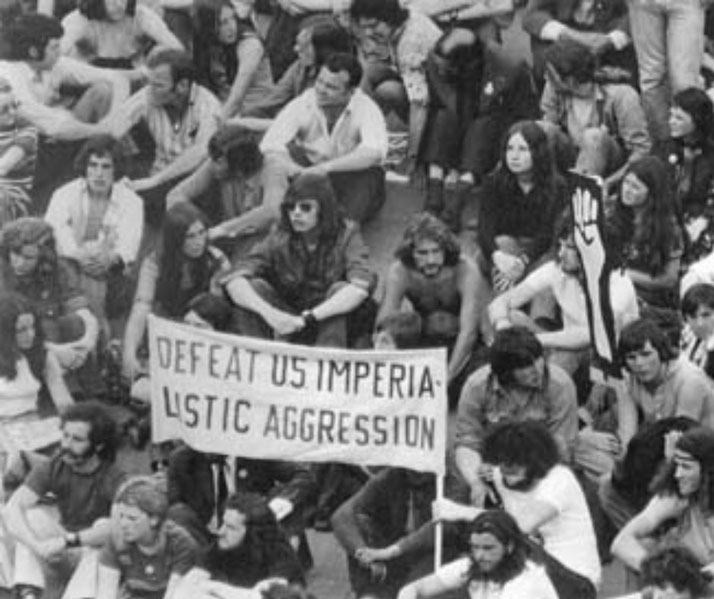
End of conscription in Australia
Following that shift, the political cost of maintaining the draft became increasingly clear.
When Gough Whitlam and the Australian Labor Party won the 1972 federal election, they wasted no time in acting.
On the day it took office, the new government abolished conscription and released imprisoned draft resisters, and it began the process that brought home the last remaining troops from Vietnam.
Although many factors had almost certainly contributed to the end of Australia’s involvement in the conflict, the influence of Save Our Sons was very clear.
For nearly eight years, the movement had consistently spoken directly to the public’s sense of right and wrong and demanded that the state answer for its decisions.
Over time, Save Our Sons had become a symbol of public resistance and maternal protest for many Australians.
Its members held no formal political office and received no financial support, and they worked without protection or help from people in power.
However, they had helped to achieve policy change because they appealed to ideas that the public recognised as fair.
Their movement did not collapse when the war ended, and instead it continued to influence public memory of the Vietnam years for a long time afterwards and influenced how many Australians thought about citizenship and obligation, as well as protest.
By forcing the government to listen to voices that it had once dismissed, Save Our Sons helped change the course of national policy and helped change the terms of public debate.