
Too young to die: The children who lied to fight in WWI
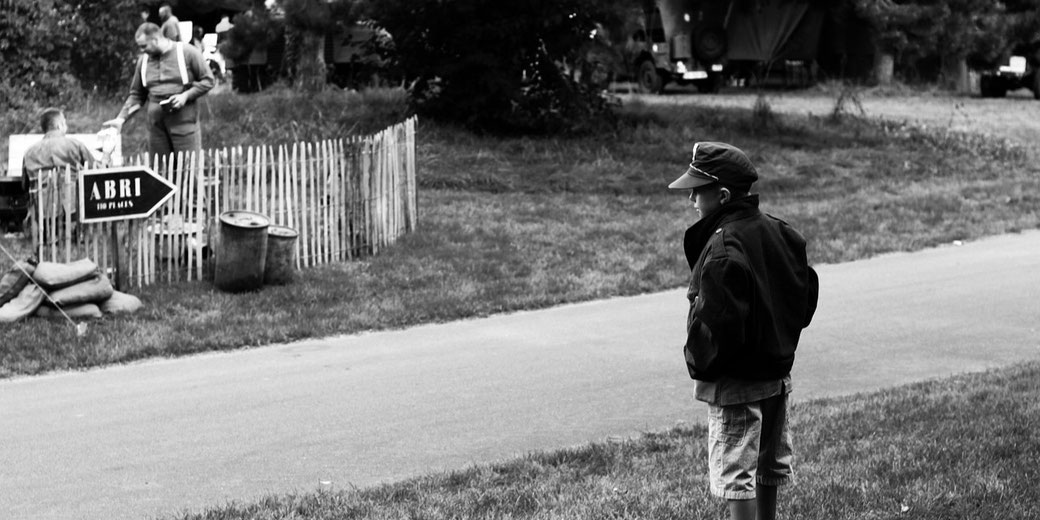
By the end of 1914, British military recruiters had accepted over one million volunteers, and among them likely stood thousands of boys who had not reached their sixteenth birthday.
Many came from industrial cities such as Liverpool and Manchester, along with parts of Glasgow, and they had never held a full-time job or finished school.
Although enlistment rules stated that soldiers had to be at least 18 years old to join and 19 to fight abroad, boys routinely lied about their age, and recruiting officers often looked the other way.
Military historians widely cited some estimates, and those estimates suggest that as many as 250,000 underage boys enlisted in the British Army during the First World War, and many slipped through recruitment checks that stayed basic until the introduction of conscription in 1916.
Why did children want to fight in WWI?
From the start of the war, many boys across Britain had absorbed the patriotic messages that filled classrooms, newspapers, and public speeches.
Recruitment posters often showed enlistment as a chance to prove loyalty, and government propaganda regularly praised sacrifice for King and Empire.
Schoolteachers often supported these values and celebrated past military victories, and many history lessons had featured men like Lord Nelson and the Duke of Wellington as national role models.
As a result, many boys had been raised on such stories, and they saw enlistment as the natural next step into adulthood.
For working-class families, the army often promised more than national pride. It often offered reliable meals and regular pay in addition to clothing, all of which many boys lacked at home.
Often, those who came from large families believed that joining up would ease pressure on parents and allow more food and space for siblings.
Some enlisted to provide income through the army’s family allotment system, while others did so to escape factory work or unemployment.
The allotment and separation allowance schemes offered financial support to families of soldiers, and these payments influenced enlistment decisions in poorer households.
Occasionally, parents helped boys lie about their age or turned a blind eye, especially when household finances were strained.
Also, peer pressure influenced many enlistments. When older brothers, neighbours, or schoolmates joined, those left behind feared ridicule or shame.
Communities often treated new recruits as local heroes, and bands played them off as they departed for training.
In some areas, groups of friends enlisted together as “pals battalions,” and those groups formed entire units from the same street or school.
The Accrington Pals lost over 580 men killed, wounded, or missing on the first day of the Somme, for example.
That sense of loyalty to one’s mates often reinforced the urge to enlist, even when boys knew they were too young.
How did the children trick the recruiters?
At the beginning of the war, army regulations required men to be 18 to enlist and 19 to be posted abroad.
However, the process for verifying age was generally not enforced consistently, so boys could usually claim they were old enough, and if they looked tall or sturdy enough, most recruiters accepted the answer without challenge.
There was no requirement to provide a birth certificate, and few recruiters asked for any supporting documents.
Often, boys used basic tricks to appear older, such as deepening their voices, wearing heavy coats to add bulk, or smearing coal dust on their faces to suggest facial hair.
Some inserted padding into their boots to increase their height, while others stood on tiptoe during medical inspections.
When rejected at one recruitment station, boys frequently tried another, sometimes on the same day, where they used a different name or date of birth.
Since enlistment records had been stored locally and had not been shared between recruiting centres, which meant there was little chance of being caught.
The Births and Deaths Registration Act 1874 had improved national record-keeping, but records stayed in separate local offices and were easy to bypass.
Recruiters had clear reasons for their part to overlook obvious lies, because each successful enlistment counted toward their target number, and many officers had received bonuses for high numbers.
As a result, very few questioned boys who were clearly underage. Field Marshal Lord Kitchener issued public instructions to enforce age limits more strictly, but many recruiting officers ignored them.
Even when parents wrote to the War Office with proof, the army often delayed its response or ignored the complaint altogether.
Once a boy had been issued a uniform and sent to the front, it became increasingly difficult to bring him back.
Some famous examples
Sidney Lewis enlisted in August 1915 at just 12 years old, and he joined the East Surrey Regiment after he had falsely claimed to be 19.
After training, he was sent to fight on the Somme in 1916, where he endured one of the war’s bloodiest offensives.
His mother discovered his enlistment months later and sent a birth certificate to the authorities.
As a result, he was pulled from the front and discharged. However, once he came of age, he voluntarily re-enlisted and later served in the military police.
His case became widely known after the war, when the Imperial War Museum confirmed his age using official records.
Similarly, Jack Cornwell joined the Royal Navy in 1915 as a Boy Seaman First Class at the age of 15.
He served on HMS Chester during the Battle of Jutland in May 1916. During the battle, enemy shells struck the ship, and nearly everyone at his gun station was killed or injured.
Although severely wounded, Cornwell stayed at his post, and he awaited orders.
He died from his injuries shortly afterwards and received the Victoria Cross for his conduct.
His story appeared in newspapers across the country and became a tool for wartime propaganda, especially in schools.
His grave in Manor Park Cemetery was given a special headstone, and the public raised funds in his honour.
John Condon of the Royal Irish Regiment long held the reputation that he was the youngest British soldier killed in action.
Official records listed his age as 14 when he died in a gas attack near Ypres in May 1915.
His gravestone in Belgium continues to mark that age, though later research using military and census records suggested he may have been at least 18.
Regardless, his case became a clear reminder of the youth sacrificed during the war, and he featured in poems and songs that later inspired documentaries well into the late twentieth century.
Another case was that of Horace Iles, who joined the Leeds Pals at 14 and was killed at the Somme at 16.
His sister later received his final letter, which apologised for causing her worry and expressed his love before battle.
Finally, Reginald St John Battersby was a clergyman’s son who became a second lieutenant at age 14 and survived the war after he was wounded at 15.
His commission and service are well documented, and his story contributed to the wider understanding of how young many volunteers actually were.
Tragic legacy of a flawed recruitment system
Eventually, most underage soldiers discovered that war had no resemblance to the tales they had imagined, as many boys entered the trenches within weeks of training, where they endured cold, hunger, filth, and constant shellfire.
Some were ordered over the top during major offensives and died within minutes, while others suffered lifelong wounds, both physical and mental.
In fact, letters from the front show that many felt regret and fear alongside growing confusion.
Some begged their parents to write to the War Office to get them home, while others tried to appear brave but hinted at exhaustion or despair.
Over time, the British Army began to discharge underage boys when complaints arose, and records show that more than 30,000 were sent home before the war’s end.
However, many stayed undetected, especially during periods of heavy casualties when fresh replacements were urgently needed.
The introduction of conscription in 1916 under the Military Service Act led to stricter checks, but underage enlistment still continued.
For the families of those who died, there was no special recognition of their youth.
Their names appeared on memorials and rolls of honour alongside adult men, and few received public recognition since they had been children when they enlisted.
After the war, memoirs, reports, and oral histories gradually brought greater attention to the presence of child soldiers in the British ranks.
During the interwar period, stories like those of Sidney Lewis and Jack Cornwell were retold in newspapers and veterans’ accounts.
A memorial that honours underage soldiers now sits at the National Memorial Arboretum in Staffordshire, after organisers opened it in 2010.
However, official histories rarely addressed the issue directly, and it took many decades for the government and public to acknowledge the extent of underage enlistment.
Although the boys had made a voluntary decision, their reasons were, in reality, motivated by national pressure, limited options, and emotional pressure.
Some were buried in anonymous graves in France or Belgium, and their true ages were never recorded, and others returned with scars that never healed.
Ultimately, their experiences showed how quickly society could sacrifice its children when caught in the rush of war.