
The role of the Arab States in the First Arab-Israeli War
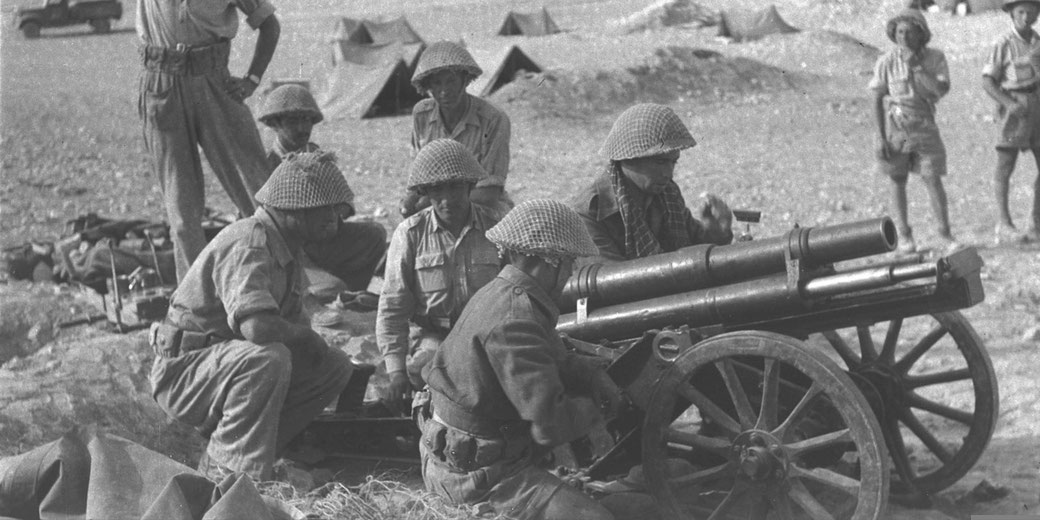
After British forces had withdrawn from Palestine in May 1948, five Arab armies launched an invasion at the same time that was badly coordinated, primarily to prevent the creation of a Jewish state and to defend what they saw as Arab territory.
Egyptian tanks crossed into the Negev desert, Transjordan’s Arab Legion moved toward Jerusalem, Syrian troops with limited artillery support, all launched attacks on northern settlements, while Iraqi troops reinforced central Palestine, and Lebanese units patrolled the border.
Although these armies marched under the banner of Arab unity, their actions exposed rivalry and planning errors that significantly influenced both the outcome of the war and the direction of post-war Middle Eastern politics.
Arab League failures in 1948
After the United Nations' partition resolution in November 1947, Arab leaders condemned the decision as a breach of Arab sovereignty.
The Arab League had issued statements publicly promising military support for Palestinian Arabs, yet failed to create a single military plan or set up a single command.
Instead, Egypt, Transjordan, Syria, Iraq, and Lebanon all prepared their armies separately, and each responded to the crisis mainly according to domestic concerns and regional interests.
By early 1948, with British withdrawal already underway, Arab leaders faced growing pressure from their populations to intervene, while also competing with each other for influence in Palestine.
King Farouk ordered Egypt’s intervention, as he intended to demonstrate his leadership within the Arab world, which he also intended to use to divert attention from growing discontent at home.
However, the Egyptian Army largely lacked modern equipment and sufficient training, and it had no clear command structure, which resulted from poor administration and uneven leadership.
On 15 May, Egyptian units crossed the Sinai border and advanced toward the southern coastal plain, initially advancing into towns such as Majdal and fighting for control of Isdud.
Soon after, Haganah forces had regrouped and launched successful counterattacks that disrupted Egyptian supply lines, which caused Egyptian troops to largely retreat to a defensive line around Gaza.
They failed to regain momentum for the rest of the war.
Transjordan and Syrian offensives
Meanwhile, Transjordan entered the conflict with different priorities. King Abdullah, whose aims focused on annexing central Palestine, deployed the Arab Legion under the command of Glubb Pasha, a British officer with combat experience.
The Legion largely avoided operations in areas designated for the Jewish state and concentrated on securing key locations in the West Bank.
On 28 May, it captured the Jewish Quarter of Jerusalem’s Old City after intense fighting.
After that victory, Abdullah directed his forces to hold positions around Ramallah and Latrun, which he hoped would avoid direct fighting with Israeli forces that might seriously jeopardise his wider political goals.
His decisions indicated a strategy aimed at securing territorial gains while limiting political fallout from the overall Arab military failure.
These actions allowed Transjordan to retain control over much of the West Bank after the war.
Syria’s campaign largely took place on the northern front, where its troops crossed into Galilee and targeted towns near Lake Tiberias.
President Shukri al-Quwatli had approved the offensive under significant domestic pressure, which involved few senior military officers in the planning.
Syrian commanders had received unclear and changing orders from civilian authorities, which contributed to the lack of a clear battle plan, and as a result, Syrian forces suffered repeated defeats at Samakh and Mishmar HaYarden.
Soon, poorly maintained supply routes and not enough artillery support further weakened their position.
Consequently, Israeli forces launched a counteroffensive that pushed the Syrians back toward the border, which further showed the weak organisation of the Syrian army.
Iraq central sector operations
For their part, Iraq had sent several thousand troops to the central sector, where they coordinated only loosely with Transjordanian forces.
The Iraqi government largely aimed to show it was a regional power, though its leaders also hoped the war would unify the population and divert attention from domestic political tensions.
Iraqi units advanced toward Jenin and Nablus but struggled to win ground.
Coordination between Iraqi and Transjordanian commanders remained limited, which meant their separate chains of command stopped joint operations.
Eventually, Iraqi forces held defensive positions, and they generally contributed little to the larger war effort.
They held isolated positions and reinforced political claims.
Lebanon, which was largely limited by internal divisions and a weak military, played a marginal role, as its small army conducted limited incursions near the northern frontier but largely avoided large engagements.
Lebanese political leaders feared that full-scale involvement might destabilise their fragile sectarian balance, which was already strained by the arrival of Palestinian refugees and the fact that tensions had risen between Christian and Muslim communities.
While public statements supported the Arab cause, actual military operations remained cautious and largely symbolic.
Israeli counteroffensives
By mid-1948, it had become increasingly clear that the Arab states were largely not acting together, as each army operated independently, often without informing other allies of planned movements.
Military setbacks led the states to blame each other, which left the Arab League largely unable to coordinate reinforcements or supply support.
During UN-arranged ceasefires, Israeli forces took advantage of the pause to strengthen their defences, call up reserves, and launch counterattacks in key areas.
In contrast, Arab states spent the truce periods arguing about next steps and issuing conflicting orders, which left them vulnerable when fighting resumed.
Eventually, Israeli offensives in late 1948 and early 1949 reversed many of the Arab advances, which led the Arab states to largely negotiate separate armistice agreements.
Egypt signed in February 1949, followed by Lebanon in March, Transjordan in April, and Syria in July.
No full peace agreement immediately followed, which meant no Arab state formally recognised Israel at the time.
Each government reacted differently to the defeat. In Egypt, the military failure had helped weaken the monarchy and had encouraged a group of army officers to plan the 1952 revolution that would end Farouk’s reign.
In Syria, the loss helped fuel political instability and led to a series of coups. In Iraq, public unhappiness increased, and leaders struggled to justify the country’s involvement.
In Lebanon, the war worsened sectarian tensions and weakened civilian control over security policy.
Defeat in 1948 forced Arab leaders to rethink their political and military views because the war had shown how regional rivalries and poor coordination had weakened their campaign.
Although they claimed to defend Palestine, each state pursued its own goals, which often came at the expense of the collective effort.
In the years that followed, the memory of that failure largely affected Arab military planning, helped nationalist movements grow, and changed how future wars were fought against Israel.
Their decisions in 1948 and their consequences led to a new phase of Middle Eastern history, resulting largely in distrust and unresolved conflict.